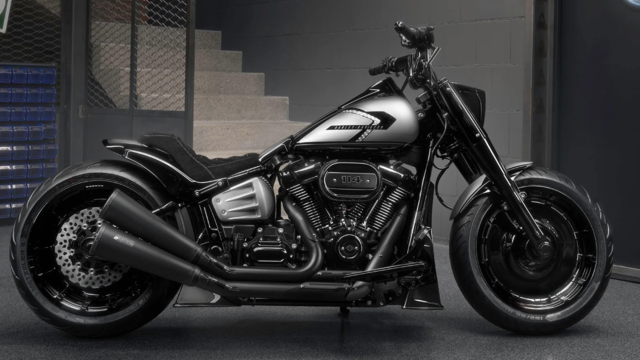
Terry Components FI Management


Thread Starter
|
Banned
Joined: May 2005
Posts: 14,496
Likes: 156
From:
 Terry Components FI Management
Terminal Velocity Fuel Management System II
[100003] $525.00
More info on the install in the links (installation manuals)... HERE
Here's a link to show the installation of this unit... HERE

Just a few years ago there were more new Harley-Davidson motorcycles purchased with carburetor systems verses fuel-injection systems. Times have changed and it’s now the other way around. The one thing that has not changed is the Harley owners desire to personalize their motorcycle to look, sound and perform the way they anticipate. One of the most common changes performed to the motorcycle is their choice of exhaust and air induction systems. Some new Harley-Davidson owners, before taking delivery of their new motorcycle, will increase the motor size to a 95ci or a 103ci along with down loads to maintain correct factory fuel calibrations, keeping the motorcycle within the guide lines to retain the factory warranty. When any performance upgrades are made to the motorcycle there will be a disturbance to the air fuel/ratio calibration, which was engineered into the factory ECU computer. Making the necessary corrections to the factory ECU computer is not as easy as changing the jets in a carburetor. The reason automotive and now the motorcycle industry are advancing to fuel injection is to comply with the new E.P.A. regulations and emission controls that become more strict each year. The motorcycle industry understands that fuel injection is the most accurate way of controlling fuel delivery and producing a reduction in emission deposits. Harley-Davidson, through the year 2005, along with most companies which manufacture fuel management systems, have chosen a (Open-Loop) system to control fuel delivery. This style of fuel control has pre-set fuel calibration tables in either after-market or factory ECU’s which are very limited to operational changes; it simply cannot adjust on its own. When any changes are made to the motor (exhaust system, air induction system or internal motor components) the factory calibration tables are no longer correct so the air fuel/ratio will be incorrect and possibly harmful to the motor. This (Open-Loop) system could be corrected by re-writing new calibration tables to the factory ECU or by the method of installing an aftermarket product which doesn’t change the factory calibration, but changes the output of the factory calibration. This method of trying to create a perfect air fuel/ratio calibration table with or with out the use of a load-dyno and air fuel/analyzer is nothing more than a guess. The reason being is that the aftermarket product which is trying to create a perfect output air/fuel ratio will not be able to achieve it because they first need the factory calibration source code. The end result is that the aftermarket calibration will have an unstable operation and will continually need to be adjusted. Harley-Davidson currently on their new 2006 Dyna Glide along with the entire automotive industry for more than 25 years has used (Closed-Loop) operational fuel control. This operation introduces an oxygen sensor (O2 sensor) into the exhaust stream so that it can monitor the oxygen content while you ride. With the sensor in place, the fuel delivery can be corrected to the factory calibration tables. This method will result in achieving the correct air fuel/ratio. There are a few exhaust companies that understand the need to properly correct the air/fuel ratios when after market exhaust systems are being installed. Bubs Enterprises’ Dennis Manning (owner), the developer of the “True Dual Jug Hugger”, “Two Into One Performance System” and the manufacturer of the “Rinehart Exhaust System” is one. At their emissions dyno lab (Bubs Enterprises) have had the opportunity to test all the current
[100003] $525.00
More info on the install in the links (installation manuals)... HERE
Here's a link to show the installation of this unit... HERE
Just a few years ago there were more new Harley-Davidson motorcycles purchased with carburetor systems verses fuel-injection systems. Times have changed and it’s now the other way around. The one thing that has not changed is the Harley owners desire to personalize their motorcycle to look, sound and perform the way they anticipate. One of the most common changes performed to the motorcycle is their choice of exhaust and air induction systems. Some new Harley-Davidson owners, before taking delivery of their new motorcycle, will increase the motor size to a 95ci or a 103ci along with down loads to maintain correct factory fuel calibrations, keeping the motorcycle within the guide lines to retain the factory warranty. When any performance upgrades are made to the motorcycle there will be a disturbance to the air fuel/ratio calibration, which was engineered into the factory ECU computer. Making the necessary corrections to the factory ECU computer is not as easy as changing the jets in a carburetor. The reason automotive and now the motorcycle industry are advancing to fuel injection is to comply with the new E.P.A. regulations and emission controls that become more strict each year. The motorcycle industry understands that fuel injection is the most accurate way of controlling fuel delivery and producing a reduction in emission deposits. Harley-Davidson, through the year 2005, along with most companies which manufacture fuel management systems, have chosen a (Open-Loop) system to control fuel delivery. This style of fuel control has pre-set fuel calibration tables in either after-market or factory ECU’s which are very limited to operational changes; it simply cannot adjust on its own. When any changes are made to the motor (exhaust system, air induction system or internal motor components) the factory calibration tables are no longer correct so the air fuel/ratio will be incorrect and possibly harmful to the motor. This (Open-Loop) system could be corrected by re-writing new calibration tables to the factory ECU or by the method of installing an aftermarket product which doesn’t change the factory calibration, but changes the output of the factory calibration. This method of trying to create a perfect air fuel/ratio calibration table with or with out the use of a load-dyno and air fuel/analyzer is nothing more than a guess. The reason being is that the aftermarket product which is trying to create a perfect output air/fuel ratio will not be able to achieve it because they first need the factory calibration source code. The end result is that the aftermarket calibration will have an unstable operation and will continually need to be adjusted. Harley-Davidson currently on their new 2006 Dyna Glide along with the entire automotive industry for more than 25 years has used (Closed-Loop) operational fuel control. This operation introduces an oxygen sensor (O2 sensor) into the exhaust stream so that it can monitor the oxygen content while you ride. With the sensor in place, the fuel delivery can be corrected to the factory calibration tables. This method will result in achieving the correct air fuel/ratio. There are a few exhaust companies that understand the need to properly correct the air/fuel ratios when after market exhaust systems are being installed. Bubs Enterprises’ Dennis Manning (owner), the developer of the “True Dual Jug Hugger”, “Two Into One Performance System” and the manufacturer of the “Rinehart Exhaust System” is one. At their emissions dyno lab (Bubs Enterprises) have had the opportunity to test all the current

Stage I
Joined: Jan 2010
Posts: 1
Likes: 0
From: Illinois
Modern portable devices. Need recommendations choosing accessories!
Hi everyone! I would be very happy if you provide your cooments taking into account your own experience. Could anyone suggest me please what kind of component parts should I acquire for my laptops? tacky or expensive? At the moment I am going to buy a battery for my Dell netbook. As a result of my looking, three websites have drawncalled my attention: 1. cheapbatteryonline.com which sells cheap laptop batteries and 2. mybestbattery.com which exposes quality new laptop batteries at a bit higher cost. 3. dell.com retails original batteries and other notebook component parts but at a much higher price. Mybestbattery.com and cheapbattery.com expose replacement batteries; they are not original, not produced by Dell. They offer Denaq batteries Have you known anything about this producer? But these online outlets give all the guarantees I consider important: quality guarantee, money back, safe and secure shopping, they guarantee that my credit card data will be protected and will not be given to other parties. Now I have a dilemma and can’t decide what is the best store to shop the battery for my Dell my netbooks and what component parts should I require in future? dime, costly, that of a medium-cost, original or replacement? I wish to save money and at the same time I wish to purchase long life and good battery. I have already looked through some thoghts but they differ. Those who produce cheap component parts string along clients and consider that penny products are as good as expensive ones. If the item is costly it doesn’t necessarily mean that it will be of good quality. While those whoproduce more costly batteries do not stop assuring that good products or accessories can’t be dime. They think that they apply only acceptable and certified raw materials and primary component partsand the hitch of quality accumulators is much longer. Both sides provide quality, reliability, proper operation of batteries. But unfortunately not both sides guarantee an acceptable price. What do you think? I will be extremely grateful if anyone gives any judgements and shares his or her experience.

Thread
Thread Starter
Forum
Replies
Last Post
doug garrison
Exhaust System Topics
4
Jan 26, 2008 06:22 PM