When you click on links to various merchants on this site and make a purchase, this can result in this site earning a commission. Affiliate programs and affiliations include, but are not limited to, the eBay Partner Network.
Maybe it's model dependant with the heat thing the last several weeks we've been high 90's to triple digits here ( unusual ) and while she gets hot I do not feel it anything like the twinkies I've ridden. Even my shovel runs hotter than the RK and this is in town commute traffic daily.
I took a Road King special with the M8 in it for 160 miles yesterday in 90+ degree weather. Anybody that thinks this M8 runs hot apparently has never spent much time on the old twin cam. Of course gets hot, it's a motor, but they run way cooler than previous models did, that I know for a fact.
It depends. I have 5000 miles on my M8 CVO Limited. I also have a 2010 CVO Ultra. My M8 had to have a replacement engine due to a sumping issue. I now have an outstanding new engine that runs terrific. Here's my assessment of both engines regarding heat as measured real time.
First its hard to compare temps between the 2 engines because the sensors are in different locations. But here's how the readings go.
Twin cam: average normal operating engine temps (ET) are around 240-250. Avg Head Temps (HT) are about 80-100 degrees higher than the ET. Hot temps from running hard or high ambient temps can approach ETs of 300. Sitting at a light when the engine is already hot, a twin cam engine can ONLY get hotter. All the heat from the twin cam engine is right under the rider.
Twin-cooled M8: average normal operating ETs are around 270. Avg HT are only about 10-15 degrees higher than the ET. Avg coolant temps are btw 160-180. Hot temps from running hard or high ambient temps can approach ET of 290 with HT of 320-340 Sitting at a light when the engine is already hot, a twin-cooled M8 engine will actually get COOLER as the radiator fans kick on for the coolant. Coolant temps can rise to 220-230 but quickly come down once the engine is idling for example at a light. Much of the heat from a twin-cooled M8 engine is well engineered to be directed away from the rider through the coolant vents.
The actual avg ET readings for an M8 are slightly higher than a TC but that could be due to sensor location. The M8 twin-cooled HTs are most definitely ALOT cooler. The temps felt by the rider are much lower on the M8.
Last edited by Heatwave; Jul 18, 2017 at 08:23 AM.
You might think about Captain Itch's Crotch Cooler.
I bought one last week and it does help make the ride more comfortable.
Was riding in 100% weather, yes it's warm but better with the it installed. Here is a pic with the Crotch Cooler.
It depends. I have 5000 miles on my M8 CVO Limited. I also have a 2010 CVO Ultra. My M8 had to have a replacement engine due to a sumping issue. I now have an outstanding new engine that runs terrific. Here's my assessment of both engines regarding heat as measured real time.
First its hard to compare temps between the 2 engines because the sensors are in different locations. But here's how the readings go.
Twin cam: average normal operating engine temps (ET) are around 240-250. Avg Head Temps (HT) are about 80-100 degrees higher than the ET. Hot temps from running hard or high ambient temps can approach ETs of 300. Sitting at a light when the engine is already hot, a twin cam engine can ONLY get hotter. All the heat from the twin cam engine is right under the rider.
Twin-cooled M8: average normal operating ETs are around 270. Avg HT are only about 10-15 degrees higher than the ET. Avg coolant temps are btw 160-180. Hot temps from running hard or high ambient temps can approach ET of 290 with HT of 320-340 Sitting at a light when the engine is already hot, a twin-cooled M8 engine will actually get COOLER as the radiator fans kick on for the coolant. Coolant temps can rise to 220-230 but quickly come down once the engine is idling for example at a light. Much of the heat from a twin-cooled M8 engine is well engineered to be directed away from the rider through the coolant vents.
The actual avg ET readings for an M8 are slightly higher than a TC but that could be due to sensor location. The M8 twin-cooled HTs are most definitely ALOT cooler. The temps felt by the rider are much lower on the M8.
Some anecdotal that agrees.
I was in stop and go with very little movement for about 30 minutes on Sunday and my Twin cooled Ultra Limited 'felt' significantly cooler to my leg and such than my 96 TC did. I would have been roasting on the Road King.
I've definitely noticed an increase in heat with my '17 RGU over my '13 Streetglide. At about 85 deg, the bottom of my right thigh and passenger foot board were roasting. But, full disclosure, I had the stage 1 on my SG to include cat removal which is something I'm considering on my RGU for that reason.
On a positive note, to echo Peej's comments, it does seem to have gotten a tad cooler after my 1K service and synthetic oil.
Well, I've noticed the "jewels" get a little warmer on my SGS versus my Wide Glide. However, overall the M8 on my SGS is much cooler running than my Twin on the WG. I've had an '11 and '12 Wide Glide and taking them home from the dealer, I blistered up my inner right leg on each bike until I added a heat shield. I think I just have a weird seating position on the Wide Glides. Even with that heat shield on the Wide Glide and none on the SGS, just sitting in traffic I can tell the SGS/M8 runs a lot cooler.
I've definitely noticed an increase in heat with my '17 RGU over my '13 Streetglide. At about 85 deg, the bottom of my right thigh and passenger foot board were roasting. But, full disclosure, I had the stage 1 on my SG to include cat removal which is something I'm considering on my RGU for that reason.
On a positive note, to echo Peej's comments, it does seem to have gotten a tad cooler after my 1K service and synthetic oil.
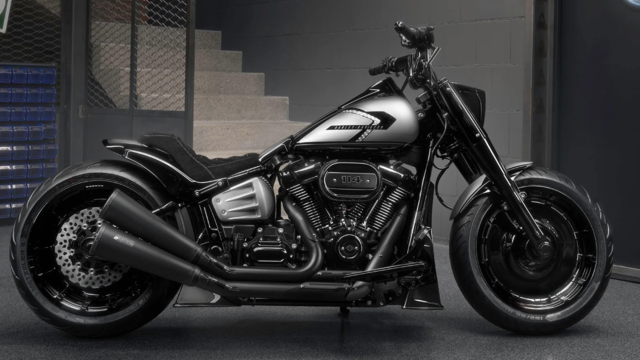
Harley-Davidson Fat Boy Becomes a Dark, Decepticon-Inspired Custom
Slideshow: Killer Custom's latest build relies on styling changes rather than performance upgrades, giving the cruiser an entirely different personality.
7 Surprising Harley-Davidson Products that Are Not Motorcycles
Slideshow: The bar-and-shield logo shows up on far more than motorcycles, some of the company's most unexpected products have nothing to do with riding.
Slideshow: From the troubled AMF years to modern misfires, these bikes earned reputations for reliability issues, questionable engineering, or disappointing performance.
Crazy Bunderbike Build Looks Amazing, But Is It Impossible to Ride?
Slideshow: The Swiss custom shop has taken a Harley Softail and stretched it into something so long and low that it looks closer to a rolling sculpture than a conventional motorcycle.
Engraved Rebellion: Inside Bundnerbike's Glam Rock II
Slideshow: A standard cruiser becomes an intricate metal canvas in the hands of a Swiss custom house known for pushing Harley-Davidson platforms far beyond their factory brief.