



solid wheels

Stage II
Joined: Jul 2005
Posts: 2
Likes: 1
 RE: solid wheels
I own a 15-year anniversary fat boy and I do believe that the solid wheel and crosswind thing is a myth. I have owned and ridden many bikes and most all of them from time to time sway in even low velocity cross winds.
Because we do not live in a vacuum… When a motorcycle travels through earth’s atmosphere, a v-patterned vortex is created from the direction of travel towards the rear and around the mass of the bike and rider. The strength of that vortex is proportional to the velocity of the vortex, which would be the beginning part - starting at the front tire. The vortex at this location is strong enough not allow any high-pressure currents traveling perpendicular to the direction of travel (i.e. cross wind) to penetrate any voids created between the front tire rim and front brake disk, front forks and frame or frame and motor. Because the crosswinds can not travel through this vortex, the inside of the vortex will have lower pressure than the outside; thus, any cross winds will have a steering effect on the mass of the bike and rider. Next time you take a ride in a crosswind place your hand below the fuel tank and you should feel no wind in any direction. If your knuckles drag the ground when you walk, and you have the opportunity to ride both solid or open type wheels, check the area adjacent to the front rims, you should notice that the negative pressure is the same for both types.
Take two Lean Cuisine challenged riders, hard bags, 21” wind shield, 80 lbs. of electronics and leather - they may not feel the effects of a cross wind because the weight of the mass overrides the steering effect of the cross wind.
A lighter rider on a fat boy should feel more of steering effects, not because of the solid wheels, but because the fat boy is tall bike, not like a low profiled sport bike or as heavy as the previously mentioned bagger.
I am not an Aerodynamic Engineer but I did recently pick up a chick at a Holiday Inn bar ….. on my fat boy.
Because we do not live in a vacuum… When a motorcycle travels through earth’s atmosphere, a v-patterned vortex is created from the direction of travel towards the rear and around the mass of the bike and rider. The strength of that vortex is proportional to the velocity of the vortex, which would be the beginning part - starting at the front tire. The vortex at this location is strong enough not allow any high-pressure currents traveling perpendicular to the direction of travel (i.e. cross wind) to penetrate any voids created between the front tire rim and front brake disk, front forks and frame or frame and motor. Because the crosswinds can not travel through this vortex, the inside of the vortex will have lower pressure than the outside; thus, any cross winds will have a steering effect on the mass of the bike and rider. Next time you take a ride in a crosswind place your hand below the fuel tank and you should feel no wind in any direction. If your knuckles drag the ground when you walk, and you have the opportunity to ride both solid or open type wheels, check the area adjacent to the front rims, you should notice that the negative pressure is the same for both types.
Take two Lean Cuisine challenged riders, hard bags, 21” wind shield, 80 lbs. of electronics and leather - they may not feel the effects of a cross wind because the weight of the mass overrides the steering effect of the cross wind.
A lighter rider on a fat boy should feel more of steering effects, not because of the solid wheels, but because the fat boy is tall bike, not like a low profiled sport bike or as heavy as the previously mentioned bagger.
I am not an Aerodynamic Engineer but I did recently pick up a chick at a Holiday Inn bar ….. on my fat boy.

Banned
Joined: May 2005
Posts: 152
Likes: 1
From:
RE: solid wheels
I've heard similiar scientific explanations before, MSFatboy. And I am extremely reluctant to dismiss them out of hand; people who do studies like that have a lot more education in that field than I do, and I respect that. But I'm a smart enough man and an experienced enough rider to know for certain that there was a big difference in stability between the stock solid disc wheels on my V-Rod, and the 5-spoke Monacco wheels I had put on, and that the whole thing wasn't just psychosomatic. I'm just wondering if there's some other quirky factor of aerodynamics that we may be missing when it comes to this argument; something about negative pressure areas or whatever. Something that may account for why some people notice a difference and some people don't, because I don't disbelieve people when they say they've had no problems, but I KNOW for sure the effects solid wheels had on my bike.
Well, I'll just hop over to MIT this afternoon and get me a degree in Applied Aerodynamics, and I'll let tell you all how it works this evening.
Well, I'll just hop over to MIT this afternoon and get me a degree in Applied Aerodynamics, and I'll let tell you all how it works this evening.
Banned
Joined: May 2005
Posts: 152
Likes: 1
From:
RE: solid wheels
Has anyone explored the possibility that maybe it's the weight of the solid disc wheels that leads to the instability, and not the shape? I don't have a wheel weights chart handy, but it's an idea...

Banned
Joined: Jul 2005
Posts: 3,485
Likes: 0
RE: solid wheels
msfatboy,
While I respect your opinion, I have to strongly disagree with your assessment. I have owned a Fatboy with and without the solid wheels for many years. While I am no genius, I do consider myself somewhat competent and I believe that I can discern the different handling characteristics that solid, versus, pass through wheels present. In my case I can absolutley without a doubt tell you that there is a difference, this I know because I have experienced it first hand. A big difference in some environments. You have an interesting theory and in some high speed instances it might even be right. You would have to spin that wheel at a very high rate of speed to create a vortex strong enough to repel a gust of wind on the highway. Of course it really depends on the velocity of the wind or gust and the speed that you are traveling. I just know that when I had the solid wheels I could really feel the wind and gust trying to move the bike around. Without the solid wheels it much less noticeable, with or without a jacket on or regardless of my riding position. I don't believe that I have any mental issues.
TM
While I respect your opinion, I have to strongly disagree with your assessment. I have owned a Fatboy with and without the solid wheels for many years. While I am no genius, I do consider myself somewhat competent and I believe that I can discern the different handling characteristics that solid, versus, pass through wheels present. In my case I can absolutley without a doubt tell you that there is a difference, this I know because I have experienced it first hand. A big difference in some environments. You have an interesting theory and in some high speed instances it might even be right. You would have to spin that wheel at a very high rate of speed to create a vortex strong enough to repel a gust of wind on the highway. Of course it really depends on the velocity of the wind or gust and the speed that you are traveling. I just know that when I had the solid wheels I could really feel the wind and gust trying to move the bike around. Without the solid wheels it much less noticeable, with or without a jacket on or regardless of my riding position. I don't believe that I have any mental issues.
TM

Cruiser
Joined: Mar 2005
Posts: 185
Likes: 0
From:
RE: solid wheels
I say think of it in terms of being at the ocean riding a wheeled vehicle down the beach while waves are coming in and hitting the wheels. The vehicle is moving at 60+, what do you think will happen?
Of course the water is much heavier then air but this still gives you a method of looking at how air moves since it moves just like water.
By the way I have a 04 FatBoy and a EG. I haven't really noticed a difference but I haven't been looking. I am interested and would like to add a question... Is it OK to leave the rear solid and change the front and do you think that would still make quite a difference then both solid. This question is of course for those that feel the difference.
Mark
Of course the water is much heavier then air but this still gives you a method of looking at how air moves since it moves just like water.
By the way I have a 04 FatBoy and a EG. I haven't really noticed a difference but I haven't been looking. I am interested and would like to add a question... Is it OK to leave the rear solid and change the front and do you think that would still make quite a difference then both solid. This question is of course for those that feel the difference.
Mark
Banned
Joined: May 2005
Posts: 152
Likes: 1
From:
RE: solid wheels
I've got a solid rear wheel on my Deuce, with a spoked wheel in front. I've had no major problems with the bike being pushed around by the wind. From what I can tell, it's the front wheel being knocked around that causes the instability. Of course, I am curious as to what would happen if I replaced the rear wheel as well...

Road Warrior
Joined: Apr 2005
Posts: 1,650
Likes: 2
From:
RE: solid wheels
I left a solid on the back of my 05 Fat Boy and put a nine spoke billit on the front.
It looks great - and handles better!
It looks great - and handles better!
HD Forum Stories
The Best of Harley-Davidson for Lifelong Riders

Jason Momoa Is Turning Classic Harleys Into PHEVs
Verdad Gallardo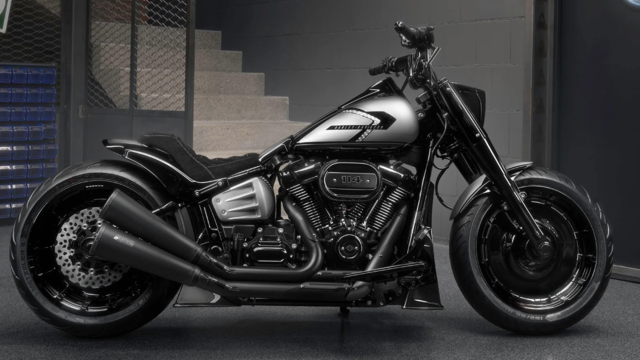
Harley-Davidson Fat Boy Becomes a Dark, Decepticon-Inspired Custom
Verdad Gallardo
6 Weirdest Harley-Davidsons Ever Sold to the Public
Verdad Gallardo
7 Times Harley-Davidson Chucked Tradition Out the Window
Verdad Gallardo
7 Surprising Harley-Davidson Products that Are Not Motorcycles
Verdad Gallardo
8 Best Harley-Davidson Motorcycles Ever
Pouria Savadkouei
10 Worst Harley-Davidson Motorcycles Ever
Pouria Savadkouei
Killer Custom's Jail Break Is The Breakout That Refused to Blend In
Verdad Gallardo
Crazy Bunderbike Build Looks Amazing, But Is It Impossible to Ride?
Verdad Gallardo
Road Master


Joined: May 2005
Posts: 1,101
Likes: 425
From: Pennsylvania
RE: solid wheels
I've got 2200 miles on my new Fat Boy with the solid front wheel.
I have been very conscious of how the bike handles, especially on days where the winds are squirrely
and have followed several of these "Solid vs. open wheel" threads.
I will be replacing the front next week with an open (thunderstar) wheel and will be able to make
a direct comparison. Same rider, same bike, same roads, different wheel.
For what its worth, I'm a 235 lb. bodybuilder type so I'm no lightweight. Between me and the bike we are
a fairly heavy hunk of matter and I notice a fair amount of movement when its gusty.
I will be adding my own results to the thread once I have the new wheel on.
I have been very conscious of how the bike handles, especially on days where the winds are squirrely
and have followed several of these "Solid vs. open wheel" threads.
I will be replacing the front next week with an open (thunderstar) wheel and will be able to make
a direct comparison. Same rider, same bike, same roads, different wheel.
For what its worth, I'm a 235 lb. bodybuilder type so I'm no lightweight. Between me and the bike we are
a fairly heavy hunk of matter and I notice a fair amount of movement when its gusty.
I will be adding my own results to the thread once I have the new wheel on.
