






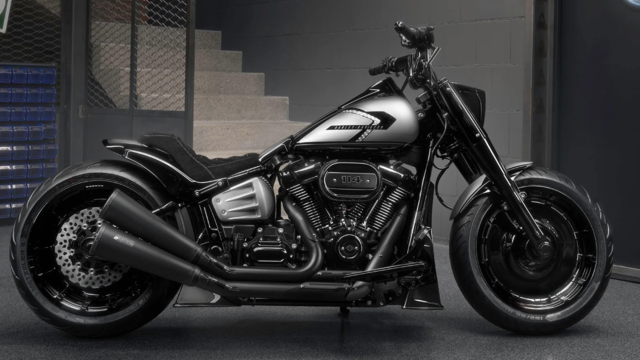
Billet Turn Signal Bar (FX)

One of these will crimp the connector nicely. Then just a dab of solder for insurance.
http://www.ebay.com/itm/250903182158...84.m1497.l2649
http://www.ebay.com/itm/250903182158...84.m1497.l2649
Thread Starter
|
Elite HDF Member
Joined: May 2012
Posts: 3,747
Likes: 5
From: Central Cali
One of these will crimp the connector nicely. Then just a dab of solder for insurance.
http://www.ebay.com/itm/250903182158...84.m1497.l2649
http://www.ebay.com/itm/250903182158...84.m1497.l2649

Now, what size are those molex connectors. Lol
What size are the molex connectors? I see there are .063 and .092 available so I'm not sure which one to get. Also, what tool do I need to put the wires to the molex connectors? I have solder and and iron and have soldered wires together but never connectors. Do I just stick the wire in the molex and solder it to it like that?
No special tools are needed for this job, though a sturdy set of needle-nose pliers will facilitate making the crimps without damaging anything. If the solder doesn't flow within a couple seconds, you may have to tin the soldering iron tip - melt solder onto the tip until it is shiny and covered. Let it "cook" a few seconds, and then wipe it clean with a damp rag or sponge. It took longer to type this than it will take you to do the job.

Uploaded with ImageShack.us
Thread Starter
|
Elite HDF Member
Joined: May 2012
Posts: 3,747
Likes: 5
From: Central Cali
There is so little current being carried by those wires that it doesn't really matter what size connector you use. The smallest size that you can handle is probably your best bet (easily tucked away). Strip enough wire to fill the area between the inner crimp joint and where the wire dead-ends in the connector (roughly between the two arrows, below). Tin the bare wire end. Do this by holding the heated tip of the iron to one side of the wire and the solder to the other side of the wire. The solder will flow when the wire is hot enough. Melt just enough so that the solder wicks into the wire. Lay the wire end into the molex connector and bend the inner crimps onto the wire to hold it. If you stripped the length correctly, the outer crimps can be bent onto the wire insulation and will act as a strain relief. Now, using the same technique as when you were tinning the bare wire, heat the inner crimp connector (which is now holding the wire) and solder the wire to the connector. DO NOT melt hot solder onto a cold connector. That will create what's known as a cold solder joint, and is guaranteed to cause you intermittent problems down the road. Next, slip the heat shrink tubing over and beyond the newly soldered connection, slide the male/female molex together, and slide the heat shrink over the connector joint (it needs to be long enough to cover all exposed metal plus a bit more, due to shrinkage). Use a hair dryer (or a match, if you are careful) to shrink the tubing around the assembled connector and you're done. The shrink tubing will protect the electrical connection from the elements, electrically insulate it, and add a little mechanical reinforcement. If you ever need to dissasemble the joint, just slit the tubing lengthwise with a box cutter.
No special tools are needed for this job, though a sturdy set of needle-nose pliers will facilitate making the crimps without damaging anything. If the solder doesn't flow within a couple seconds, you may have to tin the soldering iron tip - melt solder onto the tip until it is shiny and covered. Let it "cook" a few seconds, and then wipe it clean with a damp rag or sponge. It took longer to type this than it will take you to do the job.

No special tools are needed for this job, though a sturdy set of needle-nose pliers will facilitate making the crimps without damaging anything. If the solder doesn't flow within a couple seconds, you may have to tin the soldering iron tip - melt solder onto the tip until it is shiny and covered. Let it "cook" a few seconds, and then wipe it clean with a damp rag or sponge. It took longer to type this than it will take you to do the job.
I am going to do the front turn signal bar and then pull my rear alloy art sigs and put a molex on those so its easily disassembled if needed (like you suggested earlier). I wish I had done that to begin with....it would have been easier to now try to figure out why my left one isn't working and why I am blowing the battery fuse when I use the load equalizer. Lol
Just FYI, before you drive yourself crazy troubleshooting the blowing fuse…
My first load equalizer had a miswired connector, causing it work normally on one side and just extinguish the light on the other side. Maybe you have something similar going on.
My first load equalizer had a miswired connector, causing it work normally on one side and just extinguish the light on the other side. Maybe you have something similar going on.
Thread Starter
|
Elite HDF Member
Joined: May 2012
Posts: 3,747
Likes: 5
From: Central Cali
One other question with regards to wiring the front turn signal bar.
Wouldn't it be easier for me to get some OEM Harley male molex connections and put them on the end of the turn signal bar wiring and plugged that directing in the "hot" port of the molex connector that plugs into the harness? Rather than cut the original turn sign wires and putting a male and female in the middle so I would have the OEM plug and wire, into a female and the male would come from the turn signal bar.
I am thinking it would be easier to just plug it right into the connector and not have to use a female at all?
Wouldn't it be easier for me to get some OEM Harley male molex connections and put them on the end of the turn signal bar wiring and plugged that directing in the "hot" port of the molex connector that plugs into the harness? Rather than cut the original turn sign wires and putting a male and female in the middle so I would have the OEM plug and wire, into a female and the male would come from the turn signal bar.
I am thinking it would be easier to just plug it right into the connector and not have to use a female at all?
Thread Starter
|
Elite HDF Member
Joined: May 2012
Posts: 3,747
Likes: 5
From: Central Cali
That may be the problem but even without the LE connected, my left turn signal decided to stop working. I'm sure there is something going on with where I spliced the wires. I just hooked them together and soldered them together and put heat shrink on them. But in doing that, I did notice that when I stripped the wires it was exactly clean and some of the wires got stripped too far back.... that may be causing me to not have a good connection. That's why I am thinking of just starting over and putting the male/female connectors on.
Thread Starter
|
Elite HDF Member
Joined: May 2012
Posts: 3,747
Likes: 5
From: Central Cali
I found these on ebay. Looks like they are OEM Harley molex male and female pieces. A little more expensive but since I am familiar with the NAMZ wire extensions, this puts my mind at ease with working with them because I have used them before.... now just gotta wire them up using your directions.
Here is what I bought:
http://cgi.ebay.com/ws/eBayISAPI.dll...m=250913521819
http://cgi.ebay.com/ws/eBayISAPI.dll...m=250913591998
Here is what I bought:
http://cgi.ebay.com/ws/eBayISAPI.dll...m=250913521819
http://cgi.ebay.com/ws/eBayISAPI.dll...m=250913591998
HD Forum Stories
The Best of Harley-Davidson for Lifelong Riders

6 Weirdest Harley-Davidsons Ever Sold to the Public
Verdad Gallardo
7 Times Harley-Davidson Chucked Tradition Out the Window
Verdad Gallardo
7 Surprising Harley-Davidson Products that Are Not Motorcycles
Verdad Gallardo
8 Best Harley-Davidson Motorcycles Ever
Pouria Savadkouei
10 Worst Harley-Davidson Motorcycles Ever
Pouria Savadkouei
Killer Custom's Jail Break Is The Breakout That Refused to Blend In
Verdad Gallardo
Crazy Bunderbike Build Looks Amazing, But Is It Impossible to Ride?
Verdad Gallardo
Harley-Davidson Reveals Super Cool Cafe Racer Concept
Verdad Gallardo
Engraved Rebellion: Inside Bundnerbike's Glam Rock II
Verdad Gallardo
Thread Starter
|
Elite HDF Member
Joined: May 2012
Posts: 3,747
Likes: 5
From: Central Cali
Actually, I don't need the connector itself, I will use the one from the original turn signals. But the only way I could find male and female pieces is they came with the connectors....I'll just put them in the stash of stuff labeled "might need one day". Lol