




21” front wheel

Seasoned HDF Member


Joined: Nov 2006
Posts: 21,078
Likes: 19,236
From: The Wasteland

I've had Sporters with both and I feel like the 16 inch wheel handles better.
The 21 on my bike is narrow and tends to grab on to small grooves in the road. It's nothing crazy or dangerous, but I can feel it wiggling sometimes. Especially on grooved surfaces or grated bridges.
The 21 on my bike is narrow and tends to grab on to small grooves in the road. It's nothing crazy or dangerous, but I can feel it wiggling sometimes. Especially on grooved surfaces or grated bridges.

Seasoned HDF Member

Joined: Aug 2013
Posts: 6,087
Likes: 1,962
From: Somewhere on the Bourbon trail
The other thing to consider is the overall diameter, including the tire, is going to be about 2 inches more than what you have now (assuming you'll go with a 120/70 x 21 tire or something skinnier like a MH90-21). To keep the same stance you might want to drop the front shocks 1". You will also "feel more of the road" with the lower profile tires than the fat tires you have now.
Last edited by RKZen; Feb 14, 2025 at 09:20 AM.

Seasoned HDF Member


Joined: Sep 2017
Posts: 12,254
Likes: 4,946
From: England

HDF Community Team


Joined: Jun 2006
Posts: 12,776
Likes: 2,607
From: san antonio

I have been considering making just the opposite change to my '05 FXSTD and have been researching how wheel/tire diameter affects trail. In my case, replacing the 21" front wheel/tire with a 19" will reduce trail from 5" to 3.28". I have always thought the handlling of the Deuce was a bit "slow" or "heavy". Not interested in changing the 32* rake but changing front wheel diameter might improve on the handling of the Deuce.
So, in reverse, replacing a front 16" wheel/tire with a 21" should increase trail which will maintain high speed stability but make turn in a bit slower, to what affect, I don't know but might be worth digging in to before making the change. Replacing a 16" front wheel tire for a 21" is a pretty good jump. From what I have read, the "safe" range for trail for the street is 3"-5" so before making the change, find an online trail calculator and see how trail would be affected. Might make more sense to replace the 16" with a 19" to stay in the safe trail range.JMHO.
So, in reverse, replacing a front 16" wheel/tire with a 21" should increase trail which will maintain high speed stability but make turn in a bit slower, to what affect, I don't know but might be worth digging in to before making the change. Replacing a 16" front wheel tire for a 21" is a pretty good jump. From what I have read, the "safe" range for trail for the street is 3"-5" so before making the change, find an online trail calculator and see how trail would be affected. Might make more sense to replace the 16" with a 19" to stay in the safe trail range.JMHO.
Last edited by djl; Feb 16, 2025 at 06:08 PM.
Seasoned HDF Member
Joined: Nov 2006
Posts: 21,078
Likes: 19,236
From: The Wasteland
I dont know what I was thinking when I replied earlier. The bikes I've owned have had 19 and 21 inch wheels on the front. I dont recall ever owning a bike with a 16 inch front wheel.
Grand HDF Member
Joined: Nov 2012
Posts: 4,997
Likes: 2,083
From: Newport,TN area
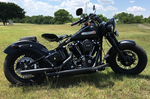
I'm going to speculate that since the 'stock' size on your bike is a 130/90HB-16
that you have a mid-glide so you could theoretically run a larger 19-21" rim with
a 3" rim width.
Now finding a 19-21" rim in a 3" width might be a challenge, but usually
the tire profiles are a lot shorter. So maybe look for a 130 (width) tire
with perhaps a 70 or less profile & 19 diameter ? (I'm just guessing/spit-ballin this)...
good luck,
T.
that you have a mid-glide so you could theoretically run a larger 19-21" rim with
a 3" rim width.
Now finding a 19-21" rim in a 3" width might be a challenge, but usually
the tire profiles are a lot shorter. So maybe look for a 130 (width) tire
with perhaps a 70 or less profile & 19 diameter ? (I'm just guessing/spit-ballin this)...
good luck,
T.
Trending Topics
Seasoned HDF Member
Joined: Sep 2017
Posts: 12,254
Likes: 4,946
From: England
HD Forum Stories
The Best of Harley-Davidson for Lifelong Riders

7 Surprising Harley-Davidson Products that Are Not Motorcycles
Verdad Gallardo
8 Best Harley-Davidson Motorcycles Ever
Pouria Savadkouei
10 Worst Harley-Davidson Motorcycles Ever
Pouria Savadkouei
Killer Custom's Jail Break Is The Breakout That Refused to Blend In
Verdad Gallardo
Crazy Bunderbike Build Looks Amazing, But Is It Impossible to Ride?
Verdad Gallardo
Harley-Davidson Reveals Super Cool Cafe Racer Concept
Verdad Gallardo
Engraved Rebellion: Inside Bundnerbike's Glam Rock II
Verdad Gallardo
10 Motorcycles You Should Never Buy
Joe Kucinski
10 Things Harley-Davidson Needs to Fix in 2026
Verdad Gallardo



Seasoned HDF Member
Joined: Aug 2013
Posts: 6,087
Likes: 1,962
From: Somewhere on the Bourbon trail
The OP's bike is the newer Custom with the fat tires like the Forty-Eight. Me thinks the skinnier tires will most likely look a bit odd with the fat front fender, to which he'll have to raise to accommodate the 21". The current fat front tire is a 130, so a close width, like a 120/70 would be a close match. The 120/70 tire is one of the most popular sizes for a 21" wheel, as most 21" the Touring guys use is the 120/70 tire size. I know, as I have one on my King.
Last edited by RKZen; Feb 19, 2025 at 04:16 PM.