







wire tuck problem

Thread Starter
|
Tourer
Joined: Oct 2012
Posts: 274
Likes: 0
From: ga
 wire tuck problem
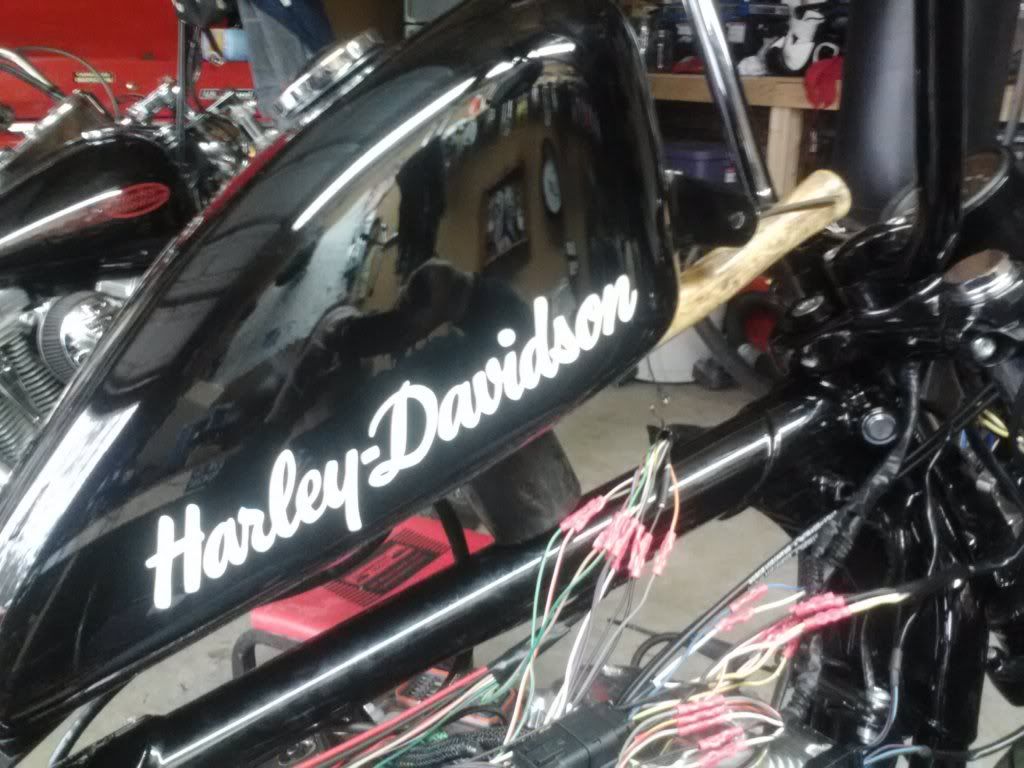
I swapped out my peanut tank for the 3 gal tank so i decided to do a wire tuck. I could see first thing that the connectors had to go. after i wired it all up, when i turned it back on the break lights and blinkers were not working!!! so now i am coming to the best resource out there.
Thread Starter
|
Tourer
Joined: Oct 2012
Posts: 274
Likes: 0
From: ga
accessory fuse blown. i swapped it and it did it again. with all these wires where do i start?
Trending Topics
Thread Starter
|
Tourer
Joined: Oct 2012
Posts: 274
Likes: 0
From: ga
how do i test the wires? the connections all look good......... i put fires out for a living so cut me a break 
HD Forum Stories
The Best of Harley-Davidson for Lifelong Riders

7 Surprising Harley-Davidson Products that Are Not Motorcycles
Verdad Gallardo
8 Best Harley-Davidson Motorcycles Ever
Pouria Savadkouei
10 Worst Harley-Davidson Motorcycles Ever
Pouria Savadkouei
Killer Custom's Jail Break Is The Breakout That Refused to Blend In
Verdad Gallardo
Crazy Bunderbike Build Looks Amazing, But Is It Impossible to Ride?
Verdad Gallardo
Harley-Davidson Reveals Super Cool Cafe Racer Concept
Verdad Gallardo
Engraved Rebellion: Inside Bundnerbike's Glam Rock II
Verdad Gallardo
10 Motorcycles You Should Never Buy
Joe Kucinski
10 Things Harley-Davidson Needs to Fix in 2026
Verdad Gallardo
Road Warrior

Joined: Oct 2012
Posts: 1,371
Likes: 46
From: In the foothills of southwestern NC - US of A
The joys of a wire tuck, eh?! I never understood it along with the tank lift, but to each their own!
Anyway, a blown fuse means you have a dead short to ground or there's been the introduction of another source to this circuit therefore adding more amps and overloading the fuse that protects the circuit. In this case it has to do with the "accessory fuse" circuit...and this "rogue source/circuit" might very well be the brake and turn signal circuit, as them not working was your first clue of a problem. You must identify the wire from this "accessory fuse" in the fuse panel following it outward and try to determine where the problem is or where it comes across the brake/taillight circuit...perhaps you pinched this/these wire[s] somewhere, the lighting is bad in your garage and you spliced the black wire with the magenta stripe to a black wire with a pink stripe [I just picked those colors out of my head, they are not referencing anything], you somehow have it connected to ground, or one circuit could be backfeeding another? I have come across many a situation where a circuit doesn't have proper ground [ie., lighting circuits due to corroded fixtures, etc.] and during it's search for ground the signal ends up powering another circuit or light. It's the oddest thing until you learn to recognize the signs.
I see that you cut off the wires from each connector right at the connector...was this to save wire length during reassembly? And butt connectors? I know they're easy to use but they offer absolutely no protection from moisture and are often the cause of failures down the road that are a real pain to identify and find.
IMHO you should have located the proper pin removal tool and removed each wire from each half of the connector[s] one set at a time so there will never be the chance of a mixup, reconnecting/soldering each and using shrink tubing to seal the connections ~OR~ cut the wires 2" from each end of the connectors and then with the proper wire, solder and shrink tube in wire extensions to make up the length required. It's always a great idea to leave enough wire left coming out of the connectors, because in case something goes wrong there will always be enough wire to reconnect. Ask me how I know this!
I am first and foremost a welder/fabricator but my second job involves cutting new/old trucks in half to either shorten or lengthen the chassis, move rear axles and undertake wheelbase changes, mounting truck bodies and undertaking a crapload of electrical installations and fixes. And every repair I do on wiring that involves any type of splicing gets the proper twist/solder/shrink tube routine, as there simply is no other method that will provide a better weatherproof and positive electrical connection outside of a weatherproof terminal/splice box.
My suggestion to you is to go over each and every connection again, making sure the colors of each wire are a perfect match [my old leadman was colorblind and had a bitch of a time when having to look through a bundle of 48 22g wires on a main Jap cabover truck harness to identify the one he was looking for] and hopefully you will find the problem. If not, as stated earlier, look for a pinched wire making ground. Then if you still can't find it you must locate the schematic for your bike and have someone who knows what they're looking at help you locate and identify each circuit until you find the culprit.
Oh, and if you know anybody with a Power Probe and knows how to use it, it is a great tool and will help locate the source of your issue.
Best wishes.
=8^)
Anyway, a blown fuse means you have a dead short to ground or there's been the introduction of another source to this circuit therefore adding more amps and overloading the fuse that protects the circuit. In this case it has to do with the "accessory fuse" circuit...and this "rogue source/circuit" might very well be the brake and turn signal circuit, as them not working was your first clue of a problem. You must identify the wire from this "accessory fuse" in the fuse panel following it outward and try to determine where the problem is or where it comes across the brake/taillight circuit...perhaps you pinched this/these wire[s] somewhere, the lighting is bad in your garage and you spliced the black wire with the magenta stripe to a black wire with a pink stripe [I just picked those colors out of my head, they are not referencing anything], you somehow have it connected to ground, or one circuit could be backfeeding another? I have come across many a situation where a circuit doesn't have proper ground [ie., lighting circuits due to corroded fixtures, etc.] and during it's search for ground the signal ends up powering another circuit or light. It's the oddest thing until you learn to recognize the signs.
I see that you cut off the wires from each connector right at the connector...was this to save wire length during reassembly? And butt connectors? I know they're easy to use but they offer absolutely no protection from moisture and are often the cause of failures down the road that are a real pain to identify and find.
IMHO you should have located the proper pin removal tool and removed each wire from each half of the connector[s] one set at a time so there will never be the chance of a mixup, reconnecting/soldering each and using shrink tubing to seal the connections ~OR~ cut the wires 2" from each end of the connectors and then with the proper wire, solder and shrink tube in wire extensions to make up the length required. It's always a great idea to leave enough wire left coming out of the connectors, because in case something goes wrong there will always be enough wire to reconnect. Ask me how I know this!
I am first and foremost a welder/fabricator but my second job involves cutting new/old trucks in half to either shorten or lengthen the chassis, move rear axles and undertake wheelbase changes, mounting truck bodies and undertaking a crapload of electrical installations and fixes. And every repair I do on wiring that involves any type of splicing gets the proper twist/solder/shrink tube routine, as there simply is no other method that will provide a better weatherproof and positive electrical connection outside of a weatherproof terminal/splice box.
My suggestion to you is to go over each and every connection again, making sure the colors of each wire are a perfect match [my old leadman was colorblind and had a bitch of a time when having to look through a bundle of 48 22g wires on a main Jap cabover truck harness to identify the one he was looking for] and hopefully you will find the problem. If not, as stated earlier, look for a pinched wire making ground. Then if you still can't find it you must locate the schematic for your bike and have someone who knows what they're looking at help you locate and identify each circuit until you find the culprit.
Oh, and if you know anybody with a Power Probe and knows how to use it, it is a great tool and will help locate the source of your issue.
Best wishes.
=8^)
Last edited by DrewBone; Dec 16, 2012 at 04:05 PM.