



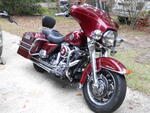

Need help with repairing my batwing!

Thread Starter
|
Novice
Joined: Oct 2020
Posts: 16
Likes: 2
From: Toronto, Canada

where would be the best place to look up the prep method to this? i mean what type of sand paper to use. I recall doing some body work a while back on my truck and i came across a site that broke down the stages.

Stellar HDF Member


Joined: Sep 2009
Posts: 3,351
Likes: 1,936
From: Formerly Tampa Bay, FL, Currently Western PA
The question is how much are you paying for the vinyl wrap? When I've looked into Vinyl wraps for cars, I was very surprised at how expensive they are - as much or more than a paintjob in some cases. Where I'm going with this is, if the vinyl wrap is very expensive, don't waste the money putting it one a repaired fairing. However, if it's cheap, then go for it and if its an issue later you can replace the fairing and have it matched later.
Now, if we go with fixing the fairing then wrapping it, I'd be afraid that any filler, even when well sanded, is going to show through the vinyl. I think it would have to be fully prepped for paint, then actually painted and buffed to a full shine, otherwise you'd see the texture through the vinyl. That's just what I THINK though, I have no experience with this. But, some good questions to ask your wrapper and I'd hope they would know
Good luck!
Now, if we go with fixing the fairing then wrapping it, I'd be afraid that any filler, even when well sanded, is going to show through the vinyl. I think it would have to be fully prepped for paint, then actually painted and buffed to a full shine, otherwise you'd see the texture through the vinyl. That's just what I THINK though, I have no experience with this. But, some good questions to ask your wrapper and I'd hope they would know
Good luck!
Elite HDF Member
Joined: Nov 2010
Posts: 3,846
Likes: 173
From: Simi Valley, CA
I'm an old painter.
What that looks like to me is excessive paint film thickness and the resulting cracking because of that thickness. Included in the overall film thickness could be any or all of the following... primer surfacers, glazing putties, sealers, color and clear coats.
There is also the possibility that the cracks are originating in the substrate (stress cracks). The only way to determine this is to strip the finish down to the substrate and inspect the substrate.
If it were me I'd start by stripping the finish. The easiest way of stripping the finish from non-metallic surfaces, like the one here, is by carefully sandblasting. You could do it with conventional sanding but that's going to be extremely labor-intensive. If going that route I'd start with something like 40 grit and work my up from there. Chemical strippers are not a good choice, especially if the substrate material is ABS.
Once the finish is stripped and you can determine the condition of the substrate, you should be able to determine what next steps are needed.
What that looks like to me is excessive paint film thickness and the resulting cracking because of that thickness. Included in the overall film thickness could be any or all of the following... primer surfacers, glazing putties, sealers, color and clear coats.
There is also the possibility that the cracks are originating in the substrate (stress cracks). The only way to determine this is to strip the finish down to the substrate and inspect the substrate.
If it were me I'd start by stripping the finish. The easiest way of stripping the finish from non-metallic surfaces, like the one here, is by carefully sandblasting. You could do it with conventional sanding but that's going to be extremely labor-intensive. If going that route I'd start with something like 40 grit and work my up from there. Chemical strippers are not a good choice, especially if the substrate material is ABS.
Once the finish is stripped and you can determine the condition of the substrate, you should be able to determine what next steps are needed.
Thread Starter
|
Novice
Joined: Oct 2020
Posts: 16
Likes: 2
From: Toronto, Canada
The question is how much are you paying for the vinyl wrap? When I've looked into Vinyl wraps for cars, I was very surprised at how expensive they are - as much or more than a paintjob in some cases. Where I'm going with this is, if the vinyl wrap is very expensive, don't waste the money putting it one a repaired fairing. However, if it's cheap, then go for it and if its an issue later you can replace the fairing and have it matched later.
Now, if we go with fixing the fairing then wrapping it, I'd be afraid that any filler, even when well sanded, is going to show through the vinyl. I think it would have to be fully prepped for paint, then actually painted and buffed to a full shine, otherwise you'd see the texture through the vinyl. That's just what I THINK though, I have no experience with this. But, some good questions to ask your wrapper and I'd hope they would know
Good luck!
Now, if we go with fixing the fairing then wrapping it, I'd be afraid that any filler, even when well sanded, is going to show through the vinyl. I think it would have to be fully prepped for paint, then actually painted and buffed to a full shine, otherwise you'd see the texture through the vinyl. That's just what I THINK though, I have no experience with this. But, some good questions to ask your wrapper and I'd hope they would know
Good luck!
Thread Starter
|
Novice
Joined: Oct 2020
Posts: 16
Likes: 2
From: Toronto, Canada
I'm an old painter.
What that looks like to me is excessive paint film thickness and the resulting cracking because of that thickness. Included in the overall film thickness could be any or all of the following... primer surfacers, glazing putties, sealers, color and clear coats.
There is also the possibility that the cracks are originating in the substrate (stress cracks). The only way to determine this is to strip the finish down to the substrate and inspect the substrate.
If it were me I'd start by stripping the finish. The easiest way of stripping the finish from non-metallic surfaces, like the one here, is by carefully sandblasting. You could do it with conventional sanding but that's going to be extremely labor-intensive. If going that route I'd start with something like 40 grit and work my up from there. Chemical strippers are not a good choice, especially if the substrate material is ABS.
Once the finish is stripped and you can determine the condition of the substrate, you should be able to determine what next steps are needed.
What that looks like to me is excessive paint film thickness and the resulting cracking because of that thickness. Included in the overall film thickness could be any or all of the following... primer surfacers, glazing putties, sealers, color and clear coats.
There is also the possibility that the cracks are originating in the substrate (stress cracks). The only way to determine this is to strip the finish down to the substrate and inspect the substrate.
If it were me I'd start by stripping the finish. The easiest way of stripping the finish from non-metallic surfaces, like the one here, is by carefully sandblasting. You could do it with conventional sanding but that's going to be extremely labor-intensive. If going that route I'd start with something like 40 grit and work my up from there. Chemical strippers are not a good choice, especially if the substrate material is ABS.
Once the finish is stripped and you can determine the condition of the substrate, you should be able to determine what next steps are needed.

Seasoned HDF Member


Joined: May 2012
Posts: 32,934
Likes: 36,032
From: Carlsbad, CA
Even to most minute imperfection shows up bad with a wrap. Plus a wrap,is designed to stick to paint, not bondo it primer. I’d ask whoever is doing the wrap, what they recommend.
BTW..how the heck does a fairing fall off?
BTW..how the heck does a fairing fall off?
HD Forum Stories
The Best of Harley-Davidson for Lifelong Riders
6 Weirdest Harley-Davidsons Ever Sold to the Public
Verdad Gallardo
7 Times Harley-Davidson Chucked Tradition Out the Window
Verdad Gallardo
7 Surprising Harley-Davidson Products that Are Not Motorcycles
Verdad Gallardo
8 Best Harley-Davidson Motorcycles Ever
Pouria Savadkouei
10 Worst Harley-Davidson Motorcycles Ever
Pouria Savadkouei
Killer Custom's Jail Break Is The Breakout That Refused to Blend In
Verdad Gallardo
Crazy Bunderbike Build Looks Amazing, But Is It Impossible to Ride?
Verdad Gallardo
Harley-Davidson Reveals Super Cool Cafe Racer Concept
Verdad Gallardo
Engraved Rebellion: Inside Bundnerbike's Glam Rock II
Verdad Gallardo
Seasoned HDF Member


Joined: Dec 2017
Posts: 5,077
Likes: 3,293
From: Plover, WI
Judging from the pics, I'd say that's gelcoat applied over fiberglass. Fairly common to see those exact types of stress cracks on boats. Google is your friend for repair techniques specific to gelcoat over fiberglass.

Stellar HDF Member
Joined: Jan 2017
Posts: 2,690
Likes: 2,089
From: Massachusetts
Not with more than 3 bolts to hold the windshield in place! That is aftermarket.
Like this: https://www.recklessmotorcycles.com/roadking.html
Like this: https://www.recklessmotorcycles.com/roadking.html
Last edited by jake24lt; Nov 11, 2020 at 10:22 AM.