When you click on links to various merchants on this site and make a purchase, this can result in this site earning a commission. Affiliate programs and affiliations include, but are not limited to, the eBay Partner Network.
I just finish my 128 big bore kit and was going to get the bike dyno tuned but after giving it some thought I decided to pull the trigger on the dyno jet Target Tune with wide band sensors. already have Powervision . Reason being I’ll most likely make changes to the bike and didn’t want to have to go back to a tuner and spend all that money.
Heard good things about TT but does anyone else have experience with it? Curious if there is any recommendations or tips/tricks to get the bike as closest to a professional dyno tune and getting most power out of the 128 kit.
It works well and does a great job dialing in the AFR. In auto tune mode, it's generally exactly what is done on the dyno, and in fact I prefer the target tune map to the standard pro tune maping. The pro tune (what most people typically use on the dyno) changes all the AFR tables to 13:1, uses that as a target and calculates the correction to the value in the table. The target tune auto tune uses the table value AFR and tunes to that, not having to do the conversion from 13:1, if that makes sense.
It won't dial in your timing tables, but you can look at logs for timing being pulled and listen for detonation and get it pretty close.
I have bikes with TT and bikes without it. I have a dyno, so I have seen how accurate it can be. I guess what I'm getting at is, if you take your time and perform the process intelligently, there isn't much to gain on the dyno, probably not enough that you would ever notice. One thing I have seen though, is the Target Tune want's to keep the bike richer than I like at WOT, so that I always needed to dial in the tables using the logging when street tuning.
It works well and does a great job dialing in the AFR. In auto tune mode, it's generally exactly what is done on the dyno, and in fact I prefer the target tune map to the standard pro tune maping. The pro tune (what most people typically use on the dyno) changes all the AFR tables to 13:1, uses that as a target and calculates the correction to the value in the table. The target tune auto tune uses the table value AFR and tunes to that, not having to do the conversion from 13:1, if that makes sense.
It won't dial in your timing tables, but you can look at logs for timing being pulled and listen for detonation and get it pretty close.
I have bikes with TT and bikes without it. I have a dyno, so I have seen how accurate it can be. I guess what I'm getting at is, if you take your time and perform the process intelligently, there isn't much to gain on the dyno, probably not enough that you would ever notice. One thing I have seen though, is the Target Tune want's to keep the bike richer than I like at WOT, so that I always needed to dial in the tables using the logging when street tuning.
This is great and very helpful thank you for the response!
It works well and does a great job dialing in the AFR. In auto tune mode, it's generally exactly what is done on the dyno, and in fact I prefer the target tune map to the standard pro tune maping. The pro tune (what most people typically use on the dyno) changes all the AFR tables to 13:1, uses that as a target and calculates the correction to the value in the table. The target tune auto tune uses the table value AFR and tunes to that, not having to do the conversion from 13:1, if that makes sense.
It won't dial in your timing tables, but you can look at logs for timing being pulled and listen for detonation and get it pretty close.
I have bikes with TT and bikes without it. I have a dyno, so I have seen how accurate it can be. I guess what I'm getting at is, if you take your time and perform the process intelligently, there isn't much to gain on the dyno, probably not enough that you would ever notice. One thing I have seen though, is the Target Tune want's to keep the bike richer than I like at WOT, so that I always needed to dial in the tables using the logging when street tuning.
I was just watching a social media video from Matt @thosedynoguys. He disagrees and says that the TT is only acceptable if there is not a Dyno near. But what does he know, just a social media guy. https://fb.watch/pw09CCDYZd/
Last edited by Fireball Jack; Jan 11, 2024 at 01:52 PM.
I was just watching a social media video from Matt @thosedynoguys. He disagrees and says that the TT is only acceptable if there is not a Dyno near. But what does he know, just a social media guy. https://fb.watch/pw09CCDYZd/
Wondering if you have ever tuned a bike before?
I don't disagree with what he said. But you need to understand that all the Target Tune module does is adjust the A/F ratio to what you command in the tuning file. No, it does not change the throttle blade control settings, or the timing tables, or the enrichment tables, or the deceleration enleanment, or the knock settings or the or the other half a dozen things you can change.
However, for the enthusiast tuner, you can get a "baseline" map from a reputable company, such as Fuel Moto, and you will have a starting point that will generally be pretty darn close to where you would end up after a competent dyno tune, with the exception of the VE tables. And those VE tables can absolutely, 100% be corrected by the Target Tune module.
Once your engine is put together to the point you are not changing anything component wise, there are only 2 things you can adjust to make changes in it's HP output. The fuel ratio and the spark timing. Period.
Will all those other settings affect how the engine runs, ABSOLUTELY. And they need to be adjusted and tweaked. But if you take the time to understand what they do, what effect it has on the engine, and get some direction from previously created tune files, you can have perfectly running machine, without putting it on the dyno. A dynomometer can only do 2 things. It can measure HP to see if a change you make increases or decreases the power output, and it can safely simulate the operating conditions the motorcycle/engine will be put in. It's not a magic machine, it's just a tool. A tool that can greatly speed up the process of dialing in the air fuel ratio. (by holding RPM of the engine steady to quickly and consistently be able to cycle through the map cells allowing corrective data to be captured) And, a tool that will tell you if the timing changes you made increased or decreased the power output.
A dyno does not, however, tell you if you are getting detonation, if the ECU is pulling timing, etc, you still need to understand how to find and decipher that information. Which, you can do, again, on your own, with a Powervision/Target Tune Module and the ability to look at a spreadsheet.
I think what people don't realize is what the Target Tune module was really intended to do. It is a wideband sensor kit that stays on the bike to make closed loop corrections to the A/F ratio, just like the factory O2 sensors, but at all positions within the map, not just in cruising areas (such as the factory system). You still need to have a proper tune in the ECM. The Target Tuner has a mode that will make permanent corrections to the map VE tables. When you tune a bike on the dyno, you use the same exact mode to make the corrections and build your VE tables.
Another option for using broadbands for tuning is using SE Smartune Pro with the TTS. You don't need a special calibration as the "switch" is only flipped when you program the map. Clicking either tab will set all the parameters for you.
Then when you are collecting vtune data just select the proper o2 sensor.
This will give you the wider range of the broadbands to get all the areas you can reach. Then I believe you can remove the Smart Tune Pro as it's not married to the bike, and then use the stock narrow bands which are much faster and accurate to finish the tune. Just another of many reasons the TTS is the top tuner imho.
I wish I knew how to tune, if only to check my bike, to see if it is operating within optimum parameters.
These threads provide great reading, and are very informative. Thanks for sharing guys.
I'm beginning to understand better about how the modern HD engine operates.
Harley-Davidson Fat Boy Becomes a Dark, Decepticon-Inspired Custom
Slideshow: Killer Custom's latest build relies on styling changes rather than performance upgrades, giving the cruiser an entirely different personality.
7 Surprising Harley-Davidson Products that Are Not Motorcycles
Slideshow: The bar-and-shield logo shows up on far more than motorcycles, some of the company's most unexpected products have nothing to do with riding.
Slideshow: From the troubled AMF years to modern misfires, these bikes earned reputations for reliability issues, questionable engineering, or disappointing performance.
Crazy Bunderbike Build Looks Amazing, But Is It Impossible to Ride?
Slideshow: The Swiss custom shop has taken a Harley Softail and stretched it into something so long and low that it looks closer to a rolling sculpture than a conventional motorcycle.
Engraved Rebellion: Inside Bundnerbike's Glam Rock II
Slideshow: A standard cruiser becomes an intricate metal canvas in the hands of a Swiss custom house known for pushing Harley-Davidson platforms far beyond their factory brief.




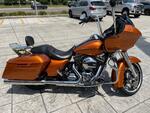



 waiting for gunner


 Target Tune