When you click on links to various merchants on this site and make a purchase, this can result in this site earning a commission. Affiliate programs and affiliations include, but are not limited to, the eBay Partner Network.
Someone suggested that trick for my straight pipes back in '83ish on my shovelhead.
I thought he was a loon.....
Didn't learn he was smarter than me for some years....
It’s the reason the uneducated uninformed people say open or drag pipes run poorly on the street. A properly tuned (length diameter) drag pipe with something to counter reversion is an excellent pipe for a Harley street bike.
I roll my eyes with the negative Nancy’s that run there mouth saying they tried drag pipes and they suck (like you S&S video… guys a moron) you can’t stick some stupid chopper craze 20” long cut off drag pipes on a bike and make it run.. so then you assume all drag pipes are bad and walk out with the S&S clown and throw them in the dumpster so you can sell your dumb one size only fits one size 2 into 1 pipe.
Generally the right drag pipe on the street for an 80 to 88” motor will be a 1 3/4 diameter 32 to 40 inch long set of equal length pipes. A high compression 96-113 is on the fence with 1 3/4 to 2 inch diameter and over 113 inch motors NEED a 2 inch diameter pipe. I’ve even seen high compression 98 inch shovels benefit from 2 inch diameter pipes before.
Last edited by Rains2much; Feb 18, 2026 at 09:10 AM.
I’ve done something similar with a washer. Guess I’ll give this one a try. Thank you
The best is probably the DK Customs Thunder torque inserts. I doubt my thumb screw vs a welded washer is any difference. In fact a straight bolt through helps. Hot Bike did this massive exhaust pipe shoot out back in the day and consistently minimized the dip on all drag pipes tested just but holding a pencil at the end of the pipe during the dyno pull.
Someone suggested that trick for my straight pipes back in '83ish on my shovelhead.
I thought he was a loon.....
Didn't learn he was smarter than me for some years....
Does anyone remember these?
The 305.4 cc (18.64 cu in) overhead cam engine had a redline of 9000 rpm and contrasted sharply from the low-revving European and American bikes of the day. Running straight pipes with small internal baffles, CL77s featured a loud and very distinct sound from the 180 degree firing order of this parallel twin. Manyof these motorcycles featured aftermarket snuff-or-nots (commonly misspoken as "snuffer nuts"), which featured a flat washer like piece of metal which pivoted just inside the tips of the exhaust pipes to quiet or increase the sound of the exhaust at any time during operation simply by twisting the external ****.
In later years Honda joined the end of the exhaust pipes with an external factory installed muffler to control exhaust noise. At first it was slipped on and clamped. Later models came with only one of the twin side pipes welded onto the slip-on muffler. The last version came with both pipes welded to the slip-on muffler.
Image and text from Wikipedia.
They really did sound great!
Last edited by Beartooth Rider; Feb 18, 2026 at 09:56 AM.
The 305.4 cc (18.64 cu in) overhead cam engine had a redline of 9000 rpm and contrasted sharply from the low-revving European and American bikes of the day. Running straight pipes with small internal baffles, CL77s featured a loud and very distinct sound from the 180 degree firing order of this parallel twin. Manyof these motorcycles featured aftermarket snuff-or-nots (commonly misspoken as "snuffer nuts"), which featured a flat washer like piece of metal which pivoted just inside the tips of the exhaust pipes to quiet or increase the sound of the exhaust at any time during operation simply by twisting the external ****.
In later years Honda joined the end of the exhaust pipes with an external factory installed muffler to control exhaust noise. At first it was slipped on and clamped. Later models came with only one of the twin side pipes welded onto the slip-on muffler. The last version came with both pipes welded to the slip-on muffler.
Image and text from Wikipedia.
They really did sound great!
Growing up that was my best friends starter bike. He still has it to this day.
Back on topic, the reversion problem with open exhaust gets conflated with back pressure.
Back pressure does mitigate reversion, but there will still be a loss of torque at lower RPM.
Regarding the need for a tuner, intuitively we should all want to run the correct Air/Fuel Ratio and Ignition Timing in our builds.
…. Or set timing by mph through the traps.. and a altoid can of jets.
No 3 week waiting list, load on a truck, drive an hour, wait.. pay $350-$550.. load, drive home and then be held hostage if you wanna try different pipes or a cam.. just throwing it out there.
I learned everything I know about EFI (not much), street tuning my 2010 Ultra Limited.
These days I have a Master Tech that has earned my complete confidence, and I just rely on him.
Yep I started with a 2010 Ultra Classic and the original unlocked Super Tuner. Built a basic tune that ran decent, then got a V&H FP3 because I wanted to calibrate the speedo and used that SE tune as a base for the FP3 to auto tune. That cleaned it up even more. I was impressed with the user friendliness of that FP3. Really seemed like a do it yourself basic tune. Don't know if such critters exist for the M8s or not.
Slideshow: Jason Momoa's latest restoration project blends 1920s Harley-Davidsons with modern electric technology, creating some of the most unusual hybrid motorcycles ever built.
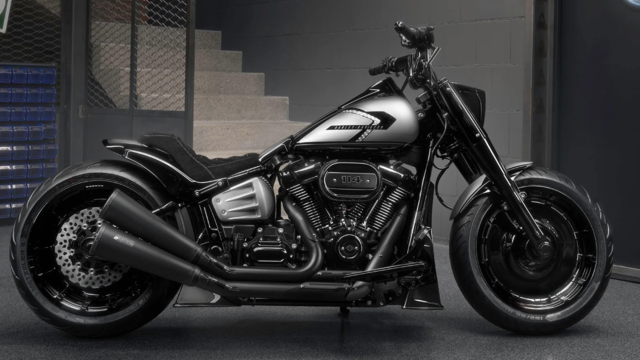
Harley-Davidson Fat Boy Becomes a Dark, Decepticon-Inspired Custom
Slideshow: Killer Custom's latest build relies on styling changes rather than performance upgrades, giving the cruiser an entirely different personality.
7 Surprising Harley-Davidson Products that Are Not Motorcycles
Slideshow: The bar-and-shield logo shows up on far more than motorcycles, some of the company's most unexpected products have nothing to do with riding.
Slideshow: From the troubled AMF years to modern misfires, these bikes earned reputations for reliability issues, questionable engineering, or disappointing performance.
Crazy Bunderbike Build Looks Amazing, But Is It Impossible to Ride?
Slideshow: The Swiss custom shop has taken a Harley Softail and stretched it into something so long and low that it looks closer to a rolling sculpture than a conventional motorcycle.