






Check Your Spokes

Thread Starter
|
Cruiser
Joined: Apr 2007
Posts: 157
Likes: 3
 Check Your Spokes
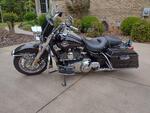
I recently experianced some rear end drifting and wobbling in turns when riding at high speeds (last 1,500 miles). Something I haven't experianced in the first 14,000 miles on my 07 RKC. I figureed the bike wasn't as tight as it was when brand new...and I was tring to make it do things beyond it's ability. I did need a new rear tire and thought that was also contribruting to the bike not tracking as strait. This week, at 16,000 mile I replaced the rear tire (I'm now on my 3rd). Today I went for a long ride and the handling is back...like it was when new. The dealer said when he replaced the rear tire I had a lot of spokes that needed to be adjusted. That was the problem. No drifting or wobble. So, keep those spokes properly adjusted...I was surprised how much of a difference it did make.

Elite HDF Member
Joined: Mar 2006
Posts: 4,722
Likes: 5
From: Biddeford, Maine
That is why a friend of mine is getting rid of his rear spoke wheel and going with a cast wheel.
He's keeping the spokes in the front, but the rear will be cast. Can't see the rear wheel much anyhow on a bagger, so most people won't even notice it.
Steve
He's keeping the spokes in the front, but the rear will be cast. Can't see the rear wheel much anyhow on a bagger, so most people won't even notice it.
Steve

Road Warrior
Joined: Apr 2008
Posts: 1,266
Likes: 7
From: Indianapolis
I must admit that the spoked wheels on my RKC make me a bit nervous. I don't expect a catastrophic failure or anything like that, but I do wonder about fixing a flat road side and also loosening spokes.

Cruiser
Joined: Sep 2006
Posts: 237
Likes: 0
From: San Antonio, TX.
It seems that there should be a known regular interval of when to check the spokes, the same as intervals have been established for other items on the bike. It was about 14000 miles for Dan, but Is it always 14k ...?
Trending Topics

Road Warrior
Joined: Nov 2007
Posts: 1,285
Likes: 0
From: Olympia Wa.
not wanting to sound to much like a smartazz, but some people should use thier owners manual for something other than a DRINK COASTER!!
Spoke adjustment is covered in the owners, AND maintenance manual, two books that you shouldn't be without when owning and operating a bike. And DON"T blame the dealer for not checking them on the service, YOU are ultimately responsible for the SAFE operation of YOUR bike.
ATC2, I am not saying this directly to you, but to everyone in general who blames someone else because thier bike doesn't ride correctly due to poor maintenance.
Spoke adjustment is covered in the owners, AND maintenance manual, two books that you shouldn't be without when owning and operating a bike. And DON"T blame the dealer for not checking them on the service, YOU are ultimately responsible for the SAFE operation of YOUR bike.
ATC2, I am not saying this directly to you, but to everyone in general who blames someone else because thier bike doesn't ride correctly due to poor maintenance.
HD Forum Stories
The Best of Harley-Davidson for Lifelong Riders

7 Surprising Harley-Davidson Products that Are Not Motorcycles
Verdad Gallardo
8 Best Harley-Davidson Motorcycles Ever
Pouria Savadkouei
10 Worst Harley-Davidson Motorcycles Ever
Pouria Savadkouei
Killer Custom's Jail Break Is The Breakout That Refused to Blend In
Verdad Gallardo
Crazy Bunderbike Build Looks Amazing, But Is It Impossible to Ride?
Verdad Gallardo
Harley-Davidson Reveals Super Cool Cafe Racer Concept
Verdad Gallardo
Engraved Rebellion: Inside Bundnerbike's Glam Rock II
Verdad Gallardo
10 Motorcycles You Should Never Buy
Joe Kucinski
10 Things Harley-Davidson Needs to Fix in 2026
Verdad Gallardo
Thread Starter
|
Cruiser
Joined: Apr 2007
Posts: 157
Likes: 3
It seems I will need a rear tire every 7,500-8,000 miles, based on my bike and riding style; If in the future I adjust them at every tire change I shouldn't experience an out of tune rear rim any more.
I like the classic look of spokes...they just fit my idea of what a motorcycle should be and look like. If you do the maintance; good tires; good tubes; you won't have any problems. I been riding on spokes for over 30 years on many bikes and only had one flat...the spokes didn't have anything to do with.
It would a lot less hassle if on a trip to just plug a tubeless tire and be on your way but hey, that's part of the adventure of touring on two wheels.
I like the classic look of spokes...they just fit my idea of what a motorcycle should be and look like. If you do the maintance; good tires; good tubes; you won't have any problems. I been riding on spokes for over 30 years on many bikes and only had one flat...the spokes didn't have anything to do with.
It would a lot less hassle if on a trip to just plug a tubeless tire and be on your way but hey, that's part of the adventure of touring on two wheels.

Extreme HDF Member
Joined: Sep 2006
Posts: 10,033
Likes: 29
Been there. Done that. My spokes first loosened up at 31k. The second time, they loosened up at 62k. That time, I had just put the bike on a lift and checked them before leaving on a trip. 200 miles later, they loosened very quickly. That was it for me. I now have a 1200C wheel outback.