







Here's My Dyno Sheet
Outstanding HDF Member
Joined: Oct 2007
Posts: 3,437
Likes: 15

I also see that there were only 5 runs made so even tho your afr looks good you probably have more hidden with timing etc. Correction factor fairly high so I am betting at elevation. I see temp was high to.

Road Captain
Joined: Sep 2006
Posts: 530
Likes: 0
From: Texas
I had hoped for more power and attribute the loss to the TD's and the 255's for dropping off at the end. I believe a 2-1 exhaust would have done me best but just love the looks of the TD's.
I just like power and wanted more but she takes off well and runs flawlessly.
I'd be interested in your comments about the outcome.
I just like power and wanted more but she takes off well and runs flawlessly.
I'd be interested in your comments about the outcome.
08 Ultra w/ V&H TDs & Ovals, SERT, 103, & 255's. Power = 83, Torque = 100. The main difference is that my torque does not peak till about 3800 rpms.
I am very pleased with the performance so far. Due to the weather, holiday trips, etc., I have had only one short ride of about 100 miles. My primary concern with this build is getting a nice boost in performance while maintaining my open road cruising mpg. Initial indications are good, but I'll need more miles under my belt to know for sure. Dyno numbers can look good, but mileage can go into the toilet if not properly tuned.
Last edited by Crusing; Jan 6, 2010 at 06:49 PM.
Elite HDF Member
Joined: Oct 2006
Posts: 4,128
Likes: 27
From: florida swamp
you want 150lbs of torque?
Buy a rocket III touring. Less $ and complete power train is built to handle the power.
As already said, **** can that dyno sheet or maybe use it for an oil rag.
Buy a rocket III touring. Less $ and complete power train is built to handle the power.
As already said, **** can that dyno sheet or maybe use it for an oil rag.
What city in Id. was the dyno? What elevation? Last year myself and two buddies had our bikes dynoed on a 250i at 3400 feet elevation and then drove to Latus Motors in Or. (sea level) and had them dynoed again on a 250i. Guess what we all made more power at sea level. Correction factor at sea level was 1.01 and around 1.15 at elevation. Even tho the correction factor is supposed to correct for elevation it really did not. Buddy that has a 117" made around 15/15 less at elevation, other buddy 95, 37 cams made 98 hp/103 tq at sea level and at elevation was 94/84. my hp was close but my torq was 6 fl/lbs higher at sea level. So even tho dyno 250's are supposed to be consistent they are not.
__________________

Jamie Long / Fuel Moto USA
The USA's Leader V-Twin EFI & Performance www.fuelmotousa.com
Contact 920-423-3309
Email jamie@fuelmotousa.com
Jamie Long / Fuel Moto USA
The USA's Leader V-Twin EFI & Performance www.fuelmotousa.com
Contact 920-423-3309
Email jamie@fuelmotousa.com
Last edited by fuelmoto; Jan 6, 2010 at 11:56 AM.
Outstanding HDF Member
Joined: Oct 2007
Posts: 3,437
Likes: 15
fuelmoto you are correct I should have worded it differently. I just figured that it would be easier to understand. Most don't under stand about the air quality. Portland is blessed with good air for making good numbers. My location has air conditions (no meaning pollution) that is hard to make the same numbers even tho both use 250i's.
That's nearly identical to what I got out of mine after the 103 upgrade with 203 cams. The only difference between your torque curve and mine is the slight dip around 2000 rpm. I have the Bub 7 TD's also and my peak numbers were 85hp and 104 ft/lbs. Don't have the sheet handy, but as I recall the torque peaked around 3500 rpm and hp peaked around 5000 rpm. I had hoped for about 10 more hp out of it. But those numbers seem to be typical for that build. I'd prefer my torque peak to be closer to where yours is. That would put it closer to normal cruising rpm since I usually run between 2500-3000 when cruising. I was told head work would get the hp numbers up closer to what I was expecting. Gotta leave something on the table for future upgrades right?

Tourer
Joined: Jan 2008
Posts: 349
Likes: 1
From: Milford, Kansas
Sir, does your 103" upgrade include headwork; or is it just cylender bore, piston and upgrade cam?
HD Forum Stories
The Best of Harley-Davidson for Lifelong Riders

7 Surprising Harley-Davidson Products that Are Not Motorcycles
Verdad Gallardo
8 Best Harley-Davidson Motorcycles Ever
Pouria Savadkouei
10 Worst Harley-Davidson Motorcycles Ever
Pouria Savadkouei
Killer Custom's Jail Break Is The Breakout That Refused to Blend In
Verdad Gallardo
Crazy Bunderbike Build Looks Amazing, But Is It Impossible to Ride?
Verdad Gallardo
Harley-Davidson Reveals Super Cool Cafe Racer Concept
Verdad Gallardo
Engraved Rebellion: Inside Bundnerbike's Glam Rock II
Verdad Gallardo
10 Motorcycles You Should Never Buy
Joe Kucinski
10 Things Harley-Davidson Needs to Fix in 2026
Verdad Gallardo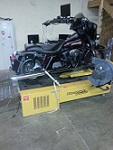
Your lines look pretty typical for your build, your torque wouldn't have that dip in it with a 2 - into 1. Your A/F looks prety good,it could use a bit of tweaking here and there but it wouldn't gain you anything. You have to realize one thing about a dyno, it is a tool to tune your bike. The print out you are looking at is for 1 cylinder at 100% throttle, it doesn't give the overall picture. Your other cylinder could be way off as far as A/F goes. I could take the same build and tune the 100% T.P. in 10 mins, doesn't mean the rest of the TP's are tuned properly

Thread
Thread Starter
Forum
Replies
Last Post
