


Road King "Float"

Seasoned HDF Member


Joined: Jan 2006
Posts: 11,477
Likes: 3,006
From: Charleston, SC

I have had the complete opposite situation. 6 weeks old and 950 miles on it and the thing is jolting the hell out of me on almost every bump. I have rode solo with 25 psi and 16psi in the rear shocks and both times its the same...Hard as hell! Its even getting a worsening knock from somewhere under the tank. Shes in getting her first check up so hopefully when they call back I wont hear "We couldnt get it to make that sound", but they probably will!
Put a bunch of air in your shocks. The difference is noticeable. I too ran low air pressure for years thinking you'll get a "softer" ride... wrong. The rear will slam up and bottom out causing a rough ride. The fix for me was putting 40 pounds in there.
lp
Road Warrior
Joined: Nov 2007
Posts: 1,800
Likes: 307
From: Houston, Texas
Float?? It is a touring bike and is supposed to be a smooth soft ride. If it's "floating" at higway speeds, that sounds like a smooth, sweet, comfortable ride to me.
I love the way my RKC rides. Mines an 08 so I can't speak for the new frames, but I run less than 20 pounds in my shocks and love the ride on the interstate. Not too soft but not too firm either. Better than a Cadillac!
I love the way my RKC rides. Mines an 08 so I can't speak for the new frames, but I run less than 20 pounds in my shocks and love the ride on the interstate. Not too soft but not too firm either. Better than a Cadillac!

Tourer
Joined: Sep 2005
Posts: 305
Likes: 1
From: pittsburgh
Remember folks, fluids don't compress. Gases do. That's why H-D uses a combination. The shock itself is liquid assisted for rebound but the absorbtion is in the air. I run my lowered FLHR (stock FLHRS) shocks at 40 min. If I add a passenger, I go to 50.
If you're feeling jarring bumps above 40 PSI you have a problem.
If you're feeling jarring bumps above 40 PSI you have a problem.

Stellar HDF Member
Joined: Dec 2009
Posts: 2,035
Likes: 8
From: Western Canada
When my front tire started to cup
it felt just like it was floating when I got up to 50 mph too. Your description sounded just like mine to the Harley dealer when I was complaining about the front tire. It may have nothing to do with your tire pressure. Check the tread wear on your tire.

Tourer
Joined: Jun 2010
Posts: 391
Likes: 0
The name shock absorber is really misleading because the shocks really are dampeners that are there to keep the tire on the road, through both compression and rebound dampening of the unsprung weight (the entire wheel, axel, swing arm, and any other components on the road side of the spring ,or in some cases torsion device).
It's the spring that makes the initial bump of a pot hole smoother, with the shocks opposing the unsprung weight's inertia to continue to movement (like the tire bouncing on and off the road until the energy of the bump is dissipated).
The sole purpose of the shock is to stop that "mechanical ringing" by using fluid to dampen out this energy, by converting it to heat.
Most shocks use different size orifices in their pistons, and one way valving to establish their individual damping rates for both compression and rebound. Some are even externally adjustable in both rates.
Adding air to a shock effectively changes the spring rate, and acts like a progressive spring.
WRT: Air in tires ..... never adjust to outside of the tire mfg's recommended pressures for a given tire with a given load, and never for comfort 'if' it puts you outside the listed pressures.
Adjusting tire pressure outside of the mfg's table (load versus pressure) is an invitation for trouble, especially if you go 'lower' than the tables recommendation.
It's not unusual for people to do that because it's intuitive to lower pressures to get a ride with les vibrations and it seems like less pressure is safer for the tire. But what happens is the side walls flex too much and that builds up heat very rapidly (like bending a coat hanger back and forth) causing the sidewall to fail which leads a sudden loss of pressure better known as ....... a total friggen blowout!!
That can really ruin a guys day ........
Tire pressures tables are available on the web by googling the mfg's name and looking for load/pressure tables for the exact tire you are running.
If in doubt, or in between the tables recommendations go to the next 'higher' spec, not lower.
WRT: floating down the freeway ...... I used to do that but now I don't smoke that stuff no more .....
I suspect the answer to your issue is in how much air you have in the shocks, as others have noted.
It's the spring that makes the initial bump of a pot hole smoother, with the shocks opposing the unsprung weight's inertia to continue to movement (like the tire bouncing on and off the road until the energy of the bump is dissipated).
The sole purpose of the shock is to stop that "mechanical ringing" by using fluid to dampen out this energy, by converting it to heat.
Most shocks use different size orifices in their pistons, and one way valving to establish their individual damping rates for both compression and rebound. Some are even externally adjustable in both rates.
Adding air to a shock effectively changes the spring rate, and acts like a progressive spring.
WRT: Air in tires ..... never adjust to outside of the tire mfg's recommended pressures for a given tire with a given load, and never for comfort 'if' it puts you outside the listed pressures.
Adjusting tire pressure outside of the mfg's table (load versus pressure) is an invitation for trouble, especially if you go 'lower' than the tables recommendation.
It's not unusual for people to do that because it's intuitive to lower pressures to get a ride with les vibrations and it seems like less pressure is safer for the tire. But what happens is the side walls flex too much and that builds up heat very rapidly (like bending a coat hanger back and forth) causing the sidewall to fail which leads a sudden loss of pressure better known as ....... a total friggen blowout!!
That can really ruin a guys day ........
Tire pressures tables are available on the web by googling the mfg's name and looking for load/pressure tables for the exact tire you are running.
If in doubt, or in between the tables recommendations go to the next 'higher' spec, not lower.
WRT: floating down the freeway ...... I used to do that but now I don't smoke that stuff no more .....
I suspect the answer to your issue is in how much air you have in the shocks, as others have noted.
Last edited by flyer91; Jun 17, 2010 at 01:02 PM.
Thread Starter
|
Advanced
Joined: Jun 2010
Posts: 84
Likes: 0
From: San Antonio, Tx
Also, checked the tires and they are a skosh above book listed pressures.
K
HD Forum Stories
The Best of Harley-Davidson for Lifelong Riders
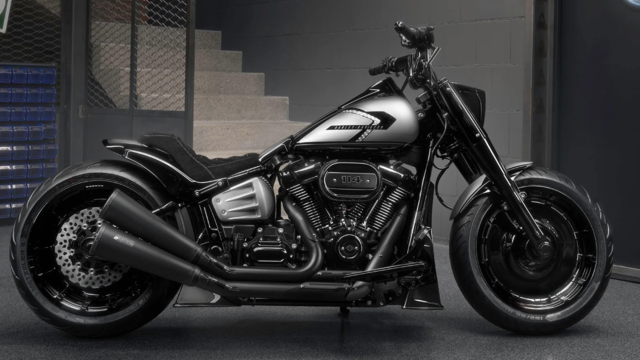
Harley-Davidson Fat Boy Becomes a Dark, Decepticon-Inspired Custom
Verdad Gallardo
6 Weirdest Harley-Davidsons Ever Sold to the Public
Verdad Gallardo
7 Times Harley-Davidson Chucked Tradition Out the Window
Verdad Gallardo
7 Surprising Harley-Davidson Products that Are Not Motorcycles
Verdad Gallardo
8 Best Harley-Davidson Motorcycles Ever
Pouria Savadkouei
10 Worst Harley-Davidson Motorcycles Ever
Pouria Savadkouei
Killer Custom's Jail Break Is The Breakout That Refused to Blend In
Verdad Gallardo
Crazy Bunderbike Build Looks Amazing, But Is It Impossible to Ride?
Verdad Gallardo
Harley-Davidson Reveals Super Cool Cafe Racer Concept
Verdad Gallardo
Road Captain
Joined: May 2009
Posts: 505
Likes: 2
Shouldn't feel unstable at that speed, mine is stable at much higher speeds than that - you have to more than double the speed until mine starts to "float" (on a racetrack obviously).
I would check everything - tire cupping, pressure, wheel alignment, air pressures in shocks, pre-load settings, fork settings etc. It may be you have something different from left side to right side also.
I would check everything - tire cupping, pressure, wheel alignment, air pressures in shocks, pre-load settings, fork settings etc. It may be you have something different from left side to right side also.