



How Many Miles Before Dyno

Stellar HDF Member


Joined: Sep 2007
Posts: 2,467
Likes: 677
From: Vancouver Island B.C.

Opinions ..... Aholes.... As the cliche goes.
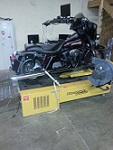
May as well break it on on the Dyno where the operator can monitor afr & temps during the process.
You can do far more damage riding an untuned motor for "x" miles than would occur in the hands of a competent tuner on a Dyno.
If you don't get the rings properly seated right from the start, you may never get the seal you could have....
But, WTF do I know...????.....
May as well break it on on the Dyno where the operator can monitor afr & temps during the process.
You can do far more damage riding an untuned motor for "x" miles than would occur in the hands of a competent tuner on a Dyno.
If you don't get the rings properly seated right from the start, you may never get the seal you could have....
But, WTF do I know...????.....
Last edited by Lonewolf176; Nov 1, 2010 at 12:40 AM.
Opinions ..... Aholes.... As the cliche goes.
May as well break it on on the Dyno where the operator can monitor afr & temps during the process.
You can do far more damage riding an untuned motor for "x" miles than would occur in the hands of a competent tuner on a Dyno.
If you don't get the rings properly seated right from the start, you may never get the seal you could have....
But, WTF do I know...????.....
May as well break it on on the Dyno where the operator can monitor afr & temps during the process.
You can do far more damage riding an untuned motor for "x" miles than would occur in the hands of a competent tuner on a Dyno.
If you don't get the rings properly seated right from the start, you may never get the seal you could have....
But, WTF do I know...????.....

Seasoned HDF Member
Joined: Oct 2006
Posts: 5,977
Likes: 85
From: Nevada
When we get done with a build, we put a break in MAP and put the bike on the dyno and check A/F at idle, cruising etc. Make sure it's running a tad rich all the way around. Then we turn the rev limiter down and take it for a ride. Then hand it over and tell the customer to break it in and we'll see them in 1000 miles. Been working just fine for us for alot of years. Our shops been building race motors since the early 60's, got a land speed record at Bonneville in '65 and tons of flat track titles in the family.
That's all fine, if the guy doesn't go past the mark. Since we warranty our motors and stand behind our work, we want to make sure they stay in the RPM range we want them to So the rev limiter is the answer for us.
Tourer
Joined: Jan 2008
Posts: 274
Likes: 0
From: South Texas
Dangerous game, I don't care what anybody says. Your tuner took a risk with your bike "taking it to r's you'll never see" before the rings are fully seated. You got lucky, you got away with it, but it was a risk non the less. It hurts nothing to wait, yet some insist on doing it.

Banned
Joined: Sep 2009
Posts: 7,580
Likes: 7
From: The Internet (& Dyer, Indiana)
I didn't really consider it a "dangerous game". The HQ113 build is not an easy build to tune from what I understand. I did do 3 or 4 ring seating runs with the starter map, but the motor was sputtering and running poorly. The tuner also ran the bike on the dyno for the first 20 minutes and did some ring seating runs. He then tuned the lower rpms, and then at the very end tuned the higher rpms. 30 miles on the bike to tune it versus 1000 miles with a poor tune. I am willing to bet that the 1000 miles with a poor tune would have done more damage to the engine than the 30 miles on the dyno could have. With the starter map, one cylinder was way rich and one cylinder was way lean. Who knows what would have happened if the bike was run like that for 1000 miles.
I keep hearing the "poor tune" argument. All you need is a base map that's close. If you are uncomfortable with that, then put a sniffer on it at low rpm's, touch it up if you have to. I never said anything about blindly running 1000 miles with a big build and a stock ecm. Never.
Banned
Joined: Sep 2009
Posts: 7,580
Likes: 7
From: The Internet (& Dyer, Indiana)
No different than the infamous oil debates. Everybody is passionate about their opinion. I'm really happy with my motor after a soft break-in.
HD Forum Stories
The Best of Harley-Davidson for Lifelong Riders

6 Weirdest Harley-Davidsons Ever Sold to the Public
Verdad Gallardo
7 Times Harley-Davidson Chucked Tradition Out the Window
Verdad Gallardo
7 Surprising Harley-Davidson Products that Are Not Motorcycles
Verdad Gallardo
8 Best Harley-Davidson Motorcycles Ever
Pouria Savadkouei
10 Worst Harley-Davidson Motorcycles Ever
Pouria Savadkouei
Killer Custom's Jail Break Is The Breakout That Refused to Blend In
Verdad Gallardo
Crazy Bunderbike Build Looks Amazing, But Is It Impossible to Ride?
Verdad Gallardo
Harley-Davidson Reveals Super Cool Cafe Racer Concept
Verdad Gallardo
Engraved Rebellion: Inside Bundnerbike's Glam Rock II
Verdad Gallardo
Tourer
Joined: Jan 2008
Posts: 274
Likes: 0
From: South Texas
I keep hearing the "poor tune" argument. All you need is a base map that's close. If you are uncomfortable with that, then put a sniffer on it at low rpm's, touch it up if you have to. I never said anything about blindly running 1000 miles with a big build and a stock ecm. Never.
It wasn't a stock ecm. It was a SEPST "starter" map for an HQ113 that the tuner has used before. In fact, it's his start map that he uses to tune every HQ113. It still wasn't good enough to do any real miles on. If breaking in on the dyno was so bad, then why don't we hear horror stories about it? Would any competent tuner risk a bike breaking down on the dyno if breaking in on the dyno was risky? My tuner said that he does dyno break-ins all the time. The search that I did before deciding to break in the dyno didn't reveal any horror stories either. I understand that you are passionate about your beliefs, but I broke my bike in on the dyno, and the bike runs strong and makes the power advertised with my pipes. There are alot of people that break bikes in on the dyno, and if it causes any damage, then I'm sure that we would have heard about it by now. I am confident that I made the right choice. You are certainly entitled to your opinion, but if you can't provide real evidence that breaking in on the dyno somehow causes damage or decrease longevity of the engine, then it is just that..... your opinion.
harry

Ultimate HDF Member
Joined: Feb 2006
Posts: 5,939
Likes: 3
From: TX
That is precisely what I try to avoid.
Too fat is far worse than too lean (despite urban legend) because it can and will wash the rings out, wash the oil from the cylinder walls, and contaminate the oil.
But that's just me.
How others do it is totally up to them. What ever floats one's boat. To my, all that matters are the motors I build and/or own.
Too fat is far worse than too lean (despite urban legend) because it can and will wash the rings out, wash the oil from the cylinder walls, and contaminate the oil.
But that's just me.
How others do it is totally up to them. What ever floats one's boat. To my, all that matters are the motors I build and/or own.