
 Since 81. I always match the RPM.




Engine Braking, Blip or no Blip
Extreme HDF Member
Joined: Jun 2011
Posts: 10,216
Likes: 224
From: Glendale AZ

To answer the original question, I do "blip" to equalize RPMs when braking, but I use engine braking only very moderately by keeping the strain on the drivetrain as low as possible. For me the majority of the braking duties should go to the brakes.
There was a technical article on this subject in a car magazine a decade or two ago and the point made was that engine braking not only wears the rear tire(s), but everything in the drivetrain--engine, transmission, primary chain, clutch, belt, etc. Using the brakes is the most economical option because brake pads are cheaper than drivetrain components.
Keep in mind that that any braking, using engine or brakes, will wear either the front or rear tire. I try to anticipate braking and coast to a stop as much as possible using the highest gear I can.
There was a technical article on this subject in a car magazine a decade or two ago and the point made was that engine braking not only wears the rear tire(s), but everything in the drivetrain--engine, transmission, primary chain, clutch, belt, etc. Using the brakes is the most economical option because brake pads are cheaper than drivetrain components.
Keep in mind that that any braking, using engine or brakes, will wear either the front or rear tire. I try to anticipate braking and coast to a stop as much as possible using the highest gear I can.
Tourer
Joined: Jul 2009
Posts: 350
Likes: 0
From: TN
I grew up riding 2 stroke engines so engine braking was not a habbit I developed. Actually I think my buddy went down in wet conditions because of it. He says doesn't know what happened, the bike did a 180 before he knew it. I really don't see a benefit with engine braking with big cc engines, imo it can get you in trouble quick. As for me I still blip the throttle beacuse I don't want uncontrolable breaking.
Elite HDF Member
Joined: Jun 2007
Posts: 3,873
Likes: 13
From: NW Arkansas
To answer the original question, I do "blip" to equalize RPMs when braking, but I use engine braking only very moderately by keeping the strain on the drivetrain as low as possible. For me the majority of the braking duties should go to the brakes.
There was a technical article on this subject in a car magazine a decade or two ago and the point made was that engine braking not only wears the rear tire(s), but everything in the drivetrain--engine, transmission, primary chain, clutch, belt, etc. Using the brakes is the most economical option because brake pads are cheaper than drivetrain components.
Keep in mind that that any braking, using engine or brakes, will wear either the front or rear tire. I try to anticipate braking and coast to a stop as much as possible using the highest gear I can.
There was a technical article on this subject in a car magazine a decade or two ago and the point made was that engine braking not only wears the rear tire(s), but everything in the drivetrain--engine, transmission, primary chain, clutch, belt, etc. Using the brakes is the most economical option because brake pads are cheaper than drivetrain components.
Keep in mind that that any braking, using engine or brakes, will wear either the front or rear tire. I try to anticipate braking and coast to a stop as much as possible using the highest gear I can.
Last edited by mike5511; Oct 19, 2011 at 04:13 AM.

Elite HDF Member
Joined: Jun 2007
Posts: 4,867
Likes: 268
From: People's Republic of Boulder Colorado

That's because newer "cast" Harley cranks are the closest thing to junk the MoCo has ever offered. Same reason that impact tools are no longer recommended on compensator replacement, ( even though that was SOP through 2006 in the repair manuals. Back then Harleys had forged cranks.)
Can you imagine a car dealer telling you not to downshfit your Ford Focus because you might twist the crank? C'mon!
And yes I blip when downshifting and have nearly 100,000 miles on this drivetrain ( with the original clutch plates too!)
Can you imagine a car dealer telling you not to downshfit your Ford Focus because you might twist the crank? C'mon!
And yes I blip when downshifting and have nearly 100,000 miles on this drivetrain ( with the original clutch plates too!)
Next they'll start making the cases out of pot metal - if they haven't already, that is.
HD Forum Stories
The Best of Harley-Davidson for Lifelong Riders
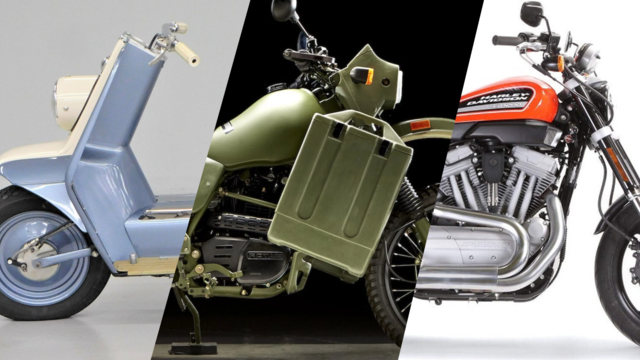
6 Weirdest Harley-Davidsons Ever Sold to the Public
Verdad Gallardo
7 Times Harley-Davidson Chucked Tradition Out the Window
Verdad Gallardo
7 Surprising Harley-Davidson Products that Are Not Motorcycles
Verdad Gallardo
8 Best Harley-Davidson Motorcycles Ever
Pouria Savadkouei
10 Worst Harley-Davidson Motorcycles Ever
Pouria Savadkouei
Killer Custom's Jail Break Is The Breakout That Refused to Blend In
Verdad Gallardo
Crazy Bunderbike Build Looks Amazing, But Is It Impossible to Ride?
Verdad Gallardo
Harley-Davidson Reveals Super Cool Cafe Racer Concept
Verdad Gallardo