



Crank run out..
Cruiser
Joined: Dec 2010
Posts: 105
Likes: 3
From: Western Nebraska

First I will say I have gear driven cams. On my 2004, the runout was .0015. I have had the gears in place for about 16,000 miles. But, I was curious and went on line and found the following, the thicknes of standard weight copy paper is .0038-.0045. That helped me wrap my head around the tolerances we are dealing with.

Cruiser
Joined: Nov 2006
Posts: 241
Likes: 2
From: Bristol TN
Took my bike down to check and see if the crank had run out and i must have got lucky because it was still right were harley put it "in the case half's". You know we are talking thousands of an inch and these number people see on the crank are from .0015 to .008 and if you zero the gauge on the high spot and roll the motor through and you see .007 total you are only .0035 out of the center. Less than a sheet of note book paper. If i were in to crank repair for a living i would be telling you all kinds of **** to scare you and get you to send me your crank. I will ride and buy harleys with .001 to .012 all day long and keep my money in my pocket and put the same mile on them as one with .000. You know stuff don't last forever it wears out and breaks. If i spent the money on fixing this so call problem i would tell everyone how great this repair was so i would not feel so bad on throwing so much money away. If i were going to yank and beat the **** out of my bike it would be a good idea to have it welded so it would not slip and get any worse but i ride it like it is made to be rode. If i wanted to raise hell one a bike, make big power and drag race all that stuff i would buy a Busa or a ZX-1400 some think made to run. I think i will keep on poking around on my slow *** turd with .007 run out on the crank and trying to make it look better I am already behind the 8 ball because it is a Fugly that is strike 1.

Road Warrior
Joined: Sep 2010
Posts: 1,260
Likes: 44
From: Back woods of Maine
Two thousandths of an inch doesn't sound like a very large number until you multiply two thousandths by the number of revolutions per minute that your bike is doing. At 2000 rpm's, the total movement at the end of the crank shaft is four inches per minute! No wonder our bikes vibrate.

Outstanding HDF Member
Joined: Oct 2012
Posts: 2,267
Likes: 1
From: Redcar Cleveland England
Hello there
Run out is one thing but shift is another. As well as what it will do to the motor.it makes you hit the vibration wall at 1800/2000 revs and some bikes come out the factory that way. Most run out is taken into account in the fact that they now have oil fed cam chain tensioners so it all gets soaked up. I think that if you are not that into whats inside the motor its best to just ride and not get sucked into all that stuff. It will be covered by Harley and they will sort it out. If you get court out after your 1 or 2 year cover you would think it would show in this time.
tbone
Run out is one thing but shift is another. As well as what it will do to the motor.it makes you hit the vibration wall at 1800/2000 revs and some bikes come out the factory that way. Most run out is taken into account in the fact that they now have oil fed cam chain tensioners so it all gets soaked up. I think that if you are not that into whats inside the motor its best to just ride and not get sucked into all that stuff. It will be covered by Harley and they will sort it out. If you get court out after your 1 or 2 year cover you would think it would show in this time.
tbone

Elite HDF Member
Joined: Jul 2008
Posts: 4,741
Likes: 45
From: Indian Land, SC
Hello there
Run out is one thing but shift is another. As well as what it will do to the motor.it makes you hit the vibration wall at 1800/2000 revs and some bikes come out the factory that way. Most run out is taken into account in the fact that they now have oil fed cam chain tensioners so it all gets soaked up. I think that if you are not that into whats inside the motor its best to just ride and not get sucked into all that stuff. It will be covered by Harley and they will sort it out. If you get court out after your 1 or 2 year cover you would think it would show in this time.
tbone
Run out is one thing but shift is another. As well as what it will do to the motor.it makes you hit the vibration wall at 1800/2000 revs and some bikes come out the factory that way. Most run out is taken into account in the fact that they now have oil fed cam chain tensioners so it all gets soaked up. I think that if you are not that into whats inside the motor its best to just ride and not get sucked into all that stuff. It will be covered by Harley and they will sort it out. If you get court out after your 1 or 2 year cover you would think it would show in this time.
tbone
That's why (knock on wood) I don't buy extended warranty's. I figure that if the big stuff is going to let go, it "should" within the standard warranty period. After that, I would rather do the repairs myself and know they were done right.
If your going to do a big bore on your bike, then crank work should be done at the same time. Me, I ride like an OF, so my 96 with the mods I have suit me and my crank just fine.

Seasoned HDF Member


Joined: Mar 2010
Posts: 38,593
Likes: 6,435
From: Honah Lee
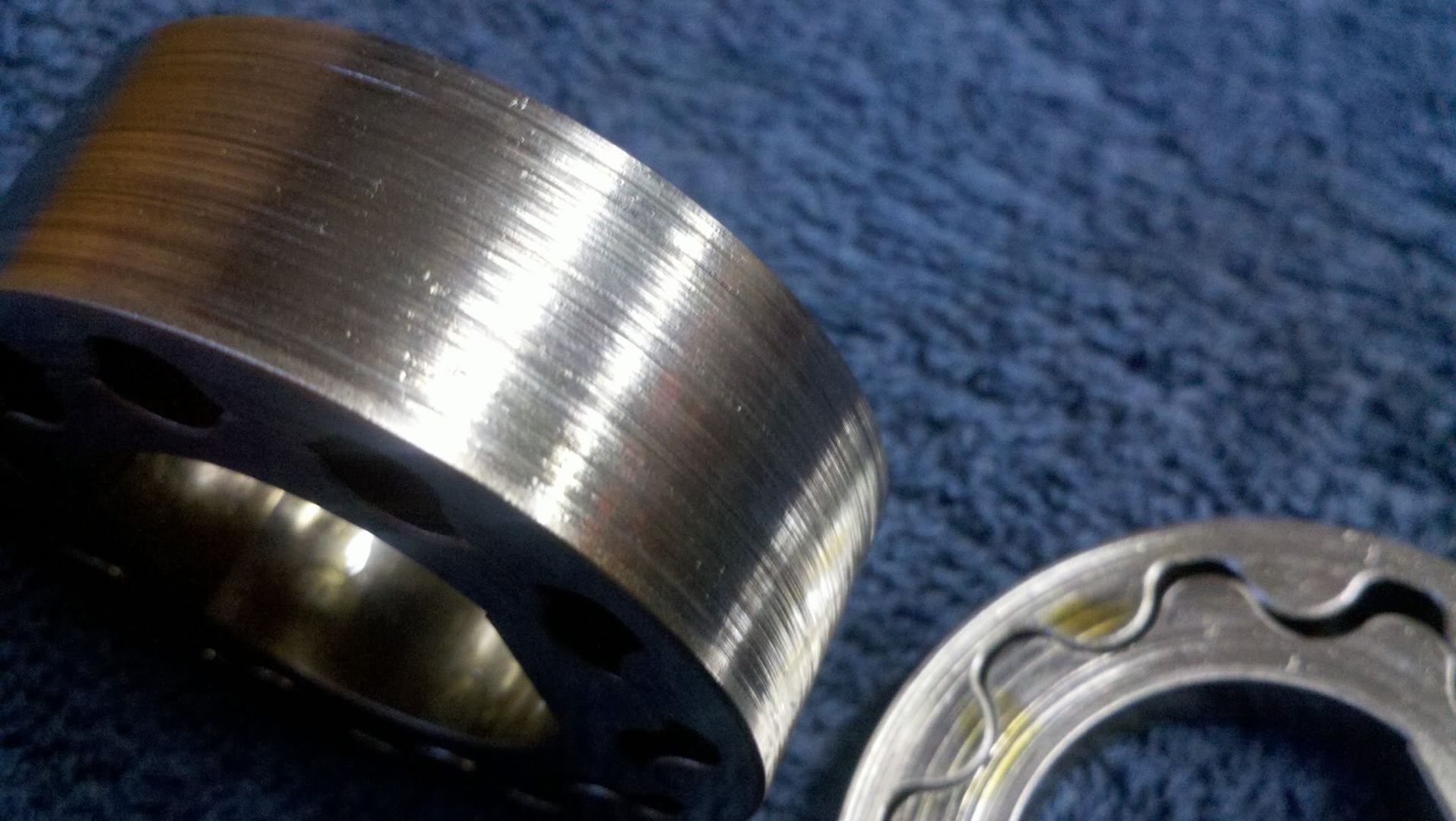
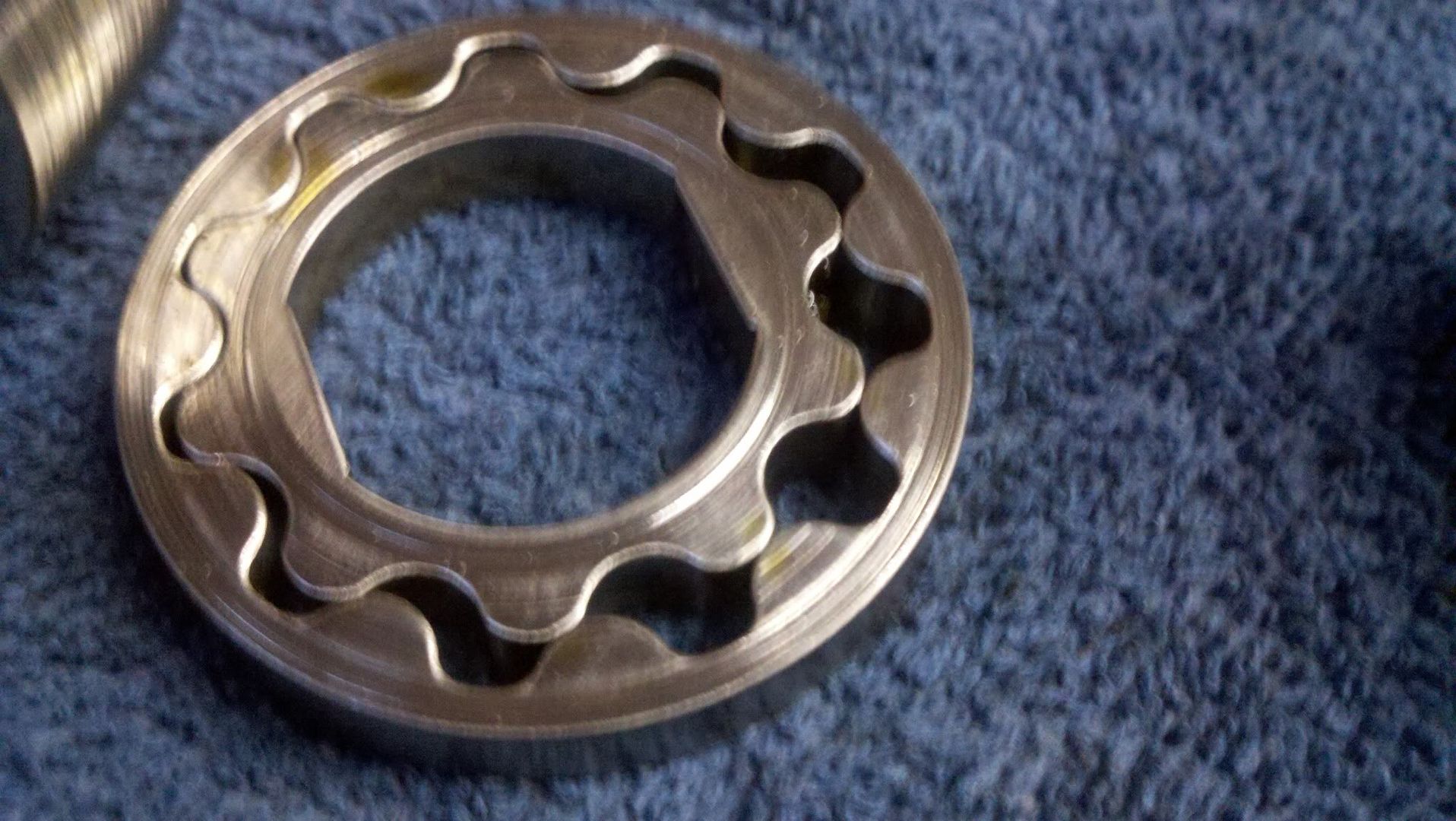
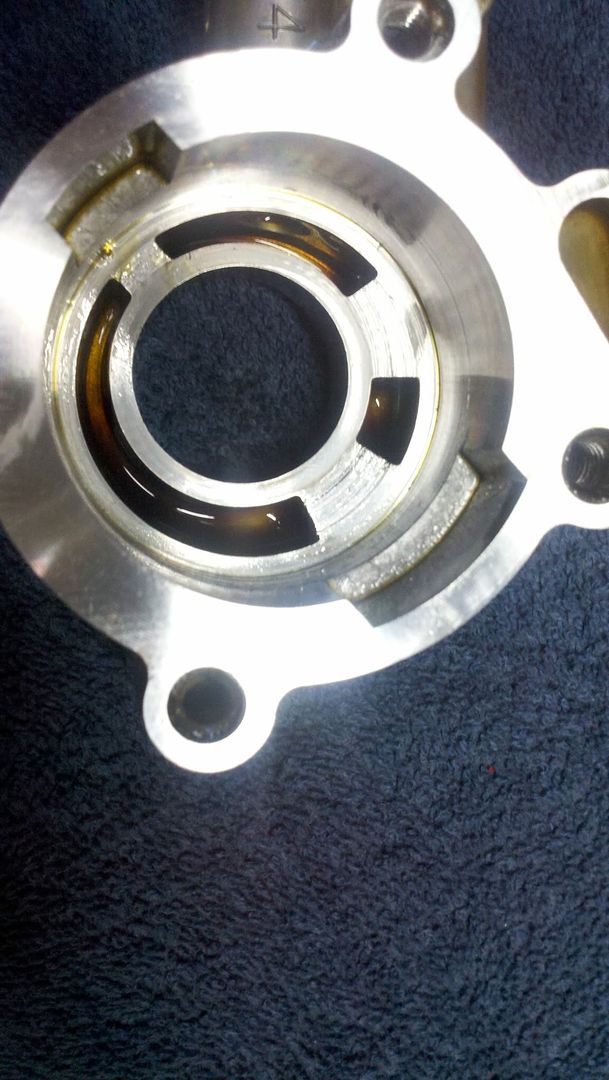
You will be okay but the pump gyrator is keyed to the crank while the pump housing is stationary. If not centered correctly the gyrator will scrub against the housing. I believe that after a lot of miles this will effect the pump. Prolly one of the reasons the 2011 pump was improved. This is mine after 118k and .004 runout.

Last edited by Jackie Paper; Feb 10, 2013 at 02:07 PM.
HD Forum Stories
The Best of Harley-Davidson for Lifelong Riders

7 Surprising Harley-Davidson Products that Are Not Motorcycles
Verdad Gallardo
8 Best Harley-Davidson Motorcycles Ever
Pouria Savadkouei
10 Worst Harley-Davidson Motorcycles Ever
Pouria Savadkouei
Killer Custom's Jail Break Is The Breakout That Refused to Blend In
Verdad Gallardo
Crazy Bunderbike Build Looks Amazing, But Is It Impossible to Ride?
Verdad Gallardo
Harley-Davidson Reveals Super Cool Cafe Racer Concept
Verdad Gallardo
Engraved Rebellion: Inside Bundnerbike's Glam Rock II
Verdad Gallardo
10 Motorcycles You Should Never Buy
Joe Kucinski
10 Things Harley-Davidson Needs to Fix in 2026
Verdad Gallardo
Tourer
Joined: Mar 2007
Posts: 461
Likes: 0
From: Glendale, AZ
I bought a used 2007 RG and it shook way too much, run out was .006. It was in the shop to get cams and so I had him order up an S & S crank and use timken bearings. Also, since then I switched out the front motor mounts and rear swing arm bushings with Glide Pro urethane ones, it is a whole different bike now.