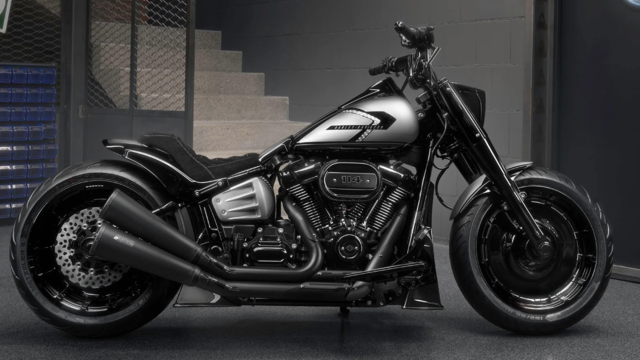
Exhaust clearance issues


Cruiser
Joined: May 2010
Posts: 172
Likes: 0
From: West Point, VA

I just went out and look at mine ( It's a Patriot pipe in my case.) I have better than a 1/4" b/w brake and floorboards but you'd be hardpressed to get a thick piece of paper between the pipe and the cam cover. The pipe was installed last July and 20,000 miles ago.
The point is that the pipe touches nothing so therefor all is good. If you install your exhaust and nothing touches in normal operation, then leave it alone. Actual measurements don't matter as long as there is no interference IMO.
The point is that the pipe touches nothing so therefor all is good. If you install your exhaust and nothing touches in normal operation, then leave it alone. Actual measurements don't matter as long as there is no interference IMO.

Outstanding HDF Member
Joined: Feb 2007
Posts: 2,710
Likes: 6
From: Spokane, WA.
Pingel spacer
I went with the Pingel spacer for my passenger left footboard (1" spacer, I believe). Chris at MGS recommended that one, unless I had designs on some other alternative (like vtwingoodies). I didn't, so I bought the Pingel from MGS. Put in on a couple of days ago, worked like a charm.
I don't have the issue with the rear brake pedal and front cylinder pipe. It's tight, but after quite a bit of rocking in the cradle the last week or so there ain't any evidence that it's made contact at all.
The exhaust clearance issue I had to iron out was my right-side muffler and axle nut clearance. It was making contact at full shock extension. Those with shortened rear shocks don't seem to have this problem. I used 6 flat washers (3 on each screw) in-between the muffler hanger plate and the muffler. That provided enough clearance, so i did the same to the left side in order to even 'em out.
I don't have the issue with the rear brake pedal and front cylinder pipe. It's tight, but after quite a bit of rocking in the cradle the last week or so there ain't any evidence that it's made contact at all.
The exhaust clearance issue I had to iron out was my right-side muffler and axle nut clearance. It was making contact at full shock extension. Those with shortened rear shocks don't seem to have this problem. I used 6 flat washers (3 on each screw) in-between the muffler hanger plate and the muffler. That provided enough clearance, so i did the same to the left side in order to even 'em out.
+1 on the pingel Spacer. Chris hooked me up as well. When ordering, ( my issue) would have been nice when I told them what my bike was that they would have spoke up about the need for the Pingel as it is not included for RK / passenger floorboard set ups. I feel as others have posted in the past that the instructions need to be IMPROVED- pictures going through the steps would help install on the user end, and eliminate calls to MGS which would free up their time. They do enough of these, that they could (IMO) do a step by step video - which would be nice. Just my .02 cents.

Thread Starter
|
Road Master
Joined: Jul 2010
Posts: 963
Likes: 1
From: Bellefonte PA
I agree, to an extent. "Daylight" clearance is enough for two pieces with no relative motion between 'em. Pipe and cam cover, for instance, shouldn't have a lot of motion between 'em. Or the right-side can and axle nut with the rear wheel off the ground (shock at full extension). But when that engine assembly starts rocking in the cradle and bouncing all over the place at idle, I think we need enough wiggle room between the plant and the "stationary" parts (like the footboards and brake pedal). I believe this to be the crux of the OP's question...how much wiggle room? Sticking a 0.005" feeler gauge between the front header and brake pedal would likely not give you enough space to prevent contact once the candles are lit. In my case, ~ 3/16" seems to be enough wiggle room. Is it the minimum? No idea. You seem to have similar clearances, with your 1/4".

Thread
Thread Starter
Forum
Replies
Last Post
GrovenSportster
Exhaust System Topics
6
Sep 27, 2017 12:56 PM
IceColdDeluxe
Softail Models
22
May 7, 2015 01:38 PM
Spud17
Dyna Glide Models
7
Feb 18, 2013 07:56 PM