



 boring
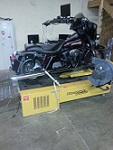

New Dyno Tune

Road Master
Joined: Jul 2008
Posts: 1,021
Likes: 2

I really wanted to give the guy the benefit of the doubt, but there is no way someone who doesn't understand basic stuff like this should be posing as an expert and giving advice to people who may not know any better.

Banned
Joined: Jul 2007
Posts: 953
Likes: 1
From: underground
it aint the first time,its just the first time he"s been called on it, or should i say fist time.

Road Captain
Joined: Feb 2009
Posts: 512
Likes: 0
From: Jacksonville, Arkansas
your not the first one on HDFORUM to find one of my misspellings, whats really good is when I use spell check to quickly and accidentally use a unintended word altogether
Last edited by Dyna-Asa; Apr 20, 2009 at 09:27 PM. Reason: misspelled word lol
Banned
Joined: Jul 2007
Posts: 953
Likes: 1
From: underground


Elite HDF Member
Joined: Sep 2008
Posts: 4,440
Likes: 148
From: Northwest
Yes, I'll buy that - to a point.
No. You can adjust when your spark happens based on the opening and closing of your valves, which is pushed open by the cams/lifters/rockers, which is driven from the crank by either chain or gear. The cam is "timed" to the crank position by that chain or gear, and the ECM knows when the valves are open or closed, based on the crank position sensor.
I'm pretty darn sure Harleys do not yet have VVT technology.
No, it's not. It's internal combustion, 4-cycle engine science.
Perhaps you did not state exactly what you meant...
No. You can adjust when your spark happens based on the opening and closing of your valves, which is pushed open by the cams/lifters/rockers, which is driven from the crank by either chain or gear. The cam is "timed" to the crank position by that chain or gear, and the ECM knows when the valves are open or closed, based on the crank position sensor.
I'm pretty darn sure Harleys do not yet have VVT technology.
No, it's not. It's internal combustion, 4-cycle engine science.
Perhaps you did not state exactly what you meant...
Ihave no idea, I didn't type it. It can be only one of 2 things, 1 I left a computer logged on at another shop, I don't know if someone replied that crap using my account or 2, I joined another forum and used the same account info and password as this site, I don't know. I would guess it's the first one though, I know they are pissed that I am buying a dyno and going on my own. I'll be the first to admit that i'm not the smartest guy, but come on, That comment was just ridiculous. I realize how stupid it looks. As far as Doc goes, I have NEVER met the guy. He trained a guy at a competing dyno shop, not ours. Someones been sending pm's from me as well, saying that I'm not getting a dyno now, to go to the other place instead.
Last edited by harleytuner; Apr 21, 2009 at 08:26 AM.
HD Forum Stories
The Best of Harley-Davidson for Lifelong Riders

7 Surprising Harley-Davidson Products that Are Not Motorcycles
Verdad Gallardo
8 Best Harley-Davidson Motorcycles Ever
Pouria Savadkouei
10 Worst Harley-Davidson Motorcycles Ever
Pouria Savadkouei
Killer Custom's Jail Break Is The Breakout That Refused to Blend In
Verdad Gallardo
Crazy Bunderbike Build Looks Amazing, But Is It Impossible to Ride?
Verdad Gallardo
Harley-Davidson Reveals Super Cool Cafe Racer Concept
Verdad Gallardo
Engraved Rebellion: Inside Bundnerbike's Glam Rock II
Verdad Gallardo
10 Motorcycles You Should Never Buy
Joe Kucinski
10 Things Harley-Davidson Needs to Fix in 2026
Verdad Gallardo

Road Captain
Joined: Nov 2009
Posts: 672
Likes: 3
From: Swamp in Louisiana
Thats not to bad ,I seen were a guy got his account hacked while he was away form the site for a week.When he came back to tell everyone about his cool trip,he found out that he had admitted to be having sex with animals ,mostly males ,in great detail all week,lol
http://en.wikipedia.org/wiki/Ignition_timingSetting the ignition timing

Timing light
"Timing advance" refers to the number of degrees before top dead center (BTDC) that the spark will ignite the air-fuel mixture in the combustion chamber during the compression stroke. Retarded timing can be defined as; changing the timing so that fuel ignition happens later than the manufacturer's specified time. If the ignition timing, specified by the manufacturer, was to be set at 12 degrees BTDC and it was adjusted to a number lower than 12 degrees BTDC, it would be retarded. In a classic ignition system with breaker points, the basic timing can be set statically using a test light or dynamically using a timing light.
Timing advance is required because it takes time to burn the air-fuel mixture. Igniting the mixture before the piston reaches top dead center (TDC) will allow the mixture to fully burn soon after the piston reaches TDC. If the air-fuel mixture is ignited at the correct time, maximum pressure in the cylinder will occur sometime after the piston reaches TDC allowing the ignited mixture to push the piston down the cylinder with the greatest force. Ideally, the time at which the mixture should be fully burnt is about 20 degrees ATDC. This will utilize the engine's power producing potential. If the ignition spark occurs at a position that is too advanced relative to piston position, the rapidly expanding air-fuel mixture can actually push against the piston still moving up, causing detonation and lost power. If the spark occurs too retarded relative to the piston position, maximum cylinder pressure will occur after the piston is already traveling too far down the cylinder. This results in lost power, high emissions, and unburned fuel.
The ignition timing will need to become increasingly advanced (relative to TDC) as the engine speed increases so that the air-fuel mixture has the correct amount of time to fully burn. As the engine speed increases, the time available to burn the mixture decreases but the burning itself proceeds at the same speed, it needs to be started increasingly earlier to complete in time. Poor volumetric efficiency at lower engine speeds also requires increased advancement of ignition timing. The correct timing advance for a given engine speed will allow for maximum cylinder pressure to be achieved at the correct crankshaft angular position. When setting the timing for an automobile engine, the factory timing setting can usually be found on a sticker in the engine bay.
The ignition timing is also dependent on the load of the engine with more load (larger throttle opening) requiring less advance (the mixture burns faster). Also it is dependent on the temperature of the engine with lower temperature allowing for more advance. The speed with which the mixture burns depends also on the octane rating of the fuel and on the air-fuel ratio.

Thread
Thread Starter
Forum
Replies
Last Post
Other Devices: Rookie question .. Dyno or no Dyno
AdmiralAaron
The Dyno Room
1
Jul 23, 2016 08:15 PM
