







Soldering Tips?

Road Master
Joined: Dec 2007
Posts: 1,122
Likes: 1
From: St Louis, MO

Everyone has given good tips, but here is my list of tips.
1. Flux is to clean oxidation from the wire... it isn't to melt the solder. I always use flux. The wire and solder will capture contaminants as soon as you clean them off. Use plenty of flux, but not too much.
2. Wires should be tinned, which means after stripping the insulation from the wire applying a layer of solder up to about 1/16 of an inch from the insulation. Try not to get the solder under the insulation(this is wicking-as stated earlier). You should still see the strands of the wire after it is tinned. Tinning preps both ends to be soldered and will cause them both to accept the new melted solder much quicker. ALWAYS MAKE SURE YOUR TIP IS CLEAN. ALWAYS USE NEW CLEAN SOLDER FOR EACH NEW WIRE. I don't generally use the wet sponge to clean the tip. I use a wet paper towel, but make sure there is no lint on it each time you wipe off the tip.
3. Solder generally goes to a plastic(wet or liquid appearing) state in the mid 500 degree range, but I like to kick it up to around 700 degrees so I don't have to hold the iron on the wires very long-increasing the risk of damage.
4. Don't use a pencil tip. Use a flat tip. The flat part of the tip will be held under the wire and distribute the heat to the parts to be soldered. A pencil tip is not the tool for soldering wires, because it will not evenly distribute the heat.
5. Make sure your work peices are steady. It's almost impossible to get a good solder joint on wires that are bouncing around. Be creative to figure out a way to secure the peices you are soldering. If your peices are moving while they are cooling down, YOU WILL NOT GET A GOOD SOLDER JOINT.
6. Lapping wires is fine, if you are good at it. I have never wrapped wires, but if you aren't confident in your skills, it might not hurt, but it will be bulky, increasing the risk of chaffing. I have always lapped, but my soldering is almost surgical.
7. Get some acid brushes and cut them short at an angle to clean the flux off with alcohol when you are done. Make sure your work is clean. If you have globs of solder, you are applying way too much.
If you have any questions, just ask. I have the best soldering skills money can buy-literally. Not being cocky, but some folks are good at computer programming. Some folks are good at roofing a house. I am better than most(read almost everyone) at soldering. I learned my skills in a professional environment where there was no room for mistakes.Also some folks may tell you that they solder pretty well with a torch and a coat hanger, and will try their best to convince you that it works great.
P.S. I would not use a soldering gun, they are heavy and harder to control and generally have bigger tips. Parts Express has a very decent soldering iron for less than $10 if memory serves correctly. If you order it, make sure you also order the tip assortment.
1. Flux is to clean oxidation from the wire... it isn't to melt the solder. I always use flux. The wire and solder will capture contaminants as soon as you clean them off. Use plenty of flux, but not too much.
2. Wires should be tinned, which means after stripping the insulation from the wire applying a layer of solder up to about 1/16 of an inch from the insulation. Try not to get the solder under the insulation(this is wicking-as stated earlier). You should still see the strands of the wire after it is tinned. Tinning preps both ends to be soldered and will cause them both to accept the new melted solder much quicker. ALWAYS MAKE SURE YOUR TIP IS CLEAN. ALWAYS USE NEW CLEAN SOLDER FOR EACH NEW WIRE. I don't generally use the wet sponge to clean the tip. I use a wet paper towel, but make sure there is no lint on it each time you wipe off the tip.
3. Solder generally goes to a plastic(wet or liquid appearing) state in the mid 500 degree range, but I like to kick it up to around 700 degrees so I don't have to hold the iron on the wires very long-increasing the risk of damage.
4. Don't use a pencil tip. Use a flat tip. The flat part of the tip will be held under the wire and distribute the heat to the parts to be soldered. A pencil tip is not the tool for soldering wires, because it will not evenly distribute the heat.
5. Make sure your work peices are steady. It's almost impossible to get a good solder joint on wires that are bouncing around. Be creative to figure out a way to secure the peices you are soldering. If your peices are moving while they are cooling down, YOU WILL NOT GET A GOOD SOLDER JOINT.
6. Lapping wires is fine, if you are good at it. I have never wrapped wires, but if you aren't confident in your skills, it might not hurt, but it will be bulky, increasing the risk of chaffing. I have always lapped, but my soldering is almost surgical.
7. Get some acid brushes and cut them short at an angle to clean the flux off with alcohol when you are done. Make sure your work is clean. If you have globs of solder, you are applying way too much.
If you have any questions, just ask. I have the best soldering skills money can buy-literally. Not being cocky, but some folks are good at computer programming. Some folks are good at roofing a house. I am better than most(read almost everyone) at soldering. I learned my skills in a professional environment where there was no room for mistakes.Also some folks may tell you that they solder pretty well with a torch and a coat hanger, and will try their best to convince you that it works great.
P.S. I would not use a soldering gun, they are heavy and harder to control and generally have bigger tips. Parts Express has a very decent soldering iron for less than $10 if memory serves correctly. If you order it, make sure you also order the tip assortment.
Last edited by greenstreetbob; Feb 16, 2011 at 09:30 AM.

Club Member

Joined: Dec 2007
Posts: 4,192
Likes: 168
From: Knoxville, Tn
Soldering
There are a couple of companies that produce a sealed splice joint that has a heat shrink sleeve with a solder ring inside. You just cut and strip your wire to expose new copper and slip both ends into the sleeve. I overlap them where the solder ring is and then just put a heat gun on the joint. At the preset temp, the solder melts and the heat shrink seals the joint up.
I can buy them at my local NAPA store and they come in different sizes for different wire gauges.
I can buy them at my local NAPA store and they come in different sizes for different wire gauges.
Lots of good tips....here's some info posted by Citoriplus:
Here's a cheap way to help get good solder connections when you need to lengthen, shorten, or add lines in the bikes electrical system.
The biggest problem with soldering wires on a bike is you need to be an octopus. You need a couple of extra hands to hold the wires whileyou use solder with one hand and the iron in the other. So I came up with a simple and cheap way to make a couple of different wire holders.
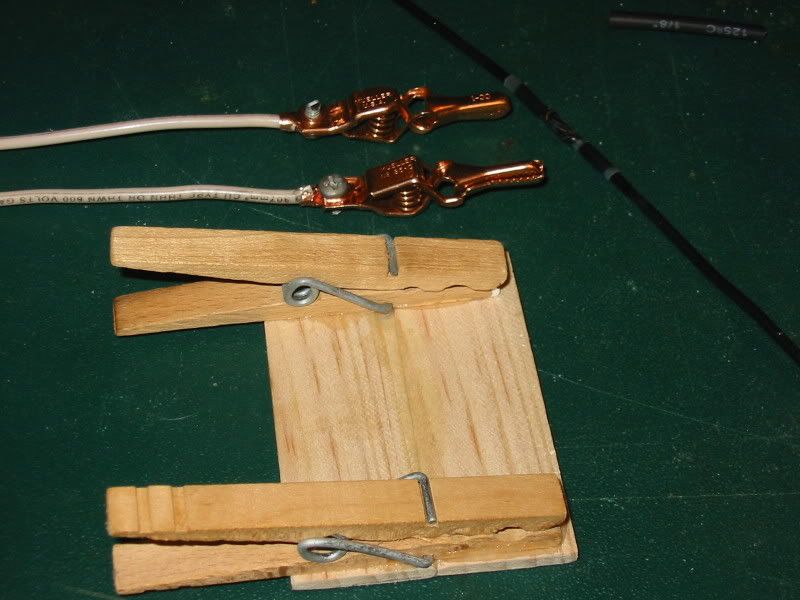
I think I spent a grand total of less than a buck for both of them, and that's because I wanted to get a new pair of alligator clips. The wood one was made from a pair of cloths pins glued to a couple of pieces of a paint mixing stick I got from Home Depot for free. The clips I swiped off the wife. This one is good for any wires that you can lay on a table, or you can glue a magnet to the back and stick it to any steel surface.
The other one with the alligator clips I mademade from the clips and a one foot long piece of scrap 12ga solid copper wire. Its great for using where you can use a clamp or vise grips on the wire between the clips and bend the ends to wherever you need them. Just be careful of using metal clips like these. A hot iron on the wores will have the teeth melting through the wire insulation. So you might considerfiling the teeth down a little and covering them with some tape or shrink tubing.
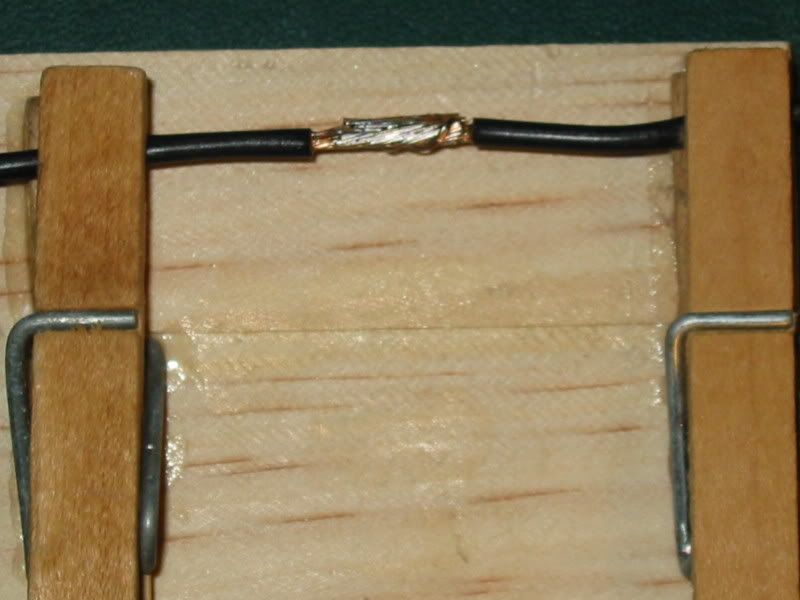
Soldering wires isn't rocket science, but it does take a little practice to do well all the time. But here's a tip for making solder connections that are nearly bullet proof. Once you get the wires soldered properly, like this.
Get some of the wives nail polish or some of this liguid tape and paint the exposed wire and solder connection.
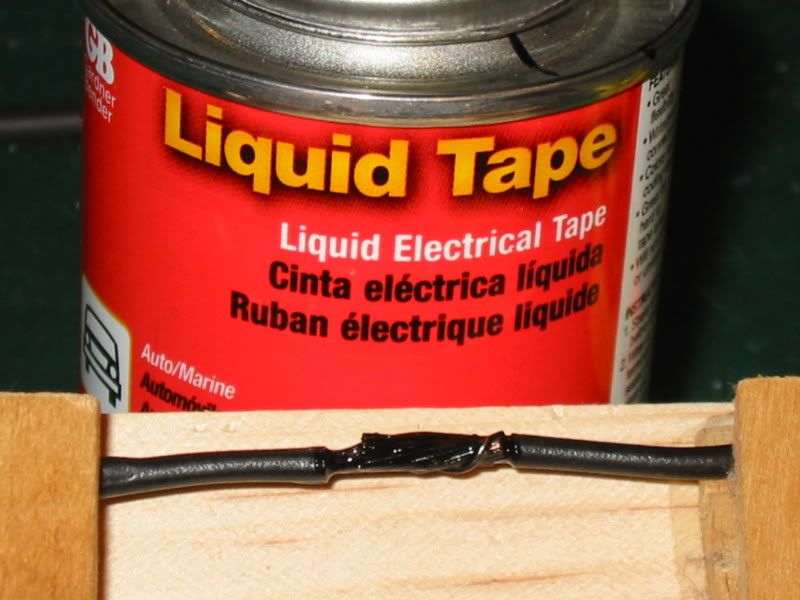
When you ‘paint’ the connection pay particular attention to the ends of the insulation and make sure its well coated. This will prevent any moisture from migrating up the wire strands and corroding them. It won't bother anything today, but a couple of years down the road it will drive you nuts trying to find the electrical gremlins.
Once its dry use a good grade of heat shrink tubing to seal and protect the connection.
Done right the connection will be only slightly larger than the original wire size and last a lifetime.
This is what it looks like before I heated the shrink tubing.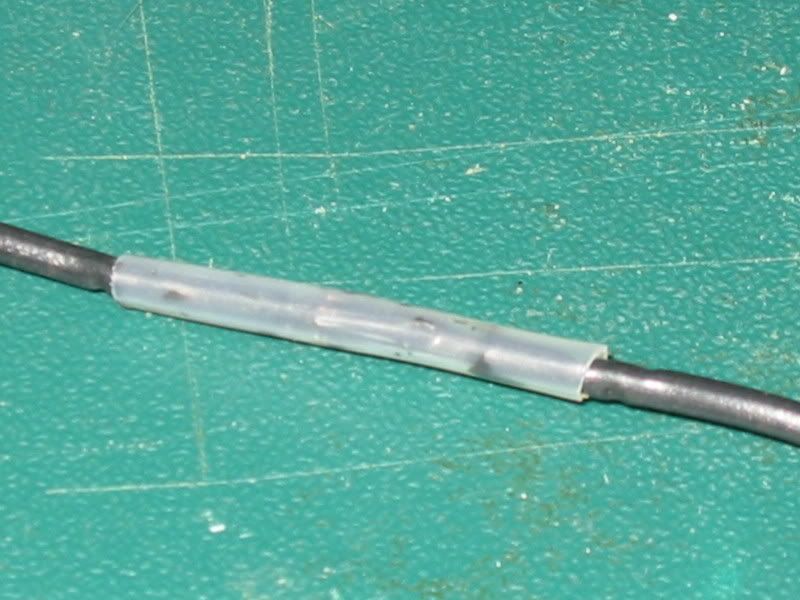
And after.
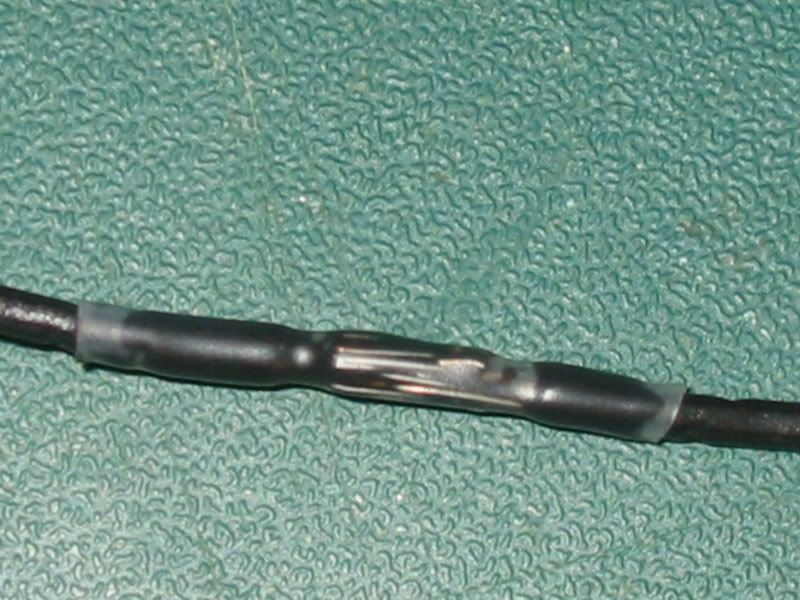
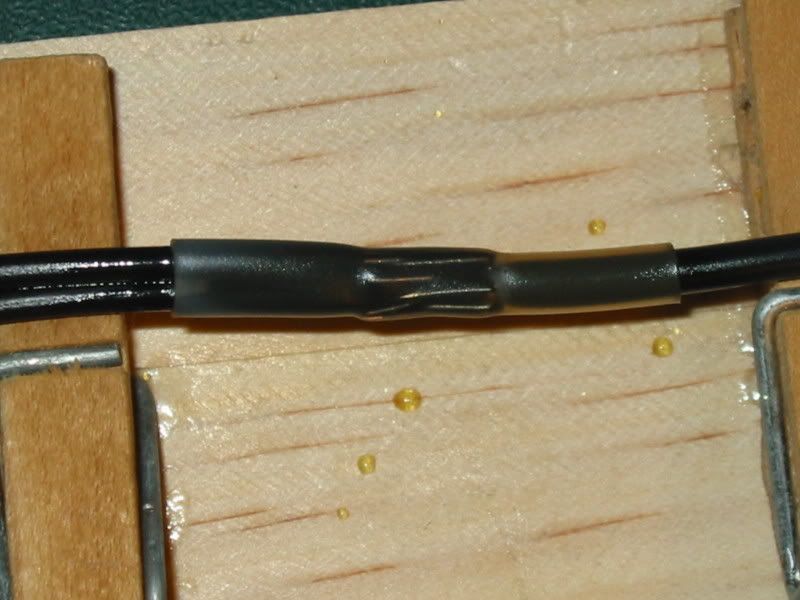
And here's one where I spliced one wire to an existing line.
Ride safe.
The biggest problem with soldering wires on a bike is you need to be an octopus. You need a couple of extra hands to hold the wires whileyou use solder with one hand and the iron in the other. So I came up with a simple and cheap way to make a couple of different wire holders.
I think I spent a grand total of less than a buck for both of them, and that's because I wanted to get a new pair of alligator clips. The wood one was made from a pair of cloths pins glued to a couple of pieces of a paint mixing stick I got from Home Depot for free. The clips I swiped off the wife. This one is good for any wires that you can lay on a table, or you can glue a magnet to the back and stick it to any steel surface.
The other one with the alligator clips I mademade from the clips and a one foot long piece of scrap 12ga solid copper wire. Its great for using where you can use a clamp or vise grips on the wire between the clips and bend the ends to wherever you need them. Just be careful of using metal clips like these. A hot iron on the wores will have the teeth melting through the wire insulation. So you might considerfiling the teeth down a little and covering them with some tape or shrink tubing.
Soldering wires isn't rocket science, but it does take a little practice to do well all the time. But here's a tip for making solder connections that are nearly bullet proof. Once you get the wires soldered properly, like this.
Get some of the wives nail polish or some of this liguid tape and paint the exposed wire and solder connection.
When you ‘paint’ the connection pay particular attention to the ends of the insulation and make sure its well coated. This will prevent any moisture from migrating up the wire strands and corroding them. It won't bother anything today, but a couple of years down the road it will drive you nuts trying to find the electrical gremlins.
Once its dry use a good grade of heat shrink tubing to seal and protect the connection.
Done right the connection will be only slightly larger than the original wire size and last a lifetime.
This is what it looks like before I heated the shrink tubing.
And after.
And here's one where I spliced one wire to an existing line.
Ride safe.

Outstanding HDF Member
Joined: Jul 2007
Posts: 2,306
Likes: 3
From: Vancouver, BC
This is the most important tip of all.......... don't get me to do it for you - I may be the worst solderer on the planet. It seems like it should be simple but for some reason mine always turn out super crappy.......

Tourer


Joined: Jan 2011
Posts: 356
Likes: 36
From: Oklahoma
All of these are sound advice. The only thing that I would add is that I put a small piece of hot melt glue stick (like you put in a hot glue gun) inside of the heat shrink. It melts at about the same temp that the shrink, shrinks. This will help seal up the connection and keep air and water out. Yes, air is bad too.
HD Forum Stories
The Best of Harley-Davidson for Lifelong Riders

7 Times Harley-Davidson Chucked Tradition Out the Window
Verdad Gallardo
7 Surprising Harley-Davidson Products that Are Not Motorcycles
Verdad Gallardo
8 Best Harley-Davidson Motorcycles Ever
Pouria Savadkouei
10 Worst Harley-Davidson Motorcycles Ever
Pouria Savadkouei
Killer Custom's Jail Break Is The Breakout That Refused to Blend In
Verdad Gallardo
Crazy Bunderbike Build Looks Amazing, But Is It Impossible to Ride?
Verdad Gallardo
Harley-Davidson Reveals Super Cool Cafe Racer Concept
Verdad Gallardo
Engraved Rebellion: Inside Bundnerbike's Glam Rock II
Verdad Gallardo