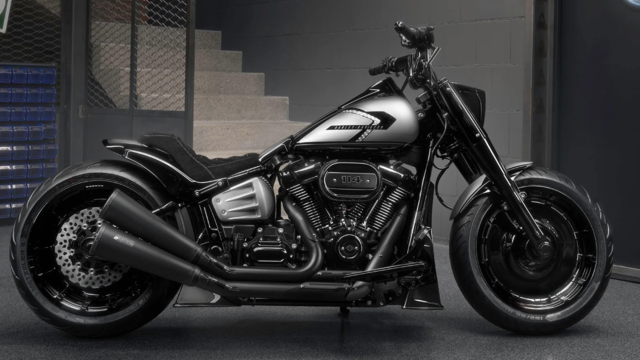
2023 CVO 121VVT Motor


Thread Starter
|
Advanced


Joined: Jan 2023
Posts: 62
Likes: 41
From: Phoenix, AZ
 2023 CVO 121VVT Motor
I just read an article on this release and it certaily caught my attention. This has been a question of mine for some time now and I am interested in a discussion from some of our gurus on the subject of integrating a VVT (variable valve timing) into a large V-twin.
I would think there are a number of hurdles that needed to be overcome, not the least of which is realestate as both the bore and stroke increased while at the same time stuffing the vvt mechanics in the case. The other being general acceptance from the H-D V-twin community. I am not sure if Honda has the tech in their big bikes. I am going to follow that up but my impression of Honda, and maybe Indian, they are using a vvt system.
Valve train function and performance is not a strong subject for me so I am interested in 3 aspects of the vvt topic.
1. What do the smart valve train peope think are the pro's and con's of VVT as it applies to the big V-twin motorcycle engine?
2. Is it a keeper in the H-D big twin future?
3. What are the implications for the 3rd party power builder business community, cams specifically as that is where technology is integrated?
I would think there are a number of hurdles that needed to be overcome, not the least of which is realestate as both the bore and stroke increased while at the same time stuffing the vvt mechanics in the case. The other being general acceptance from the H-D V-twin community. I am not sure if Honda has the tech in their big bikes. I am going to follow that up but my impression of Honda, and maybe Indian, they are using a vvt system.
Valve train function and performance is not a strong subject for me so I am interested in 3 aspects of the vvt topic.
1. What do the smart valve train peope think are the pro's and con's of VVT as it applies to the big V-twin motorcycle engine?
2. Is it a keeper in the H-D big twin future?
3. What are the implications for the 3rd party power builder business community, cams specifically as that is where technology is integrated?
Last edited by Duke4AZ; Sep 6, 2023 at 11:00 AM. Reason: Clean up.

Road Warrior


Joined: May 2007
Posts: 1,434
Likes: 384
From: Arkansastan
It’s already on the market and has good reviews so far. It doesn’t stick out that much on the right side. As for your three aspects,
1. it allows a better control under all driving conditions than a cam that peaks torque only in a certain rpm. Just as with your late model auto.
2. yes, I believe it is inevitable that it will become a permanent part of the HD engine future. technology is moving forward. HD has to as well to stay competitive.
3. It won’t affect them much, all the VVT does is advance and retard a given grind of cam. The aftermarket will still make cams that deliver more HP, but now without as much pralines in the RPM ranges as a cam setup does currently.
1. it allows a better control under all driving conditions than a cam that peaks torque only in a certain rpm. Just as with your late model auto.
2. yes, I believe it is inevitable that it will become a permanent part of the HD engine future. technology is moving forward. HD has to as well to stay competitive.
3. It won’t affect them much, all the VVT does is advance and retard a given grind of cam. The aftermarket will still make cams that deliver more HP, but now without as much pralines in the RPM ranges as a cam setup does currently.
Thread Starter
|
Advanced
Joined: Jan 2023
Posts: 62
Likes: 41
From: Phoenix, AZ
It’s already on the market and has good reviews so far. It doesn’t stick out that much on the right side. As for your three aspects,....3. It won’t affect them much, all the VVT does is advance and retard a given grind of cam. The aftermarket will still make cams that deliver more HP, but now without as much pralines in the RPM ranges as a cam setup does currently.
Road Warrior
Joined: May 2007
Posts: 1,434
Likes: 384
From: Arkansastan
When I first saw "VVT" being the technology discussed in the article my head went to a dual cam set-up with independent intake and exhaust cam timing control, similar to what is currently used in the car industry. I was not thinking single cam phasing like what H-D is calling VVT. That simplifies the outcomes of each of the questions. It should help widen the power curves on both ends which has positve implementations for both performance and fuel economy. As to longevity in production, in theory it should be a sustainable improvement providing there is a successful implementation, ie, reliability, cost effectiveness, cultural acceptance.



Road Captain

Joined: Jun 2013
Posts: 671
Likes: 168
From: Ontario, Canada
When I first saw "VVT" being the technology discussed in the article my head went to a dual cam set-up with independent intake and exhaust cam timing control, similar to what is currently used in the car industry. I was not thinking single cam phasing like what H-D is calling VVT. That simplifies the outcomes of each of the questions. It should help widen the power curves on both ends which has positve implementations for both performance and fuel economy. As to longevity in production, in theory it should be a sustainable improvement providing there is a successful implementation, ie, reliability, cost effectiveness, cultural acceptance.
The R&D involved in building and tuning a cam for a VVT system is probably much higher as well. I'm no builder but I bet it needs a new level of design and tuning skills.

Tourer
Joined: Feb 2009
Posts: 298
Likes: 103
From: King Island, Tasmania
Getting into the computer to tune it might be slightly more challenging, reading the HD literature on the electronic side of it sounds like they have thrown out a challenge to the aftermarket, they also made it sound like a revelation to them that the aftermarket had been accessing the engine management in the past lol, lawyers in action no doubt.

Thread
Thread Starter
Forum
Replies
Last Post
Iron lHorse
General Harley Davidson Chat
16
Jan 12, 2014 07:57 PM
schumacher
General Harley Davidson Chat
2
Jun 25, 2009 08:16 PM