




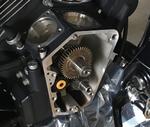
What is this?

Cruiser
Joined: Jan 2016
Posts: 181
Likes: 37
From: Broken Arrow, OK

Yes, the cap goes over the existing piece.
I tore into mine last night because it looks just like yours. I'm pretty sure the aluminum has a clear coat or some other coating over it, which is what ends up looking so bad, probably because of the heat from the exhaust. I started sanding mine and it already looks 100% better. I have to go back over it with a finer grit and then polish it, but I'll post some photos in the next few days.
Word of warning, however, if you go down this route of sanding/polishing, you have to do the whole thing because otherwise you'll have a line wherever you stop sanding. There are a lot of nooks and crannies, so it's a little bit of a pain to sand. Also, you have to be comfortable with taking the coating off and living with raw aluminum.
I tore into mine last night because it looks just like yours. I'm pretty sure the aluminum has a clear coat or some other coating over it, which is what ends up looking so bad, probably because of the heat from the exhaust. I started sanding mine and it already looks 100% better. I have to go back over it with a finer grit and then polish it, but I'll post some photos in the next few days.
Word of warning, however, if you go down this route of sanding/polishing, you have to do the whole thing because otherwise you'll have a line wherever you stop sanding. There are a lot of nooks and crannies, so it's a little bit of a pain to sand. Also, you have to be comfortable with taking the coating off and living with raw aluminum.
Seasoned HDF Member


Joined: Jun 2010
Posts: 9,332
Likes: 3,873
From: Upstate New York
THIS is the reason I won't ride on roads that have been salted. That's what happens when salt/moisture gets on chrome plated aluminum. The aluminum starts to corrode UNDER the plating and causes the plating to lift and peel. Yes, Uncle G. is an engineer.
Yes, the cover can be removed without disturbing the valvetrain. I've done it. Remove the exhaust system, brake pedal and anything else in the way, then remove the ignition cover and remove the sensor plate and the trigger cup on the end of the camshaft. Mark the position of the "notch" in the sensor plate so you can put it back in the proper place. Rotate the motor until the "notch" in the end of the camshaft is in the "5 o'clock" position and unbolt the cover. There's a special tool you can use to pull the cover off the two dowel pins that presses on the end of the cam to pull the cover. Otherwise, pull on the cover as best you can, while pushing in on the cam with your thumb to keep the cam from coming out with the cover.
Seasoned HDF Member
Joined: Jun 2010
Posts: 9,332
Likes: 3,873
From: Upstate New York
Yes, the cap goes over the existing piece.
I tore into mine last night because it looks just like yours. I'm pretty sure the aluminum has a clear coat or some other coating over it, which is what ends up looking so bad, probably because of the heat from the exhaust. I started sanding mine and it already looks 100% better. I have to go back over it with a finer grit and then polish it, but I'll post some photos in the next few days.
Word of warning, however, if you go down this route of sanding/polishing, you have to do the whole thing because otherwise you'll have a line wherever you stop sanding. There are a lot of nooks and crannies, so it's a little bit of a pain to sand. Also, you have to be comfortable with taking the coating off and living with raw aluminum.
I tore into mine last night because it looks just like yours. I'm pretty sure the aluminum has a clear coat or some other coating over it, which is what ends up looking so bad, probably because of the heat from the exhaust. I started sanding mine and it already looks 100% better. I have to go back over it with a finer grit and then polish it, but I'll post some photos in the next few days.
Word of warning, however, if you go down this route of sanding/polishing, you have to do the whole thing because otherwise you'll have a line wherever you stop sanding. There are a lot of nooks and crannies, so it's a little bit of a pain to sand. Also, you have to be comfortable with taking the coating off and living with raw aluminum.
Harley actually sells a "wipe-on" protective coating for aluminum called "Harley Preserves". It's sold as a "moist towelette" at the dealership. After you clean and polish the aluminum, you wipe this stuff on. After it dries it's invisible, but really works. I treated my fork legs after I sanded off the corrosion and what was left of the clear coat about 5 years ago. I've had no sign of tarnish or corrosion since.

Road Captain

Joined: Apr 2015
Posts: 636
Likes: 35
From: NorCal
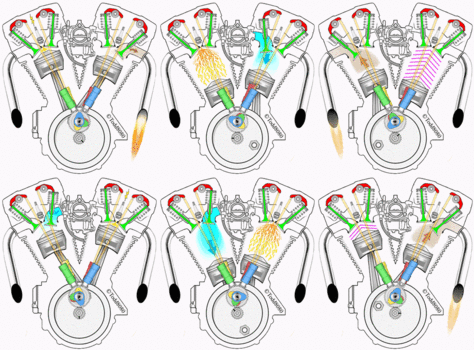
According to the gurus around here you can take off the cam cover (gear cover) without disassembling the motor.
You just have to rotate the motor until the notch in the end of the cam is in the 5 o'clock position and then use something to hold the cam in place while removing the cam cover.
You just have to rotate the motor until the notch in the end of the cam is in the 5 o'clock position and then use something to hold the cam in place while removing the cam cover.
Cruiser
Joined: Jan 2016
Posts: 181
Likes: 37
From: Broken Arrow, OK
I finished sanding and polishing the original piece. Of course I forgot to take a photo before I started, so I can't show a true "before" picture, but it looked a lot like the photo Grey Fox posted at the start of the thread. Here are some photos of the various stages during sanding and polishing. It was a bit of work, but I'm pretty pleased with the results.
I'm a sucker for chrome, so replacing the part with the chrome piece would have been my first choice, or using the chrome cap is another great option, but this was a decent alternative, if you have more time than money.
I'm a sucker for chrome, so replacing the part with the chrome piece would have been my first choice, or using the chrome cap is another great option, but this was a decent alternative, if you have more time than money.
Dirt don't hurt


Joined: Jan 2011
Posts: 21,065
Likes: 4,561
From: Haslet Texas
I finished sanding and polishing the original piece. Of course I forgot to take a photo before I started, so I can't show a true "before" picture, but it looked a lot like the photo Grey Fox posted at the start of the thread. Here are some photos of the various stages during sanding and polishing. It was a bit of work, but I'm pretty pleased with the results.
I'm a sucker for chrome, so replacing the part with the chrome piece would have been my first choice, or using the chrome cap is another great option, but this was a decent alternative, if you have more time than money.
I'm a sucker for chrome, so replacing the part with the chrome piece would have been my first choice, or using the chrome cap is another great option, but this was a decent alternative, if you have more time than money.
I would add a protective layer like Uncle G suggested at this point.

Cruiser

Joined: Feb 2016
Posts: 197
Likes: 92
From: Tehachapi, Ca.
I finished sanding and polishing the original piece. Of course I forgot to take a photo before I started, so I can't show a true "before" picture, but it looked a lot like the photo Grey Fox posted at the start of the thread. Here are some photos of the various stages during sanding and polishing. It was a bit of work, but I'm pretty pleased with the results.
I'm a sucker for chrome, so replacing the part with the chrome piece would have been my first choice, or using the chrome cap is another great option, but this was a decent alternative, if you have more time than money.
I'm a sucker for chrome, so replacing the part with the chrome piece would have been my first choice, or using the chrome cap is another great option, but this was a decent alternative, if you have more time than money.
Todd
HD Forum Stories
The Best of Harley-Davidson for Lifelong Riders

7 Surprising Harley-Davidson Products that Are Not Motorcycles
Verdad Gallardo
8 Best Harley-Davidson Motorcycles Ever
Pouria Savadkouei
10 Worst Harley-Davidson Motorcycles Ever
Pouria Savadkouei
Killer Custom's Jail Break Is The Breakout That Refused to Blend In
Verdad Gallardo
Crazy Bunderbike Build Looks Amazing, But Is It Impossible to Ride?
Verdad Gallardo
Harley-Davidson Reveals Super Cool Cafe Racer Concept
Verdad Gallardo
Engraved Rebellion: Inside Bundnerbike's Glam Rock II
Verdad Gallardo
10 Motorcycles You Should Never Buy
Joe Kucinski
10 Things Harley-Davidson Needs to Fix in 2026
Verdad Gallardo
Cruiser
Joined: Jan 2016
Posts: 181
Likes: 37
From: Broken Arrow, OK
If I had to do it again, I would go straight to the grey scuff pad and Nevr-Dull, which is very close to what you're describing with the fine sand paper and Mothers.