



How Do I Fix This?

Thread Starter
|
Stellar HDF Member


Joined: Aug 2013
Posts: 3,426
Likes: 3,554
From: Texas

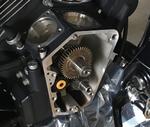
I changed the oil filter, cleaned it real good, rode it 30 miles to work and there is no sign of any leak. Most of the dirt and oil that was caked on, was around the stator plug. What is the fix for the stator plug, if needed.
Seasoned HDF Member


Joined: Jun 2010
Posts: 9,332
Likes: 3,873
From: Upstate New York
This is copied from a post I made on this several years ago:
"I've had this problem with every Evo stator I've had. They all start to leak oil around the rubber plug. I've tried everything, even removing and reinstalling after coating the plug with RTV.
The proper material to use for this job is "flowable RTV", made by Permatex and sold at auto parts stores. This stuff is made for sealing windshield leaks and is designed to "wick" into cracks and gaps. Clean all the oil around the plug with contact cleaner and dry everything off. Then apply a thin bead of the flowable RTV around the stator plug where it exits the case. I use a small syringe and a 20 gage industrial (blunt end) needle-buy on Amazon. In a few minutes, the RTV will wick into the space between the plug and the case and disappear. Wait overnight for it to cure, ride and enjoy.
This worked for me, and my stator plug has been dry for over a year now."
The other, or "hard" way involves pulling the primary and replacing the stator, and hoping the new one doesn't leak.
"I've had this problem with every Evo stator I've had. They all start to leak oil around the rubber plug. I've tried everything, even removing and reinstalling after coating the plug with RTV.
The proper material to use for this job is "flowable RTV", made by Permatex and sold at auto parts stores. This stuff is made for sealing windshield leaks and is designed to "wick" into cracks and gaps. Clean all the oil around the plug with contact cleaner and dry everything off. Then apply a thin bead of the flowable RTV around the stator plug where it exits the case. I use a small syringe and a 20 gage industrial (blunt end) needle-buy on Amazon. In a few minutes, the RTV will wick into the space between the plug and the case and disappear. Wait overnight for it to cure, ride and enjoy.
This worked for me, and my stator plug has been dry for over a year now."
The other, or "hard" way involves pulling the primary and replacing the stator, and hoping the new one doesn't leak.
Last edited by Uncle G.; Jun 7, 2016 at 12:18 PM.
Thread Starter
|
Stellar HDF Member
Joined: Aug 2013
Posts: 3,426
Likes: 3,554
From: Texas
This is copied from a post I made on this several years ago:
"I've had this problem with every Evo stator I've had. They all start to leak oil around the rubber plug. I've tried everything, even removing and reinstalling after coating the plug with RTV.
The proper material to use for this job is "flowable RTV", made by Permatex and sold at auto parts stores. This stuff is made for sealing windshield leaks and is designed to "wick" into cracks and gaps. Clean all the oil around the plug with contact cleaner and dry everything off. Then apply a thin bead of the flowable RTV around the stator plug where it exits the case. I use a small syringe and a 20 gage industrial (blunt end) needle-buy on Amazon. In a few minutes, the RTV will wick into the space between the plug and the case and disappear. Wait overnight for it to cure, ride and enjoy.
This worked for me, and my stator plug has been dry for over a year now."
"I've had this problem with every Evo stator I've had. They all start to leak oil around the rubber plug. I've tried everything, even removing and reinstalling after coating the plug with RTV.
The proper material to use for this job is "flowable RTV", made by Permatex and sold at auto parts stores. This stuff is made for sealing windshield leaks and is designed to "wick" into cracks and gaps. Clean all the oil around the plug with contact cleaner and dry everything off. Then apply a thin bead of the flowable RTV around the stator plug where it exits the case. I use a small syringe and a 20 gage industrial (blunt end) needle-buy on Amazon. In a few minutes, the RTV will wick into the space between the plug and the case and disappear. Wait overnight for it to cure, ride and enjoy.
This worked for me, and my stator plug has been dry for over a year now."
Seasoned HDF Member
Joined: Jun 2010
Posts: 9,332
Likes: 3,873
From: Upstate New York
My fix is probably only a temporary fix (what isn't?, you might ask), but mine's been dry for a couple of years now, and if it starts to seep again, it's an easy job to remove the RTV and re-do the job. It's a lot easier than pulling the stator each time.

Elite HDF Member
Joined: Oct 2005
Posts: 3,872
Likes: 83
From: Canton, Michigan
Can't argue with that. I was eating batteries every two years until I discovered that I really didn't have a firm connection between the stator and the regulator. Xacto knife, a couple of small picks, and a pair of needle nose pliers fixed it.
Thread Starter
|
Stellar HDF Member
Joined: Aug 2013
Posts: 3,426
Likes: 3,554
From: Texas
Cometic Gaskets Top End Gasket Kit, STD Bore for Harley Davidson 1992-99 Evo arrived, will start taking it apart this weekend. I will inspect the cyl bores and pistons to see if it needs more work. It has 92,000 miles on it, but runs just fine, we will see.

Seasoned HDF Member


Joined: Mar 2010
Posts: 21,092
Likes: 7,614
From: Poolville
HD Forum Stories
The Best of Harley-Davidson for Lifelong Riders

7 Surprising Harley-Davidson Products that Are Not Motorcycles
Verdad Gallardo
8 Best Harley-Davidson Motorcycles Ever
Pouria Savadkouei
10 Worst Harley-Davidson Motorcycles Ever
Pouria Savadkouei
Killer Custom's Jail Break Is The Breakout That Refused to Blend In
Verdad Gallardo
Crazy Bunderbike Build Looks Amazing, But Is It Impossible to Ride?
Verdad Gallardo
Harley-Davidson Reveals Super Cool Cafe Racer Concept
Verdad Gallardo
Engraved Rebellion: Inside Bundnerbike's Glam Rock II
Verdad Gallardo
10 Motorcycles You Should Never Buy
Joe Kucinski
10 Things Harley-Davidson Needs to Fix in 2026
Verdad Gallardo
Grand HDF Member
Joined: Apr 2007
Posts: 3,725
Likes: 3,070
From: Brighton, MI
This is copied from a post I made on this several years ago:
"I've had this problem with every Evo stator I've had. They all start to leak oil around the rubber plug. I've tried everything, even removing and reinstalling after coating the plug with RTV.
The proper material to use for this job is "flowable RTV", made by Permatex and sold at auto parts stores. This stuff is made for sealing windshield leaks and is designed to "wick" into cracks and gaps. Clean all the oil around the plug with contact cleaner and dry everything off. Then apply a thin bead of the flowable RTV around the stator plug where it exits the case. I use a small syringe and a 20 gage industrial (blunt end) needle-buy on Amazon. In a few minutes, the RTV will wick into the space between the plug and the case and disappear. Wait overnight for it to cure, ride and enjoy.
This worked for me, and my stator plug has been dry for over a year now."
The other, or "hard" way involves pulling the primary and replacing the stator, and hoping the new one doesn't leak.
"I've had this problem with every Evo stator I've had. They all start to leak oil around the rubber plug. I've tried everything, even removing and reinstalling after coating the plug with RTV.
The proper material to use for this job is "flowable RTV", made by Permatex and sold at auto parts stores. This stuff is made for sealing windshield leaks and is designed to "wick" into cracks and gaps. Clean all the oil around the plug with contact cleaner and dry everything off. Then apply a thin bead of the flowable RTV around the stator plug where it exits the case. I use a small syringe and a 20 gage industrial (blunt end) needle-buy on Amazon. In a few minutes, the RTV will wick into the space between the plug and the case and disappear. Wait overnight for it to cure, ride and enjoy.
This worked for me, and my stator plug has been dry for over a year now."
The other, or "hard" way involves pulling the primary and replacing the stator, and hoping the new one doesn't leak.
It worked once on the original 20 year old plug, and again on the 2 year old replacement. Kind of sux to have to replace a stator just for the rubber plug. Next time I am eliminating the plug all together and running the wires thru the hole to a new connector closer to the regulator, and the hole will be filled with silicone. Others recommend if you replace the stator, completely coat the new rubber plug with silicone from the inside of the primary to prevent the oil from getting to the rubber plug in the first place.
I have confirmed that the rubber gets soft and as mentioned, "dog boned shaped". I think the O-ring fills in the narrow portion of the dog bone. YD


Thread
Thread Starter
Forum
Replies
Last Post