When you click on links to various merchants on this site and make a purchase, this can result in this site earning a commission. Affiliate programs and affiliations include, but are not limited to, the eBay Partner Network.
Waiting for everything to come in was going to take awhile, so I decided to start the project with screwdrivers and the tack removal tool (thanks to 2 day shipping from Amazon prime).Starting with a small flathead screwdriver, I began to peel up the speedometer ring's lip. There were a few areas around the base that had no leverage for a screwdriver to brace against and that's where the tack removal tool came in handy. I also have an abused screwdriver whose tip has been ground and is kind of shaped like the paint can opener (which hasn't come in yet) and it was much more efficient than a regular screwdriver in lifting the lip. It caught the lip much better and pushed it up and out, whereas the regular screwdriver was much less forgiving. The ring eventually came off and now the odometer reset **** and speedometer needle are preventing further disassembly. What is the next step in removing those? Thanks
Last edited by Dirty Dancer; Jul 8, 2021 at 05:28 PM.
Working on a Harley speedo, posting pictures, and stamped on it is Japan I guess it could be worse China,or Mexico or something I guess if it was a newer Harley it probably would !!
Nice job on the removal of the ring, the instructions below are for the rear reset **** style speedo. I did not notice yours is a side reset **** till after I posted the info below. Post a few more pics of the reset shaft/housing so we can get a better look. I am leaving the info as I typed it for those who have a rear reset ****. I'm sure someone will come along with the info you need about that, but in the meantime, keep playing with the rubics cube type puzzle. It's probably something simple.
There is an extremely small phillips screw way down deep in the plastic reset ****. Use a flashlight and look into the hole of the reset ****. Just make sure you use the correct sized screwdriver or you will strip the head and will be screwed.
As far as removing the needle, you need to protect the face of the gauge with something somewhat rigid like credit card plastic, and using two tea spoons (one on each side of the needle 3:00 and 9:00) as a "pry bar" slip the spoons under the needle and gingerly pry the needle straight up towards the sky. The spoons need to be located right over those two rivet looking things on the face of the gauge, That is the strongest part of the plastic gauge face, so that is your pry point. A little tape on the spoons to protect the needle won't hurt either.
Heads up, the needle could go flying in the air, so be prepared. However, if my memory serves me correctly, and you will soon find out, I don't think you need to pull the needle to fix your problem, and if you don't have to remove, then don't. Once you get the rear housing off, you can see and service just about everything in there.
The reason I say don't remove the needle unless you really have to is: there is no guarantee you will get it back on accurately. You just press it back on fairly firmly with your finger, but the proper position is the trick, as I think there is slight tension on the stop pin of the gauge. Get that wrong and your speed reading won't be the same.
Now I'm not saying this is the best way, but it is how I avoided this issue and my speedo matches my GPS:
Before removing the needle, use a speedometer cable connected to your speedo and a 110 volt electric drill (or like the converted fan in the earlier pic). Run the drill and lock the drill at full speed using that little lock feature on the drill. Take note of the speed the needle is pointing at. Shut down drill and disconnect cable at the speedo. Then remove the needle, do what you have to do to make your repair, and when time to replace the needle, hook the drill back up to the speedo, run it like before, and while the drill is running, place the needle back on the spindle pointing at the speed you wrote down earlier. You only have to lightly press the needle on the spindle while the drill is running because you might not get it in the exact correct spot on the first try and can just pull it off with your fingers and repeat placement till it's correct. Once correct, press the needle on more firmly with your finger. shut down drill and remove cable, press the needle in even more to make sure it is seated for good on the spindle.
Here is my favorite part: Assembly is the reverse of disassembly
EDIT: Just noticed you have a side odometer reset, never been in one of those, so my instructions are regarding the rear reset style gauge.
Last edited by Yankee Dog; Jul 8, 2021 at 05:48 PM.
Looking at the reset **** shaft again, there's no screw in the center of it (unless it's covered by something which is orange colored). Hard to see even with a magnifying glass. I did remove the rubber protector. It looks like there's a c clip (square black piece of metal similar to the way the retaining ring that originally went missing) holding the shaft to the base. I tried to slide it off with a flathead screwdriver, but that didn't work. Am not even positive it's the correct way to remove the shaft. It's hard to take a picture, but I did get part of it.
Last edited by Dirty Dancer; Jul 9, 2021 at 12:44 PM.
Just to finish this thread, the c clip comes off and you can then remove the trip meter shaft. After that, the assembly is able to slide out of the speedometer housing. I sent the speedometer in to Powls to fix.
Sorry, late to the game...yes they can come apart. Just takes time. To be clear, the metal lip that needs to be raised is accessed from the underside of the stainless ring where stainless meets the housing, NOT the area where the stainless meets the glass on the face of the gauge.
First thing I did was wrap the housing with some electrical tape to protect the finish. The shaft of the screwdiver I use will scratch up the housing when prying the lip. Then I just used a small screwdriver to slowly raise that lip. Just a little at a time going around and around raising that lip higher and higher. Takes time and you need to go slow, lifting a little at a timeo. Going to fast and you will tear the stainless metal lip. I slowly moved up to the next size larger screwdriver going around and around again till finally the stainless ring can be pulled away from the housing. Then can remove the ring, a rubber seal, and the glass. I never used the paint lid remover trick...will try it next time if I have a next time.
Now it will come apart and you can see the mechanism and what might be wrong. Please post pics of what you find...
Reassembly: Clean the glass really well, then only touch the edges of the glass. Get the dead bugs out, gently clean the rubber seal and put all back together. Use a clean rag to protect the stainless ring. Place rag on a smooth surface. Put the gauge face down on the clean rag and "push or press" the gauge housing into the ring. You want the rubber seal to be slightly compressed (does not need much force to seal against water intrusion) so that is why I am saying "press gauge housing into stainless ring".
While pressing, you need to bend back over the stainless lip back at say 12:00, 6:00, 9:00, and 3:00 with the flat part of a screw driver. Your like "bending the tab back over" to hold it all in place. Once you have it locked in place in about four spots, you can let go from compressing the housing into the ring. If you have a drill press, you put say about a 5/16 drill bit into the press backwards, then using a rag again to protect the face of the stainless ring, you use the drill press as a ram/press bending the ring lip back. A little at a time, going around and around till the lip is pressed back flat against the lip of the can. You can get the lip surprisingly factory smooth again.
The trick to not tearing the stainless ring lip is to go slow, and bend a little at a time. That is for removal or reassembly. Slow and steady wins the race.
Let me know if you need to remove the face and needle. That can be done, but is a little more technical, and is another long post, sorry, gotta get to work...Good luck.
Sorry, late to the game...yes they can come apart. Just takes time. To be clear, the metal lip that needs to be raised is accessed from the underside of the stainless ring where stainless meets the housing, NOT the area where the stainless meets the glass on the face of the gauge.
First thing I did was wrap the housing with some electrical tape to protect the finish. The shaft of the screwdiver I use will scratch up the housing when prying the lip. Then I just used a small screwdriver to slowly raise that lip. Just a little at a time going around and around raising that lip higher and higher. Takes time and you need to go slow, lifting a little at a timeo. Going to fast and you will tear the stainless metal lip. I slowly moved up to the next size larger screwdriver going around and around again till finally the stainless ring can be pulled away from the housing. Then can remove the ring, a rubber seal, and the glass. I never used the paint lid remover trick...will try it next time if I have a next time.
Now it will come apart and you can see the mechanism and what might be wrong. Please post pics of what you find...
Reassembly: Clean the glass really well, then only touch the edges of the glass. Get the dead bugs out, gently clean the rubber seal and put all back together. Use a clean rag to protect the stainless ring. Place rag on a smooth surface. Put the gauge face down on the clean rag and "push or press" the gauge housing into the ring. You want the rubber seal to be slightly compressed (does not need much force to seal against water intrusion) so that is why I am saying "press gauge housing into stainless ring".
While pressing, you need to bend back over the stainless lip back at say 12:00, 6:00, 9:00, and 3:00 with the flat part of a screw driver. Your like "bending the tab back over" to hold it all in place. Once you have it locked in place in about four spots, you can let go from compressing the housing into the ring. If you have a drill press, you put say about a 5/16 drill bit into the press backwards, then using a rag again to protect the face of the stainless ring, you use the drill press as a ram/press bending the ring lip back. A little at a time, going around and around till the lip is pressed back flat against the lip of the can. You can get the lip surprisingly factory smooth again.
The trick to not tearing the stainless ring lip is to go slow, and bend a little at a time. That is for removal or reassembly. Slow and steady wins the race.
Let me know if you need to remove the face and needle. That can be done, but is a little more technical, and is another long post, sorry, gotta get to work...Good luck.
7 Surprising Harley-Davidson Products that Are Not Motorcycles
Slideshow: The bar-and-shield logo shows up on far more than motorcycles, some of the company's most unexpected products have nothing to do with riding.
Slideshow: From the troubled AMF years to modern misfires, these bikes earned reputations for reliability issues, questionable engineering, or disappointing performance.
Crazy Bunderbike Build Looks Amazing, But Is It Impossible to Ride?
Slideshow: The Swiss custom shop has taken a Harley Softail and stretched it into something so long and low that it looks closer to a rolling sculpture than a conventional motorcycle.
Engraved Rebellion: Inside Bundnerbike's Glam Rock II
Slideshow: A standard cruiser becomes an intricate metal canvas in the hands of a Swiss custom house known for pushing Harley-Davidson platforms far beyond their factory brief.
Slideshow: Harley-Davidson's challenges aren't abstract; they show up in dropping shipments, shrinking dealer traffic, and strategic decisions that aren't yet translating into growth.



 Been there, done that...
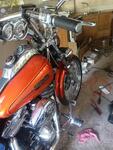

 I guess it could be worse China,or Mexico or something I guess if it was a newer Harley it probably would !!










 Sticky This!









