




30,000 mile maintenance recommendations??

Thread Starter
|
Stage IV


Joined: May 2023
Posts: 4
Likes: 3
From: PA
 30,000 mile maintenance recommendations??
I just bought a '97 Road King-- Police fuel injected model. Just wondering if there are known issues that I should address at that mileage.
I've read about the "grenade plate" but am a bit confused as to what it really is.
Also, I've read about some lifter problems but am a bit unsure as to what I should do about that.
Anything else that I should worry about?
Thanks,
John
I've read about the "grenade plate" but am a bit confused as to what it really is.
Also, I've read about some lifter problems but am a bit unsure as to what I should do about that.
Anything else that I should worry about?
Thanks,
John
Cruiser


Joined: May 2020
Posts: 231
Likes: 450
From: SW Florida
I just bought a '97 Road King-- Police fuel injected model. Just wondering if there are known issues that I should address at that mileage.
I've read about the "grenade plate" but am a bit confused as to what it really is.
Also, I've read about some lifter problems but am a bit unsure as to what I should do about that.
Anything else that I should worry about?
Thanks,
John
I've read about the "grenade plate" but am a bit confused as to what it really is.
Also, I've read about some lifter problems but am a bit unsure as to what I should do about that.
Anything else that I should worry about?
Thanks,
John
Thread Starter
|
Stage IV
Joined: May 2023
Posts: 4
Likes: 3
From: PA
Thanks.l The service manual came with the bike. Good seller. 
So far, I changed out it back to stock pipes.
I need to replace the heated grips.
Other than that, it's just been a fun ride so far.
So far, I changed out it back to stock pipes.
I need to replace the heated grips.
Other than that, it's just been a fun ride so far.

HDF Community Team

Joined: Jan 2020
Posts: 1,434
Likes: 800
From: Colorado

IN the center of the clutch plates, will have a spring disc that keeps the clutch from juttering during hard launches.
You want to replace it about every 30K, before the brass rivets start breaking to take out the clutch hub.

As for the rest of the clutch discs/ pressure plates. hubs, if you replace the spring disc before it starts breaking rivets, the rest of the parts should be fine to reuse. Also with the primary cover off to pull the clutch apart to replace the spring disc, give you a quick way to check the primary chain to see if it need adjusting.
Note here, there is the extra disc kits to do away with the spring plate, but since the system uses the spring plate, and not just jutter springs like newer bikes, going to extra disc clutch can make a lot of noise on hard launches. I did try an extra disc kit, but went back to the standard spring plate in the end. the spring disc allows the clutch to be slipped a lot easier, wider lever engagement distant, and make is that much easy to use the clutch in off gears as well.
On the newer bikes that no longer use the spring disc, you have a thin flat plate on the bottom of the stack, another concaved wave spring that sits on that, then the first friction plate is smaller to mate up with the two jutter springs.
Myself, would pull the rims, to pulls the seals to re-grease the temkin wheel bearings, then install new seals. There is a grease fitting the steering bearings, so would make sure to fresh greased that as well.
Would pull the cam chest cover to take a look at the cam sensor, to make sure it not melting and then the other end connector by the ECM to make sure it has been Zip tied so it does not come undone (its a twist connector).
Would change at least the fuel filter in the tank and get a good look in the tank to make sure that the tank liner is not peeling, and then make sure to run something like Lucas fuel treatment in the fuel to clean up the rest of the fuel system.
Would change the main breaker, since it matter of more of age, then use. The main fuse is around $10, located under the seat in front of the battery, and is the breaker between the charging system and the battery. Also,Would pull the ignition switch apart to clean it, then re-delectric grease it as well.
As for shock and forks, if they are not leaking, would at least the color of the fork oil,
Myself with the rims pulled to re-grease the bearing, checking the brakes and such, would just pull the forks to rebuild them, and the shocks to replace the fluid in them as well. In the forks, use 15w fork oil to factory amount, and in the shocks, 10.5Oz of 10w fork oil. Also with rims off, get a look at the tire dates on the rims. If they are older than say 8 years old, replace the tires since they will be out of round. Trust me, with tires old and out of round, going to be a handful to hold the bike on line past 50mph down the highway.
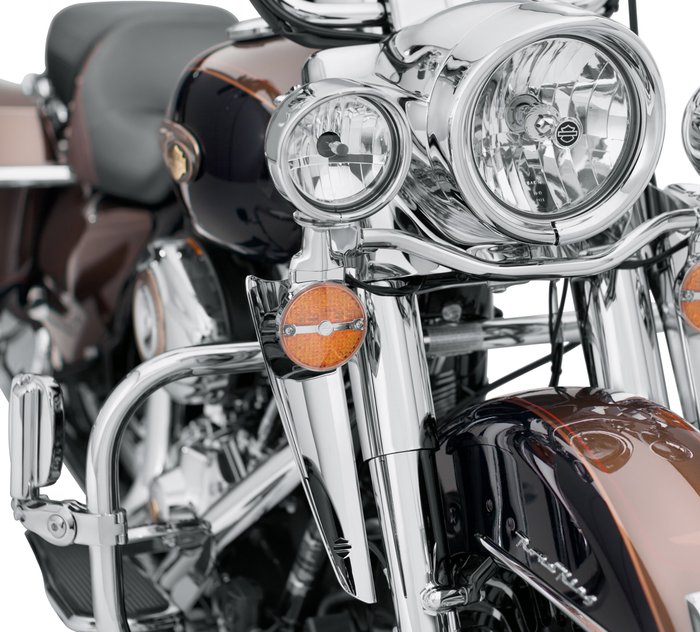
Last one, if you are running the fairing, then get front fangs for the bike if it did not come with it. It keeps you from getting head buffeting from the air that comes up under the fairling, as well works like a steering damper to keep the front end stable at speeds as well. On my 97RK with fairing before the fangs, would not dare take my hands off the bars at 55mph, while with fangs, take my hands off the bars over over 80mph instead. As for install, only take a few mins and they bolt right up to the existing bolts on the side of the forks.
Regarding the fairing, should be looking over the top of it by about 2". It can be replaced for about a C note, or just have it cut down if clean instead.
As for the lifters, and even the cam bearing if still running the solid push rods, it gets a bit deep at that point.
What you may want to do is pull one of the lifter cover top clips to pull up on the cover and see if the push rods are still solid, or have been replace to adjustable push rods instead. If adjustable, maybe someone has already been in the motor to change the lifters and cam bearing, while is still solid, crap shoot of what is still in play.
Myself, if lifters and cam bearing is not making any noise with solid push rods still in play,and don't have a base gasket leak to justify pulling the top end apart, may want to hold off on this.
You want to replace it about every 30K, before the brass rivets start breaking to take out the clutch hub.
As for the rest of the clutch discs/ pressure plates. hubs, if you replace the spring disc before it starts breaking rivets, the rest of the parts should be fine to reuse. Also with the primary cover off to pull the clutch apart to replace the spring disc, give you a quick way to check the primary chain to see if it need adjusting.
Note here, there is the extra disc kits to do away with the spring plate, but since the system uses the spring plate, and not just jutter springs like newer bikes, going to extra disc clutch can make a lot of noise on hard launches. I did try an extra disc kit, but went back to the standard spring plate in the end. the spring disc allows the clutch to be slipped a lot easier, wider lever engagement distant, and make is that much easy to use the clutch in off gears as well.
On the newer bikes that no longer use the spring disc, you have a thin flat plate on the bottom of the stack, another concaved wave spring that sits on that, then the first friction plate is smaller to mate up with the two jutter springs.
Myself, would pull the rims, to pulls the seals to re-grease the temkin wheel bearings, then install new seals. There is a grease fitting the steering bearings, so would make sure to fresh greased that as well.
Would pull the cam chest cover to take a look at the cam sensor, to make sure it not melting and then the other end connector by the ECM to make sure it has been Zip tied so it does not come undone (its a twist connector).
Would change at least the fuel filter in the tank and get a good look in the tank to make sure that the tank liner is not peeling, and then make sure to run something like Lucas fuel treatment in the fuel to clean up the rest of the fuel system.
Would change the main breaker, since it matter of more of age, then use. The main fuse is around $10, located under the seat in front of the battery, and is the breaker between the charging system and the battery. Also,Would pull the ignition switch apart to clean it, then re-delectric grease it as well.
As for shock and forks, if they are not leaking, would at least the color of the fork oil,
Myself with the rims pulled to re-grease the bearing, checking the brakes and such, would just pull the forks to rebuild them, and the shocks to replace the fluid in them as well. In the forks, use 15w fork oil to factory amount, and in the shocks, 10.5Oz of 10w fork oil. Also with rims off, get a look at the tire dates on the rims. If they are older than say 8 years old, replace the tires since they will be out of round. Trust me, with tires old and out of round, going to be a handful to hold the bike on line past 50mph down the highway.
Last one, if you are running the fairing, then get front fangs for the bike if it did not come with it. It keeps you from getting head buffeting from the air that comes up under the fairling, as well works like a steering damper to keep the front end stable at speeds as well. On my 97RK with fairing before the fangs, would not dare take my hands off the bars at 55mph, while with fangs, take my hands off the bars over over 80mph instead. As for install, only take a few mins and they bolt right up to the existing bolts on the side of the forks.
Regarding the fairing, should be looking over the top of it by about 2". It can be replaced for about a C note, or just have it cut down if clean instead.
As for the lifters, and even the cam bearing if still running the solid push rods, it gets a bit deep at that point.
What you may want to do is pull one of the lifter cover top clips to pull up on the cover and see if the push rods are still solid, or have been replace to adjustable push rods instead. If adjustable, maybe someone has already been in the motor to change the lifters and cam bearing, while is still solid, crap shoot of what is still in play.
Myself, if lifters and cam bearing is not making any noise with solid push rods still in play,and don't have a base gasket leak to justify pulling the top end apart, may want to hold off on this.

Road Warrior
Joined: Apr 2018
Posts: 1,347
Likes: 820
From: Moneta, Virginia
I have a ‘97 with 106+ miles on her, I haven’t had a clutch issue. Maybe I’m just living right!
Has the bike been sitting unused or just ridden a few hundred Miles a year for 26 years?
Do you have any maintenance records?
Has the bike been sitting unused or just ridden a few hundred Miles a year for 26 years?
Do you have any maintenance records?
HDF Community Team
Joined: Jan 2020
Posts: 1,434
Likes: 800
From: Colorado
Also, although you can find the TPS now, if you do start to have problems with dead throttle on the MM FI system, I did a write up on pulling the sensor apart to tweak more tension on the wipers, so it will read correctly again.
https://www.hdforums.com/forum/ignit...for-evo-s.html
And how to reinstall and time it.
https://www.hdforums.com/forum/touri...r-issue-3.html
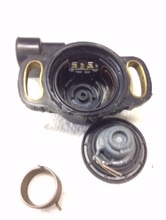
The down and dirty is the swiper spring legs go weak from age (notice how they are slightly bent inward in the below photo), so your just pulling it apart to tweak the spring swiper legs a touch more outwards again, so when reinstalled, will track more cleanly instead.
Also, take a peek through the bottom of the voltage regulator to get a look at the front motor mount.
The old style is on the right, while the update style in on the left.
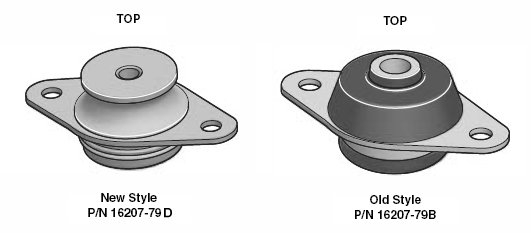
If old style still in play, should have a gap between the bottom of the motor mount plate, and the rubber below it on the motor mount.
If new style, no gap since the rubber top comes all the way up to the bottom of the plate, unlike the older type that had the raised sleeve above the rubber section.
As for motor mounts, what happens in the inner metal sleeve is bonded to the rubber inner section, and its just a mater of time before the sleeve tears away from the rubber to cause it to fail (will be able to see if from the bottom of mount when it tears away, as well as the motor really dancing up and down more than normal).
I got about three years each on the old style replacements before they would let loose/fail, have installed a new style one ($100), and give it about 4 years before it fails and will be replacing it again.
Last one, and if you are getting decel popping, its due to the intake rubber seals going dry and leaking at the heads.
If you need to replace them (just a few dollars), just dielectric grease the hell out of the rubber seals, the cups they mate into on the plate, and the intake pipe section surfaces as well. The silicone grease will keep the rubber seals from heat drying out so fast, so you get more than a few years out of the seals before they need to be replace again. Also, when installing the bolts back in, make dam sure to use a drop of 242 on the bolts, so they are not shaken out of the heads to cause a leak as well.
https://www.hdforums.com/forum/ignit...for-evo-s.html
And how to reinstall and time it.
https://www.hdforums.com/forum/touri...r-issue-3.html
The down and dirty is the swiper spring legs go weak from age (notice how they are slightly bent inward in the below photo), so your just pulling it apart to tweak the spring swiper legs a touch more outwards again, so when reinstalled, will track more cleanly instead.
Also, take a peek through the bottom of the voltage regulator to get a look at the front motor mount.
The old style is on the right, while the update style in on the left.
If old style still in play, should have a gap between the bottom of the motor mount plate, and the rubber below it on the motor mount.
If new style, no gap since the rubber top comes all the way up to the bottom of the plate, unlike the older type that had the raised sleeve above the rubber section.
As for motor mounts, what happens in the inner metal sleeve is bonded to the rubber inner section, and its just a mater of time before the sleeve tears away from the rubber to cause it to fail (will be able to see if from the bottom of mount when it tears away, as well as the motor really dancing up and down more than normal).
I got about three years each on the old style replacements before they would let loose/fail, have installed a new style one ($100), and give it about 4 years before it fails and will be replacing it again.
Last one, and if you are getting decel popping, its due to the intake rubber seals going dry and leaking at the heads.
If you need to replace them (just a few dollars), just dielectric grease the hell out of the rubber seals, the cups they mate into on the plate, and the intake pipe section surfaces as well. The silicone grease will keep the rubber seals from heat drying out so fast, so you get more than a few years out of the seals before they need to be replace again. Also, when installing the bolts back in, make dam sure to use a drop of 242 on the bolts, so they are not shaken out of the heads to cause a leak as well.
Last edited by Dano523; May 28, 2023 at 07:11 PM.
Trending Topics
HDF Community Team
Joined: Jan 2020
Posts: 1,434
Likes: 800
From: Colorado
No way in hell that an Evo clutch spring plate is going to live 106K miles of clutch use without snapping/ throwing rivets, so would dare to guess that either different clutch set up with bottom jutter springs, or extra disc was installed to replace the spring plate instead.
As stated, as the brass rivets start to break apart, they will migrate into the clutch base, as well as the spring plates will come out as well, and it just grooves the hell out of the spines of basket and hub to make a real mess of them as you loose the function of the clutch. Also, find it strange that clutch hub bearing would last that long as well (read HD did kind of design all these parts on a limited life span concept, to make more money wrenching on the bikes as well).
Myself, I just replace the spring plate ($30) like Clock work every 30K before it fails, which allows me to take a look at the friction plates and discs at the same time, check the clutch basket bearing for run out, as well as check.adjust tension on the primary chain. Hence its a Harley that your doing fluid changes on every 5K, so not a bad idea to pull the primary cover to give all its parts an once over every 30K..
And as pointed out, intake seals are never going to last more than 5 years best case, same with front motor mount, and just goes on and on with Any HD that will have parts that will need to be replace from time to time. Its kind of the reason that HD wants you take the bike in every 5K to be serviced (which most of use do ourselves on the older bikes, since the dealers will not longer touch them).
Last edited by Dano523; May 28, 2023 at 07:14 PM.
HD Forum Stories
The Best of Harley-Davidson for Lifelong Riders

7 Surprising Harley-Davidson Products that Are Not Motorcycles
Verdad Gallardo
8 Best Harley-Davidson Motorcycles Ever
Pouria Savadkouei
10 Worst Harley-Davidson Motorcycles Ever
Pouria Savadkouei
Killer Custom's Jail Break Is The Breakout That Refused to Blend In
Verdad Gallardo
Crazy Bunderbike Build Looks Amazing, But Is It Impossible to Ride?
Verdad Gallardo
Harley-Davidson Reveals Super Cool Cafe Racer Concept
Verdad Gallardo
Engraved Rebellion: Inside Bundnerbike's Glam Rock II
Verdad Gallardo
10 Motorcycles You Should Never Buy
Joe Kucinski
10 Things Harley-Davidson Needs to Fix in 2026
Verdad Gallardo
Road Warrior
Joined: Apr 2018
Posts: 1,347
Likes: 820
From: Moneta, Virginia
No way in hell that an Evo clutch spring plate is going to live 106K miles of clutch use without snapping/ throwing rivets, so would dare to guess that either different clutch set up with bottom jutter springs, or extra disc was installed to replace the spring plate instead.
As stated, as the brass rivets start to break apart, they will migrate into the clutch base, as well as the spring plates will come out as well, and it just grooves the hell out of the spines of basket and hub to make a real mess of them as you loose the function of the clutch. Also, find it strange that clutch hub bearing would last that long as well (read HD did kind of design all these parts on a limited life span concept, to make more money wrenching on the bikes as well).
Myself, I just replace the spring plate ($30) like Clock work every 30K before it fails, which allows me to take a look at the friction plates and discs at the same time, check the clutch basket bearing for run out, as well as check.adjust tension on the primary chain. Hence its a Harley that your doing fluid changes on every 5K, so not a bad idea to pull the primary cover to give all its parts an once over every 30K..
And as pointed out, intake seals are never going to last more than 5 years best case, same with front motor mount, and just goes on and on with Any HD that will have parts that will need to be replace from time to time. Its kind of the reason that HD wants you take the bike in every 5K to be serviced (which most of use do ourselves on the older bikes, since the dealers will not longer touch them).
As stated, as the brass rivets start to break apart, they will migrate into the clutch base, as well as the spring plates will come out as well, and it just grooves the hell out of the spines of basket and hub to make a real mess of them as you loose the function of the clutch. Also, find it strange that clutch hub bearing would last that long as well (read HD did kind of design all these parts on a limited life span concept, to make more money wrenching on the bikes as well).
Myself, I just replace the spring plate ($30) like Clock work every 30K before it fails, which allows me to take a look at the friction plates and discs at the same time, check the clutch basket bearing for run out, as well as check.adjust tension on the primary chain. Hence its a Harley that your doing fluid changes on every 5K, so not a bad idea to pull the primary cover to give all its parts an once over every 30K..
And as pointed out, intake seals are never going to last more than 5 years best case, same with front motor mount, and just goes on and on with Any HD that will have parts that will need to be replace from time to time. Its kind of the reason that HD wants you take the bike in every 5K to be serviced (which most of use do ourselves on the older bikes, since the dealers will not longer touch them).
Road Warrior
Joined: Apr 2018
Posts: 1,347
Likes: 820
From: Moneta, Virginia
I looked in the service manual and it shows the spring disk with the rivets. The manual on my ‘01 RK shows a different spring disk, no rivets pictured.
I wonder when they made a change? Could my ‘97 have the different spring disk?
I wonder when they made a change? Could my ‘97 have the different spring disk?