


new improved ignition ?

Club Member


Joined: Jun 2007
Posts: 45,429
Likes: 2,898
From: Bedford UK

Graham I must admit I like the idea of an ignition that may reverse any government reductions, if that makes scence? I kind of understand the retard setup where as the ignition I think has the most get up and go when its fully advanced but correct me if I'm wrong the motor would run hot too hot if always running fully advanced.
Graham back in the days of riding the 76 iron to reduce rpm's on the hiway I changed the front sprocket to a bigger sprocket but can't say I've heard much on upping the rear sprocket, I would think this would add to the RPM\s on the hi-speeds.
By the way Graham I'm in Canada but I think the US and Canadian bikes are for the most part regulated the same.
Thread Starter
|
Stellar HDF Member
Joined: Apr 2009
Posts: 3,039
Likes: 11
From: Northern Ontario
Ignition is on the way,I also got the software and cable and actually after ordering the serial cable I decided to give a call back to see if usb type is available and sure enough it is. Thanks guys for the input and thanks John for taking the time out of your busy day to explain things to me.
Seasoned HDF Member
Joined: Aug 2008
Posts: 5,082
Likes: 2,159
From: Ohio
John pointed you in a good direction, installed the Ultima/Dyna ignition kit in my warmed up Evo and very flexable advance settings from stock to giddyup. Double check the rev limiter readings, the settings on the module don't match what is on the directions, we found out when my buddies Ultima ignition hit his limiter earlier than programmed and compared directions to printed settings on the module, mine is the same way.
Thread Starter
|
Stellar HDF Member
Joined: Apr 2009
Posts: 3,039
Likes: 11
From: Northern Ontario
John pointed you in a good direction, installed the Ultima/Dyna ignition kit in my warmed up Evo and very flexable advance settings from stock to giddyup. Double check the rev limiter readings, the settings on the module don't match what is on the directions, we found out when my buddies Ultima ignition hit his limiter earlier than programmed and compared directions to printed settings on the module, mine is the same way.

Elite HDF Member
Joined: Sep 2007
Posts: 4,468
Likes: 12
From: Bluffton, South Carolina
It isn't really a problem if it comes on too soon, as you will know what it is and make the needed adjustment. However if it came on too late that could cause problems!!!!!
Outstanding HDF Member
Joined: Oct 2010
Posts: 2,706
Likes: 14
From: Near Frankenmuth, MI
Factory module on my bike was designed for a limit of 5,200 RPMs. It would start to effect my acceleration at about 4,700 rpms, cutting the engine from revving any higher.
I set my new one at 5,700 rpms and I start to pull back around 5 grand which is redline on my tach.
I like to be able to crank it up a little more than stock, but on an older bike you don't want to push it too hard, over rev it and destroy the engine.
Beside our engines are design for high torque at a lot lower (safe) RPM range.
I set my new one at 5,700 rpms and I start to pull back around 5 grand which is redline on my tach.
I like to be able to crank it up a little more than stock, but on an older bike you don't want to push it too hard, over rev it and destroy the engine.
Beside our engines are design for high torque at a lot lower (safe) RPM range.

Tourer
Joined: Dec 2007
Posts: 275
Likes: 0
There are a lot of good reasons to have an adjustable ignition module especially if you live someplece like Northern California where a few hours ride can take you from sea level to 8000 feet and fuel ranges from 116 octane race gas to E85 or even oxygenated and alcohol blended fuel.
The idea from any ignition curve to get as much advance in as quickly as you can without bad things happening. Lots of variables come in to play. On a "stock" engine with a stock ignition most vtwin ignitions start at about 22-25 degrees btc at idle or 1000 RPM +/_. This quickly climbs to 36 degrees at 3500, 42-43 degrees at 4500 and maybe tops out at 46 degrees at 6000.
Poor fuel, vehicle weight, compression, air and engine temperature all change the equation and can cause pinging (also called knock, detonation, spark knock, pinging or pinking) in spark-ignition internal combustion engines occurs when combustion of the air/fuel mixture in the cylinder starts off correctly in response to ignition by the spark plug, but one or more pockets of air/fuel mixture explode outside the envelope of the normal combustion front. The fuel-air charge is meant to be ignited by the spark plug only, and at a precise time in the piston's stroke cycle. The peak of the combustion process no longer occurs at the optimum moment for the four-stroke cycle. The shock wave creates the characteristic metallic "pinging" sound, and cylinder pressure increases dramatically. Effects of engine knocking range from inconsequential to completely destructive. The trick for maximum performance is to to that point but not beyond.
In normal combustion, this flame front moves throughout the fuel/air mixture at a rate characteristic for the fuel/air mixture. Pressure rises smoothly to a peak, as nearly all the available fuel is consumed, then pressure falls as the piston descends. Maximum cylinder pressure is achieved a few crankshaft degrees after the piston passes TDC, so that the increasing pressure can give the piston a hard push when its speed and mechanical advantage on the crank shaft gives the best recovery of force from the expanding gases.
Porting, compression, piston materials and coatings all contribute to or inhibit the process. This is the reason we use forged pistons and dial in cam settings to create an optimum condition which are almost never emissions friendly. IMHO if your bike is stock, live someplace flat, do not ride hard and have a good fuel source you will be fine with a "stock" ignition.
For my money I like the flexibility a programmable or adjustable box allows.
The idea from any ignition curve to get as much advance in as quickly as you can without bad things happening. Lots of variables come in to play. On a "stock" engine with a stock ignition most vtwin ignitions start at about 22-25 degrees btc at idle or 1000 RPM +/_. This quickly climbs to 36 degrees at 3500, 42-43 degrees at 4500 and maybe tops out at 46 degrees at 6000.
Poor fuel, vehicle weight, compression, air and engine temperature all change the equation and can cause pinging (also called knock, detonation, spark knock, pinging or pinking) in spark-ignition internal combustion engines occurs when combustion of the air/fuel mixture in the cylinder starts off correctly in response to ignition by the spark plug, but one or more pockets of air/fuel mixture explode outside the envelope of the normal combustion front. The fuel-air charge is meant to be ignited by the spark plug only, and at a precise time in the piston's stroke cycle. The peak of the combustion process no longer occurs at the optimum moment for the four-stroke cycle. The shock wave creates the characteristic metallic "pinging" sound, and cylinder pressure increases dramatically. Effects of engine knocking range from inconsequential to completely destructive. The trick for maximum performance is to to that point but not beyond.
In normal combustion, this flame front moves throughout the fuel/air mixture at a rate characteristic for the fuel/air mixture. Pressure rises smoothly to a peak, as nearly all the available fuel is consumed, then pressure falls as the piston descends. Maximum cylinder pressure is achieved a few crankshaft degrees after the piston passes TDC, so that the increasing pressure can give the piston a hard push when its speed and mechanical advantage on the crank shaft gives the best recovery of force from the expanding gases.
Porting, compression, piston materials and coatings all contribute to or inhibit the process. This is the reason we use forged pistons and dial in cam settings to create an optimum condition which are almost never emissions friendly. IMHO if your bike is stock, live someplace flat, do not ride hard and have a good fuel source you will be fine with a "stock" ignition.
For my money I like the flexibility a programmable or adjustable box allows.
Last edited by michael95688; Jun 15, 2011 at 09:20 PM.
HD Forum Stories
The Best of Harley-Davidson for Lifelong Riders
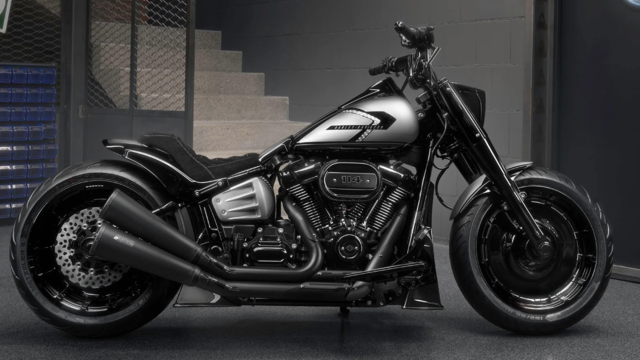
Harley-Davidson Fat Boy Becomes a Dark, Decepticon-Inspired Custom
Verdad Gallardo
6 Weirdest Harley-Davidsons Ever Sold to the Public
Verdad Gallardo
7 Times Harley-Davidson Chucked Tradition Out the Window
Verdad Gallardo
7 Surprising Harley-Davidson Products that Are Not Motorcycles
Verdad Gallardo
8 Best Harley-Davidson Motorcycles Ever
Pouria Savadkouei
10 Worst Harley-Davidson Motorcycles Ever
Pouria Savadkouei
Killer Custom's Jail Break Is The Breakout That Refused to Blend In
Verdad Gallardo
Crazy Bunderbike Build Looks Amazing, But Is It Impossible to Ride?
Verdad Gallardo
Harley-Davidson Reveals Super Cool Cafe Racer Concept
Verdad Gallardo
Thread
Thread Starter
Forum
Replies
Last Post
