





Understanding the role of "backpressure"

Thread Starter
|
Seasoned HDF Member


Joined: Sep 2009
Posts: 17,143
Likes: 6,165
From: SE Michigan
 Understanding the role of "backpressure"
Thought I'd start a conversation. Clearly its a more complex topic than you might think, and I personally dont have a great understanding, so I thought I'd see if any of the expert builders and tuners out there can make it easier for us to understand.
I often read comments like "<your product here> doest produce enough backpressure!",
Nobody ever says "your setup produces too much backpressure!". The conclusion you could easily draw from these observations is that you can never have enough.
I suspect, as in all things - it depends.
I'm not sure, but it seems to me what you're looking for is volumetric efficiency and scavenging. Backpressure plays a role, but as in most things, more is not always better.
I was reading this document - (yes, I know its the internet, it must be right!). Here's an interesting quote, if this is accurate:
And
Discuss.....
I often read comments like "<your product here> doest produce enough backpressure!",
Nobody ever says "your setup produces too much backpressure!". The conclusion you could easily draw from these observations is that you can never have enough.
I suspect, as in all things - it depends.
I'm not sure, but it seems to me what you're looking for is volumetric efficiency and scavenging. Backpressure plays a role, but as in most things, more is not always better.
I was reading this document - (yes, I know its the internet, it must be right!). Here's an interesting quote, if this is accurate:
...Wollongong (Australia) mechanic Kevin Davis has done extensive testing of varying
backpressure on a number of performance engines.
These range from turbocharged Subaru Legacy RS flat fours to full-house traditional pushrod V8s. In
not one case has he found any improvement in any engine performance parameter with increased
exhaust backpressure
backpressure on a number of performance engines.
These range from turbocharged Subaru Legacy RS flat fours to full-house traditional pushrod V8s. In
not one case has he found any improvement in any engine performance parameter with increased
exhaust backpressure
The tests came about because Kevin has developed a patented
variable-flow exhaust that uses a butterfly within the exhaust pipe. He initially expected to use the
system to cause some backpressure at low loads 'to help torque.'
However, he soon changed his mind when any increase in back pressure proved to decrease
torque on a properly tuned engine.
variable-flow exhaust that uses a butterfly within the exhaust pipe. He initially expected to use the
system to cause some backpressure at low loads 'to help torque.'
However, he soon changed his mind when any increase in back pressure proved to decrease
torque on a properly tuned engine.
Last edited by Keithhu; May 5, 2015 at 11:36 AM.

Tourer
Joined: Oct 2014
Posts: 389
Likes: 21
From: Hickory, NC
There are so many variables it's hard to say on e way or another on a particular engine or vehicle.
My feeling is there is little benefit of additional backpressure on a properly tuned engine, and it can be tuned around backpressure, like so many of our exhaust choices.
If there were any true benefits you would see it on race cars and bikes, but generally they have the freest flowing most open exhaust possible.
On any given setup on a harley there are other factors that have more of an effect than backpressure, head design, valves, cams, tuning, combustion chamber design, etc.
My feeling is there is little benefit of additional backpressure on a properly tuned engine, and it can be tuned around backpressure, like so many of our exhaust choices.
If there were any true benefits you would see it on race cars and bikes, but generally they have the freest flowing most open exhaust possible.
On any given setup on a harley there are other factors that have more of an effect than backpressure, head design, valves, cams, tuning, combustion chamber design, etc.

Tourer
Joined: Mar 2012
Posts: 343
Likes: 1
From: Western WA
This is a very interesting topic and I honestly have never come close to fully understanding the benefit of "back ppressure" as it pertains to exhaust flow and/ exhaust scavenging.
Hoping to see some helpful responses for this thread that can help all of us with better knowledge in order to make better tuning and buying decisions.
Hoping to see some helpful responses for this thread that can help all of us with better knowledge in order to make better tuning and buying decisions.
My understanding has always been backpressure isn't what you want, its scavenging. I think some people confuse the two.
I've never understood, nor have I seen it explained, how backpressure could be helpful in making power.
I've never understood, nor have I seen it explained, how backpressure could be helpful in making power.

Road Warrior
Joined: Jun 2012
Posts: 1,832
Likes: 67
From: Phoenix
Backpressure is more of a concern on a two-stroke than a four-stroke, if I remember right.

Seasoned HDF Member

Joined: Jul 2013
Posts: 11,185
Likes: 7,961
From: In my head
The guys at RB Racing build some of the worlds most "high tech" exhaust systems. From one off's like "Ray Price's" Top fueler and many other Racers across the world. They also build 350 hp S&S engines they stick in Road glides...
A person could learn a lot from their page regarding exhaust and how it actually works... about 5 mins in you will realize these guys know what their talking about.
http://www.rbracing-rsr.com/exhausttech.htm
Too much information to cut and paste and it would be an injustice to do so.
OS
A person could learn a lot from their page regarding exhaust and how it actually works... about 5 mins in you will realize these guys know what their talking about.
http://www.rbracing-rsr.com/exhausttech.htm
Too much information to cut and paste and it would be an injustice to do so.
OS
Seasoned HDF Member
Joined: Jul 2013
Posts: 11,185
Likes: 7,961
From: In my head
Regarding my post above and the guys at RB Racing...
I'd bet 60% or more of the forum members here run V&H pipes... And yet, V&H turns to RB Racing for their racing pipes.
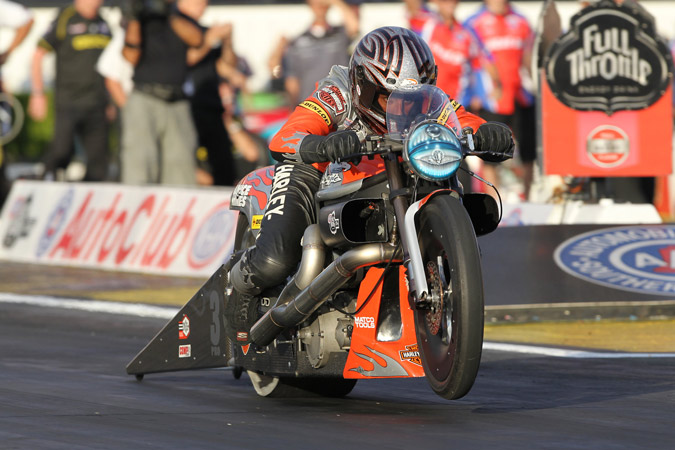
I'd bet 60% or more of the forum members here run V&H pipes... And yet, V&H turns to RB Racing for their racing pipes.
Trending Topics

Outstanding HDF Member
Joined: Mar 2010
Posts: 2,877
Likes: 2
From: Hallsville, Tx.
In racing, mostly you're talking WOT conditions, No backpressure, ala drag pipes, produce power at WOT but not in real world street conditions. I know that I'm over simplifying.
HD Forum Stories
The Best of Harley-Davidson for Lifelong Riders

8 Best Harley-Davidson Motorcycles Ever
Pouria Savadkouei
10 Worst Harley-Davidson Motorcycles Ever
Pouria Savadkouei
Killer Custom's Jail Break Is The Breakout That Refused to Blend In
Verdad Gallardo
Crazy Bunderbike Build Looks Amazing, But Is It Impossible to Ride?
Verdad Gallardo
Harley-Davidson Reveals Super Cool Cafe Racer Concept
Verdad Gallardo
Engraved Rebellion: Inside Bundnerbike's Glam Rock II
Verdad Gallardo
10 Motorcycles You Should Never Buy
Joe Kucinski
10 Things Harley-Davidson Needs to Fix in 2026
Verdad Gallardo
Southpaw Super Glide: A Left-Hand-Drive 1979 Harley FXE Built to Fit the Rider
Verdad Gallardo
Seasoned HDF Member
Joined: Jul 2013
Posts: 11,185
Likes: 7,961
From: In my head
A snip from "RB Racing"
Backpressure Physics
We are going to state this very clearly...Backpressure does not increase horsepower. Period.
An often heard statement from the well-informed is "You need a bit of backpressure for an exhaust to work". Usually this comes from someone who is not a tuner or someone who is faced with a situation where he does not have the tools or means to adjust things. Anything you do in the exhaust will change the flows, the pressures, or velocities somewhat. The correct scenario is that the exhaust has to be properly designed and then you optimize the jetting, ecu data inputs, camshafts, port dimensions, valve sizes and the like. The exhaust has to be designed for the intended use.
This all dates from the early 1980's when Supertrapp invented a muffler designed for dirtbikes to trap potential sparks, or burning, carbonized, bits, so it could have US Forrestry Approval for off-road use. The "trapp" tells what the intended purpose was. If you wanted a Harley to barely work you had to stick a couple of pounds, or about 23-25 of these discs in the end of your exhaust. Of course this didn't really work, which is why they ended up putting a hole up the middle anyway. You don't tune an exhaust.
Your engine has 15 psi (1 Bar) of atmospheric pressure sitting at the inlet and another 15 psi lurking at the end of the tailpipe. The inlet stroke creates a pressure differential and the atmosphere goes rushing inward. The exhaust valve opens and there is a pressure rise in the tube followed by a strong vacuum signal as the gases head down the pipe. Note that we said "vacuum signal."

Pressure differentials can be seen in the exhaust of a jet engine. We have a high pressure pulse coming out our exhaust system but it's just not visible as in the photo above.
The pattern of evenly spaced rings sometimes visible in the exhaust of jet engine is typically referred to as shock diamonds or Mach disks. The phenomenon occurs anytime a flow exits a nozzle at supersonic speeds and at a pressure that is different than that of the external atmosphere. Most of us are probably used to seeing shock diamonds occur near sea level during the takeoff of an aircraft, like in the above photo of the SR-71 Blackbird.
Logical extremes are often used to illustrate a point. For those who argue that backpressure can be a help they might say, from an extreme position, "Let's throw away the exhaust system so we have no backpressure at all". They would then conclude that the motor would run like crap and we would agree completely. The only problem is that they haven't gotten rid of backpressure, they simply have introduced 15 psi at the exhaust port and have given up any inertia, gas speeds or vacuum signals that exist in a primary tube.
The vacuum signal or low pressure that follows an exhaust event can be used to help scavenge the cylinder during overlap when both exhaust and inlet valves are open. Conversely, during this overlap period, the increase in backpressure can cause these burnt gases to re-enter the combustion chamber and contaminate the inlet charge. Result...loss of power.
The proper way to look at exhausts is to view them as a way to maintain the highest velocity that will not impede flow. As velocity increases the pressure drops and the engine can become more efficient. We have all the variables of length, diameter, rpm, collector size, internal shapes and the reflective waves that all this causes. There is no "one answer".
For those of you who disagree because of anecdotal evidence we would agree with you also. Altering an exhaust's flow can correct something else like mixture or spark timing. In the end, if you have to throw it off a cliff to win, do it. Only results count and if increasing back pressure helps your situation then do it.
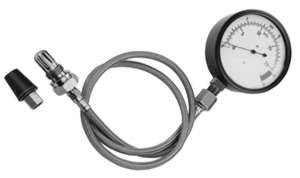
As a final thought...Gale Banks doesn't make money selling increased back pressure exhaust systems. Think about it. That picture above is a dedicated exhaust back pressure gauge. We use them.
Backpressure Physics
We are going to state this very clearly...Backpressure does not increase horsepower. Period.
An often heard statement from the well-informed is "You need a bit of backpressure for an exhaust to work". Usually this comes from someone who is not a tuner or someone who is faced with a situation where he does not have the tools or means to adjust things. Anything you do in the exhaust will change the flows, the pressures, or velocities somewhat. The correct scenario is that the exhaust has to be properly designed and then you optimize the jetting, ecu data inputs, camshafts, port dimensions, valve sizes and the like. The exhaust has to be designed for the intended use.
This all dates from the early 1980's when Supertrapp invented a muffler designed for dirtbikes to trap potential sparks, or burning, carbonized, bits, so it could have US Forrestry Approval for off-road use. The "trapp" tells what the intended purpose was. If you wanted a Harley to barely work you had to stick a couple of pounds, or about 23-25 of these discs in the end of your exhaust. Of course this didn't really work, which is why they ended up putting a hole up the middle anyway. You don't tune an exhaust.
Your engine has 15 psi (1 Bar) of atmospheric pressure sitting at the inlet and another 15 psi lurking at the end of the tailpipe. The inlet stroke creates a pressure differential and the atmosphere goes rushing inward. The exhaust valve opens and there is a pressure rise in the tube followed by a strong vacuum signal as the gases head down the pipe. Note that we said "vacuum signal."
Pressure differentials can be seen in the exhaust of a jet engine. We have a high pressure pulse coming out our exhaust system but it's just not visible as in the photo above.
The pattern of evenly spaced rings sometimes visible in the exhaust of jet engine is typically referred to as shock diamonds or Mach disks. The phenomenon occurs anytime a flow exits a nozzle at supersonic speeds and at a pressure that is different than that of the external atmosphere. Most of us are probably used to seeing shock diamonds occur near sea level during the takeoff of an aircraft, like in the above photo of the SR-71 Blackbird.
Logical extremes are often used to illustrate a point. For those who argue that backpressure can be a help they might say, from an extreme position, "Let's throw away the exhaust system so we have no backpressure at all". They would then conclude that the motor would run like crap and we would agree completely. The only problem is that they haven't gotten rid of backpressure, they simply have introduced 15 psi at the exhaust port and have given up any inertia, gas speeds or vacuum signals that exist in a primary tube.
The vacuum signal or low pressure that follows an exhaust event can be used to help scavenge the cylinder during overlap when both exhaust and inlet valves are open. Conversely, during this overlap period, the increase in backpressure can cause these burnt gases to re-enter the combustion chamber and contaminate the inlet charge. Result...loss of power.
The proper way to look at exhausts is to view them as a way to maintain the highest velocity that will not impede flow. As velocity increases the pressure drops and the engine can become more efficient. We have all the variables of length, diameter, rpm, collector size, internal shapes and the reflective waves that all this causes. There is no "one answer".
For those of you who disagree because of anecdotal evidence we would agree with you also. Altering an exhaust's flow can correct something else like mixture or spark timing. In the end, if you have to throw it off a cliff to win, do it. Only results count and if increasing back pressure helps your situation then do it.
As a final thought...Gale Banks doesn't make money selling increased back pressure exhaust systems. Think about it. That picture above is a dedicated exhaust back pressure gauge. We use them.
Last edited by Oldskewl; May 5, 2015 at 03:31 PM.
Seasoned HDF Member
Joined: Jul 2013
Posts: 11,185
Likes: 7,961
From: In my head
If you go to the website I posted, you can find a wealth of information for those seeking to really understand how it all works and why it works.
RB produces pipes for the average stock bike as well as racing applications, regardless, the principals are the same.
Hope this helps.
OS