




Dielectric Grease
Seasoned HDF Member


Joined: Apr 2015
Posts: 7,709
Likes: 7,850
From: New York

Disclaimer: I am an electrical moron. [I've literally snipped positive & negative, simultaneously, upon the vague assurance that the proper fuse had been pulled.] However, this statement might help: "The grease does not conduct electricity, so it shouldn’t be applied directly to the mating surfaces (pins and sockets) of an electrical connection." Thus, being an insulator and not a conductor, especially with a CANBUS system and my limited knowledge of how that system reacts to voltage variations, I suspect there could be the risk of simulating a "short" by using the grease.

Seasoned HDF Member
Joined: Jun 2014
Posts: 14,262
Likes: 15,534
From: Tulsa
An open more likely, but yes it could have a negative effect on the circuit.
Seasoned HDF Member

Joined: Jun 2010
Posts: 9,332
Likes: 3,874
From: Upstate New York
The main reason they say not to use it is that dielectric grease is an insulator. If too much is used it will interrupt the flow to the circuit and LEDs are very low power so a small interruption can be significant. Most people have a tendency to use the More is Better approach and that defeats any advantage the grease may have had.
The insulating properties BTW are similar to a capacitor. The more current, the more resistance.
The insulating properties BTW are similar to a capacitor. The more current, the more resistance.

Thread Starter
|
Outstanding HDF Member
Joined: Sep 2017
Posts: 2,008
Likes: 788
From: Great State of Texas
Oh man, the lights look awesome and couldn't be happier with the way they look. They made an incredible difference as far as visibility. My wife doesn't care anything about bikes but she commented how awesome it looked. It got her attention!
For anyone else interested...I went ahead and put a thin dab of the dielectric grease on all the other bulb connections. Everything worked afterwards.
For anyone else interested...I went ahead and put a thin dab of the dielectric grease on all the other bulb connections. Everything worked afterwards.
Last edited by Cbyway; Feb 15, 2018 at 07:02 AM.

Seasoned HDF Member


Joined: Mar 2010
Posts: 38,656
Likes: 6,455
From: Honah Lee
I use silicone grease which I assume is dialectic. I think there concern was since I assume is was the spring loaded 1157 spring contacts that a big blob of grease would push that fiber disk down (hydraulic pressure) removing the contacts from the bulb base. LED bulbs are low voltage and amperage, so it does not take much for them not to work. A volt drop on a indecasant bulb is hardly noticeable, probably kill a LED. However, I am confused that the connection is 12.7 battery voltage and the bulb has the LED and circuit for them.
I have LED bulbs in my rear brake to help the hydraulic and lever micro switch last longer and I used silicone on it. Has worked fine for years now.
I have a switch on RIP's side by side door fridge that uses 2 AA batteries. When they get low, the 6 LED's get dimmer progressive to indicate low voltage. Easly done since there are wired in series to drop voltage to there rating like Christmas tree lights.
I have LED bulbs in my rear brake to help the hydraulic and lever micro switch last longer and I used silicone on it. Has worked fine for years now.
I have a switch on RIP's side by side door fridge that uses 2 AA batteries. When they get low, the 6 LED's get dimmer progressive to indicate low voltage. Easly done since there are wired in series to drop voltage to there rating like Christmas tree lights.
Last edited by Jackie Paper; Feb 15, 2018 at 08:50 AM.
HD Forum Stories
The Best of Harley-Davidson for Lifelong Riders
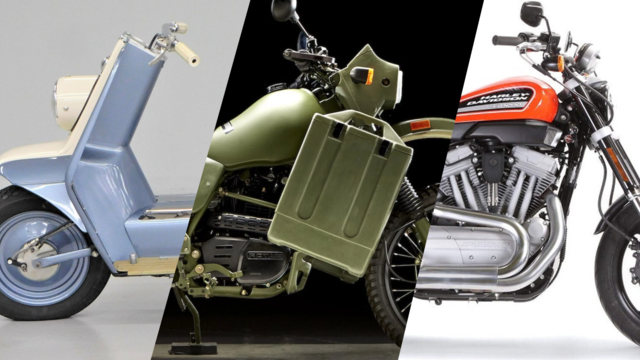
6 Weirdest Harley-Davidsons Ever Sold to the Public
Verdad Gallardo
7 Times Harley-Davidson Chucked Tradition Out the Window
Verdad Gallardo
7 Surprising Harley-Davidson Products that Are Not Motorcycles
Verdad Gallardo
8 Best Harley-Davidson Motorcycles Ever
Pouria Savadkouei
10 Worst Harley-Davidson Motorcycles Ever
Pouria Savadkouei
Killer Custom's Jail Break Is The Breakout That Refused to Blend In
Verdad Gallardo
Crazy Bunderbike Build Looks Amazing, But Is It Impossible to Ride?
Verdad Gallardo
Harley-Davidson Reveals Super Cool Cafe Racer Concept
Verdad Gallardo