







Dielectric Grease

Thread Starter
|
Outstanding HDF Member
Joined: Sep 2017
Posts: 2,008
Likes: 788
From: Great State of Texas

I tried Noxema and Baby Magic once.......once...

Tourer

Joined: Mar 2011
Posts: 424
Likes: 0
From: Emory,TX
LED's can be spec'd to run on 3-48 volts, depends on the particular led...most automotive led's are 12v variety

Road Captain


Joined: Aug 2016
Posts: 696
Likes: 488
From: Southern Indiana
It depends on how you use the grease. I had that experience just yesterday, installing new Sunpie lights and a BAL-1 tail light. I put too much grease in the sockets for the pins and the light would not work until I took apart and cleaned out the sockets with a toothpick.
You want very little grease on the actual metal contacts to complete the circuit.
Then smear the grease on the outside of any exposed metal to inhibit corrosion.
You want very little grease on the actual metal contacts to complete the circuit.
Then smear the grease on the outside of any exposed metal to inhibit corrosion.
Road Captain
Joined: Nov 2017
Posts: 514
Likes: 160
From: So Cal!
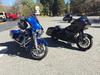
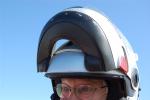
Oh man, the lights look awesome and couldn't be happier with the way they look. They made an incredible difference as far as visibility. My wife doesn't care anything about bikes but she commented how awesome it looked. It got her attention!
For anyone else interested...I went ahead and put a thin dab of the dielectric grease on all the other bulb connections. Everything worked afterwards.
For anyone else interested...I went ahead and put a thin dab of the dielectric grease on all the other bulb connections. Everything worked afterwards.
Road Warrior
Joined: May 2007
Posts: 1,635
Likes: 58
From: Bishkek, Kyrgyzstan
Dielectric grease is mainly for corrosion resistance.

Stellar HDF Member
Joined: Jul 2017
Posts: 2,328
Likes: 2,410
From: Jackson, OH
My business commonly installs and services 12v landscape lighting. I'm talking about custom-designed systems powered by good transformers and using a variety of fixtures and lamps, from simple incandescent to halogen to led. In these installations all of the wire runs are under something...be it stone, mulch, dirt, etc. Every main connection must have a generous amount of dielectric grease if it is subjected to constant moisture. At the fixture itself (where the bulb connects) we do not use dielectric grease at all. This is particularly true for led bulbs and fixtures. We've tried it both ways many times and found that dielectric grease (which is nonconductive) is too easy to over-apply and it will interfere with conduction in some cases. With led fixtures the power draw is so minimal in comparison to an equivalent incandescent fixture that any reduction of conductivity can impede function or performance.
My general rule is this: Dielectric grease should not be used between actual connection or contact points except in larger connectors supported by larger wire and offering plenty of current. Use it only as a corrosion inhibitor. It does not expel or prevent moisture intrusion, but it does help prevent moisture-induced corrosion or oxidation. In the end, it comes down to knowing how much real benefit you get from it and often it's not enough to worry with in connections that usually stay dry or dry quickly.
My general rule is this: Dielectric grease should not be used between actual connection or contact points except in larger connectors supported by larger wire and offering plenty of current. Use it only as a corrosion inhibitor. It does not expel or prevent moisture intrusion, but it does help prevent moisture-induced corrosion or oxidation. In the end, it comes down to knowing how much real benefit you get from it and often it's not enough to worry with in connections that usually stay dry or dry quickly.
Thread Starter
|
Outstanding HDF Member
Joined: Sep 2017
Posts: 2,008
Likes: 788
From: Great State of Texas
Originally Posted by Dillbilly Bone
My business commonly installs and services 12v landscape lighting. I'm talking about custom-designed systems powered by good transformers and using a variety of fixtures and lamps, from simple incandescent to halogen to led. In these installations all of the wire runs are under something...be it stone, mulch, dirt, etc. Every main connection must have a generous amount of dielectric grease if it is subjected to constant moisture. At the fixture itself (where the bulb connects) we do not use dielectric grease at all. This is particularly true for led bulbs and fixtures. We've tried it both ways many times and found that dielectric grease (which is nonconductive) is too easy to over-apply and it will interfere with conduction in some cases. With led fixtures the power draw is so minimal in comparison to an equivalent incandescent fixture that any reduction of conductivity can impede function or performance.
My general rule is this: Dielectric grease should not be used between actual connection or contact points except in larger connectors supported by larger wire and offering plenty of current. Use it only as a corrosion inhibitor. It does not expel or prevent moisture intrusion, but it does help prevent moisture-induced corrosion or oxidation. In the end, it comes down to knowing how much real benefit you get from it and often it's not enough to worry with in connections that usually stay dry or dry quickly.
My general rule is this: Dielectric grease should not be used between actual connection or contact points except in larger connectors supported by larger wire and offering plenty of current. Use it only as a corrosion inhibitor. It does not expel or prevent moisture intrusion, but it does help prevent moisture-induced corrosion or oxidation. In the end, it comes down to knowing how much real benefit you get from it and often it's not enough to worry with in connections that usually stay dry or dry quickly.
I am on an iPad and haven't figured out where the "Thanks" button is here. So Thanks
Thank you to everyone else as well.
HD Forum Stories
The Best of Harley-Davidson for Lifelong Riders

7 Surprising Harley-Davidson Products that Are Not Motorcycles
Verdad Gallardo
8 Best Harley-Davidson Motorcycles Ever
Pouria Savadkouei
10 Worst Harley-Davidson Motorcycles Ever
Pouria Savadkouei
Killer Custom's Jail Break Is The Breakout That Refused to Blend In
Verdad Gallardo
Crazy Bunderbike Build Looks Amazing, But Is It Impossible to Ride?
Verdad Gallardo
Harley-Davidson Reveals Super Cool Cafe Racer Concept
Verdad Gallardo
Engraved Rebellion: Inside Bundnerbike's Glam Rock II
Verdad Gallardo
10 Motorcycles You Should Never Buy
Joe Kucinski
10 Things Harley-Davidson Needs to Fix in 2026
Verdad Gallardo
Thread Starter
|
Outstanding HDF Member
Joined: Sep 2017
Posts: 2,008
Likes: 788
From: Great State of Texas
Originally Posted by SoCalHDMC
I have always been a fan of dielectric grease on connectors that were not sealed. Been using it on incandescent, halogen, and LED bulbs and connectors for 30+ years, still a fan with no failures. Have a Ciro Vision X headlight, matching Passing Lamp bulbs, Fang LED turn signals and taillights, Bag Blades, and Custom Dynamics Tri-Bar brake light and strobe module, all assembled with a bit of dielectric grease, and everything works impeccably.
Road Captain
Joined: Nov 2017
Posts: 514
Likes: 160
From: So Cal!


