




Lotsa pressure

Stellar HDF Member

Joined: Feb 2006
Posts: 3,035
Likes: 17
From: Houston Texas

it starts on the second or third kick...so far. That's welcome news!
My hopes are pretty high though because it doesn't trip when I blip the throttle at all. No flames out of the pipes either. More good news!
And get this! I set the Idle at 2000 RPM with the throttle lock, put the timing light on it and the mark is right in the middle! It fluctuates a bit , but uses less than 1/3 of the window. You have the timing nailed down perfectly! Actually as long as the mark shows up anywhere in the hole....that is close enough. I guess the backfiring was the timing afterall. Next time you will know what to look at if it starts again.
I was having a bit of trouble seeing the rear timing mark though. I could see it but I think most of the time it wasn't visible because the front mark was there. Because both cylinders fire at the same time, right? Yes, both fire at the same time. Only the cylinder that is on compression stroke ignites. The other cylinder on exhaust stroke just gets a 'waste spark.'
One thing I did encounter was having a bit of trouble getting the idle to stay below 1200 RPM's. After looking a little closer , I noticed that my idle speed adjustment screw wasn't touching the ear on the throttle shaft. The butterfly must not be perfectly centered. That is exactly correct. Something is not allowing the butterfly to fully close and that results in an overly fast idle speed. It does not take much either.
Another member here on the forum recently asked the same question about an S&S carb. I know almost nothing about an S&S myself, but I suggested he look at his butterfly as the reason for his fast idle speed.
Oh, well I wanted to pull the carb anyway to inspect the float and everything for any reasons it may be hanging up. I also wanted to lock tight the screws in the throttle and choke plate as well. I'd really rather not suck one of those babies into the intake!
Something else that may be noteworthy. In light of pushrod adjustment last night , I was listening extra close for lifter clatter or the pushrods bouncing around between the rockers and lifter. I heard something possibly similar. Put my ear to the covers and then realized that it was coming from inside the carb. I think what I was hearing was the valves closing. Could this be? I didn't hear it before the adjustment. I think I'm glad I hear it. Little concerned as well. Sure, it may be the sound of the valves closing. There is nothing but a tunnel containing an air/fuel mix between the intake valve and the carb venturi, and that manifold is short.
As you know, with solid lifters noise is better than quiet. Quiet means things are too tight which leaves valves open. Noise means valves are fully closing which is a good thing.
Thanks again for all the help. Otherwise , I may have given in, heeded all the locals advice and taken it out to Roberson's ( a shop about 45 min. away that works on mainly shovels). Then the next time I had an issue, I'd have to load it up and take it back again, that is if they would even work on an Ironhead. The help and in depth explanations are truly priceless. They have made me understand and appreciate this old bike even more. As I said before, it's all starting to make sense.
My hopes are pretty high though because it doesn't trip when I blip the throttle at all. No flames out of the pipes either. More good news!
And get this! I set the Idle at 2000 RPM with the throttle lock, put the timing light on it and the mark is right in the middle! It fluctuates a bit , but uses less than 1/3 of the window. You have the timing nailed down perfectly! Actually as long as the mark shows up anywhere in the hole....that is close enough. I guess the backfiring was the timing afterall. Next time you will know what to look at if it starts again.
I was having a bit of trouble seeing the rear timing mark though. I could see it but I think most of the time it wasn't visible because the front mark was there. Because both cylinders fire at the same time, right? Yes, both fire at the same time. Only the cylinder that is on compression stroke ignites. The other cylinder on exhaust stroke just gets a 'waste spark.'
One thing I did encounter was having a bit of trouble getting the idle to stay below 1200 RPM's. After looking a little closer , I noticed that my idle speed adjustment screw wasn't touching the ear on the throttle shaft. The butterfly must not be perfectly centered. That is exactly correct. Something is not allowing the butterfly to fully close and that results in an overly fast idle speed. It does not take much either.
Another member here on the forum recently asked the same question about an S&S carb. I know almost nothing about an S&S myself, but I suggested he look at his butterfly as the reason for his fast idle speed.
Oh, well I wanted to pull the carb anyway to inspect the float and everything for any reasons it may be hanging up. I also wanted to lock tight the screws in the throttle and choke plate as well. I'd really rather not suck one of those babies into the intake!
Something else that may be noteworthy. In light of pushrod adjustment last night , I was listening extra close for lifter clatter or the pushrods bouncing around between the rockers and lifter. I heard something possibly similar. Put my ear to the covers and then realized that it was coming from inside the carb. I think what I was hearing was the valves closing. Could this be? I didn't hear it before the adjustment. I think I'm glad I hear it. Little concerned as well. Sure, it may be the sound of the valves closing. There is nothing but a tunnel containing an air/fuel mix between the intake valve and the carb venturi, and that manifold is short.
As you know, with solid lifters noise is better than quiet. Quiet means things are too tight which leaves valves open. Noise means valves are fully closing which is a good thing.
Thanks again for all the help. Otherwise , I may have given in, heeded all the locals advice and taken it out to Roberson's ( a shop about 45 min. away that works on mainly shovels). Then the next time I had an issue, I'd have to load it up and take it back again, that is if they would even work on an Ironhead. The help and in depth explanations are truly priceless. They have made me understand and appreciate this old bike even more. As I said before, it's all starting to make sense.
Yes, when you have to depend on a shop to fix an ironhead you are at a great disavantage.
One thing goes wrong and then it seems to be followed by another. But when all of the problems have been fixed, all you have to do is change the oil on a regular basis and adjust valves, timing, and replace a bolt here and there that has vibrated loose.
Ironheads are fun bikes. Twin-Cam riders need not apply.
pg
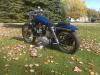
Thread Starter
|
Cruiser
Joined: Jun 2009
Posts: 217
Likes: 0
From: Summerville,SC
Solid lifters
Solid Lifters! I wondered about that! Too Cool. This thing is like the'69 302 DZ Camaro Z-28 of bikes! I suppose that explains why it revs so quick. Well, partially. A lot of other things play their part as well.
Got the front brake line on and the brakes bled. Nice firm feel and the lever still has about an inch before it reaches the grip. I was reading in another thread A LOT of different input on brake fluid. From what i read I surmised that I didn't want dot 5, because of it being silicon based. It will eat the seals. Made sense to me because I've seen what silicon dressing does to tires when I had my car wash. It actually melts the very outside surface of the tire. With extended frequent use, I would guess it would cause trouble. Also, because it doesn't mix with water, if there is any moisture in the system, it can cause vapor bubbles when heated up. All that being said, was dot 4 an ok choice?
should be able to get a ride in before the snow sticks after all!
These ARE fun bikes. And as for the twin cam riders, here here to your statement! Great bikes and all, but Ironheads just seem like the good ole grassroots Harley...to me,anyway.
Got the front brake line on and the brakes bled. Nice firm feel and the lever still has about an inch before it reaches the grip. I was reading in another thread A LOT of different input on brake fluid. From what i read I surmised that I didn't want dot 5, because of it being silicon based. It will eat the seals. Made sense to me because I've seen what silicon dressing does to tires when I had my car wash. It actually melts the very outside surface of the tire. With extended frequent use, I would guess it would cause trouble. Also, because it doesn't mix with water, if there is any moisture in the system, it can cause vapor bubbles when heated up. All that being said, was dot 4 an ok choice?
should be able to get a ride in before the snow sticks after all!
These ARE fun bikes. And as for the twin cam riders,
here here to your statement! Great bikes and all, but Ironheads just seem like the good ole grassroots Harley...to me,anyway.
Stellar HDF Member
Joined: Feb 2006
Posts: 3,035
Likes: 17
From: Houston Texas
Yep, the old Panheads of the same era as our Ironheahds had hydraulic lifters. The Ironheads have always had the solids.
Now on the brake fluid question..... I will have to leave that for someone else to answer.
I have a bit of knowledge about Sportys up to 1974, but it does not include hydraulic disc brakes. I don't want to contract foot in mouth disease (as has happened before), so I'd better keep the trap shut.
Whatever brake fluid was used in 1973 would be my choice to use today in your bike. But again, I know little about this.
pg
Now on the brake fluid question..... I will have to leave that for someone else to answer.
I have a bit of knowledge about Sportys up to 1974, but it does not include hydraulic disc brakes. I don't want to contract foot in mouth disease (as has happened before), so I'd better keep the trap shut.
Whatever brake fluid was used in 1973 would be my choice to use today in your bike. But again, I know little about this.
pg
Thread Starter
|
Cruiser
Joined: Jun 2009
Posts: 217
Likes: 0
From: Summerville,SC
Thanks for your honesty. I'll re-read the information I've found on the topic so far. And maybe... after 100 or so posts to this one... start a new thread. Whatta ya think , bout time. We've covered A LOT of information. Thanks!
Stellar HDF Member
Joined: Feb 2006
Posts: 3,035
Likes: 17
From: Houston Texas
Thread Starter
|
Cruiser
Joined: Jun 2009
Posts: 217
Likes: 0
From: Summerville,SC
Yep, I see it now. In my haste, I nissed that last night. If I notice any brake fade, I will dis-assemble front braking system entirely. Clean everything thoroughly. Then re-assemble and use the proper brake fluid for this application. Haste makes waste.oh well,live and learn.
Thanks!
Thanks!
HD Forum Stories
The Best of Harley-Davidson for Lifelong Riders

7 Surprising Harley-Davidson Products that Are Not Motorcycles
Verdad Gallardo
8 Best Harley-Davidson Motorcycles Ever
Pouria Savadkouei
10 Worst Harley-Davidson Motorcycles Ever
Pouria Savadkouei
Killer Custom's Jail Break Is The Breakout That Refused to Blend In
Verdad Gallardo
Crazy Bunderbike Build Looks Amazing, But Is It Impossible to Ride?
Verdad Gallardo
Harley-Davidson Reveals Super Cool Cafe Racer Concept
Verdad Gallardo
Engraved Rebellion: Inside Bundnerbike's Glam Rock II
Verdad Gallardo
10 Motorcycles You Should Never Buy
Joe Kucinski
10 Things Harley-Davidson Needs to Fix in 2026
Verdad Gallardo
Road Warrior
Joined: Aug 2008
Posts: 1,306
Likes: 865
From: Sheboygan, WI
Yep, I see it now. In my haste, I nissed that last night. If I notice any brake fade, I will dis-assemble front braking system entirely. Clean everything thoroughly. Then re-assemble and use the proper brake fluid for this application. Haste makes waste.oh well,live and learn.
Thanks!
Thanks!
Thread Starter
|
Cruiser
Joined: Jun 2009
Posts: 217
Likes: 0
From: Summerville,SC
Oh, man. Thanks! Guess I've got another project for this weekend. Like I said before, live and learn. Better than having the brakes fail and experiencing the alternative. Thanks again for the heads up!