



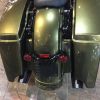


Removing main fuse.

Thread Starter
|
Intermediate
Joined: Nov 2016
Posts: 45
Likes: 4
From: Canada
 Removing main fuse.
I have found that a lot of instructions for installing accessories tell you to remove the main fuse to avoid accidentally starting the motorcycle. There is a procedure for motorcycles equipped WITH a siren using the fob. For motorcycles WITHOUT a siren, see the service manual. What am I missing here? How complicated could it be? Any input would be greatly appreciated.
Road Master


Joined: Oct 2008
Posts: 793
Likes: 112
Keep in mind the siren has a rechargeable internal battery. I believe if you cut power it (pulling main fuse) will send the siren onto ear splitting mode. There is a procedure to stop this. Check your owners manual or look up the security siren instructions. I believe it is there. Old timers forbids me to remember what the heck the proper procedure is.
Eagle Out
Eagle Out
Thread Starter
|
Intermediate
Joined: Nov 2016
Posts: 45
Likes: 4
From: Canada
I absolutely agree with all of you. It's unlikely that I'll accidentally start the motorcycle while working on it but ok. I work with machinery and it's the way things are going. Lockout procedures and all. And sure... removing the main fuse makes sense when working with electrical. But the instructions I'm referring to is for installing the siren so no risk of it going off if it's not even installed yet. My point is why can't they just tell me the procedure for removing the main fuse if I don't have a siren rather than directing me to a service manual that I probably don't (and I don't) have? I believe most Harley-Davidson instructions have this information at the beginning. It did for the four point docking hardware.
Road Master
Joined: Oct 2008
Posts: 793
Likes: 112
Look in your owners manual, I believe you should find a diagram for the main fuse and where it is located. I do tend to agree that many of the directions are lacking for the MOCO accesories we love to purchase. Maybe the Chinese still struggle with english.......
Pretty sure you shut off your kill switch and ignition, then remove the main fuse. Do your thing, then reinstall it. Believe the radio keeps your stuff for a certain amount of time but won't swear by it.
Eagle Out
Pretty sure you shut off your kill switch and ignition, then remove the main fuse. Do your thing, then reinstall it. Believe the radio keeps your stuff for a certain amount of time but won't swear by it.
Eagle Out

Grand HDF Member
Joined: Nov 2013
Posts: 3,807
Likes: 1,488
From: SW Washington State
If it lands in the right place, A dropped wrench or bolt can make **** happen that you may not like.
Ever see a fat man running after a kenworth thats exiting the shop without its driver? I have and it aint a pretty sight.
Ever see a fat man running after a kenworth thats exiting the shop without its driver? I have and it aint a pretty sight.
Trending Topics

Cruiser
Joined: Sep 2012
Posts: 131
Likes: 12
From: Ottawa, Canada
I absolutely agree with all of you. It's unlikely that I'll accidentally start the motorcycle while working on it but ok. I work with machinery and it's the way things are going. Lockout procedures and all. And sure... removing the main fuse makes sense when working with electrical. But the instructions I'm referring to is for installing the siren so no risk of it going off if it's not even installed yet. My point is why can't they just tell me the procedure for removing the main fuse if I don't have a siren rather than directing me to a service manual that I probably don't (and I don't) have? I believe most Harley-Davidson instructions have this information at the beginning. It did for the four point docking hardware.
Turn the ignition to the run position but do not start the bike. Pull the main fuse. Plug in the siren and insert it into the slot specifically designed for it with the horn facing down. Return the ignition to the off position and insert the main fuse. Just did this on the weekend.
Cheers,
Martin
HD Forum Stories
The Best of Harley-Davidson for Lifelong Riders

7 Surprising Harley-Davidson Products that Are Not Motorcycles
Verdad Gallardo
8 Best Harley-Davidson Motorcycles Ever
Pouria Savadkouei
10 Worst Harley-Davidson Motorcycles Ever
Pouria Savadkouei
Killer Custom's Jail Break Is The Breakout That Refused to Blend In
Verdad Gallardo
Crazy Bunderbike Build Looks Amazing, But Is It Impossible to Ride?
Verdad Gallardo
Harley-Davidson Reveals Super Cool Cafe Racer Concept
Verdad Gallardo
Engraved Rebellion: Inside Bundnerbike's Glam Rock II
Verdad Gallardo
10 Motorcycles You Should Never Buy
Joe Kucinski
10 Things Harley-Davidson Needs to Fix in 2026
Verdad Gallardo
Thread Starter
|
Intermediate
Joined: Nov 2016
Posts: 45
Likes: 4
From: Canada
Turn the ignition to the run position but do not start the bike. Pull the main fuse. Plug in the siren and insert it into the slot specifically designed for it with the horn facing down. Return the ignition to the off position and insert the main fuse. Just did this on the weekend.
Cheers,
Martin
Cheers,
Martin

Cruiser
Joined: Sep 2016
Posts: 224
Likes: 24
From: Black Hills
...My point is why can't they just tell me the procedure for removing the main fuse if I don't have a siren rather than directing me to a service manual that I probably don't (and I don't) have? I believe most Harley-Davidson instructions have this information at the beginning. It did for the four point docking hardware.