




Sumping in un-modfied HD117CI CVO

Cruiser
Joined: Mar 2017
Posts: 205
Likes: 132
From: Chicago area

4 out of the 6 bikes in your group sumped. How do you ride? Meaning sustained high RPM in a low gear? There seems there must be a root cause for this statistic in your group.
15-20 bikes in our group every weekend in the summer. All M8. Combination of 2017 to 2019s. 107 to CVO 117. Many weekend rides of 200-500 miles all at highway speed as well as back roads with twists. Some two up and fully loaded. Much shifting and engine braking. Bikes mileage range from less than 5K miles to over 40K miles. Not a single sumper. Had other issues like transfer and clutch switch.
So your group has 67% failure rate with sumping. Interesting statistic. I hope your bike is good as new. Maybe you all should evaluate your operating procedure.
15-20 bikes in our group every weekend in the summer. All M8. Combination of 2017 to 2019s. 107 to CVO 117. Many weekend rides of 200-500 miles all at highway speed as well as back roads with twists. Some two up and fully loaded. Much shifting and engine braking. Bikes mileage range from less than 5K miles to over 40K miles. Not a single sumper. Had other issues like transfer and clutch switch.
So your group has 67% failure rate with sumping. Interesting statistic. I hope your bike is good as new. Maybe you all should evaluate your operating procedure.
Seasoned HDF Member
Joined: Dec 2005
Posts: 19,859
Likes: 7,980
From: poway
One thing to note is that If a piston seized like shown in the picture, the motor will likely sump do to poor ring seal. So what came first, the chicken or the egg? There may be a setup issue errantly caused by the dealer? These all came from the same dealer?

Member
Joined: Jul 2009
Posts: 4,310
Likes: 1,079
Heatwave, that bike was in another part of the shop, being worked on by another technician. I took a couple of shots, asked a couple of questions and then moved on. The technician did say it had a 2020 pump which was installed in October, and he did say the bike was sumping. I did not quiz him on how thorough he had been.
its just very hard to imagine seizing pistons on a bike that is sumping. Damage yes but seized pistons, hard to imagine based on my experience. A sumping engine provides subtle signals that turn into not-so-subtle signals.
- slight loss of power that eventually becomes serious loss of power
- slight burning smell that eventually becomes an overwhelming putrid smell of burning oil
- slightly hot engine that eventually becomes a furnace
A rider on a sumping engine would have to ignore the extreme sumping signals to seize pistons. I suppose its possible but just difficult to imagine a rider wouldn’t stop the bike, turn off the engine and chk the oil level long before pistons would seize.
I don’t doubt you, just trying to get a complete picture
Last edited by Heatwave; Mar 7, 2020 at 10:27 AM.
Club Member


Joined: Apr 2016
Posts: 11,500
Likes: 8,336
From: Inland NW

4 out of the 6 bikes in your group sumped. How do you ride? Meaning sustained high RPM in a low gear? There seems there must be a root cause for this statistic in your group.
15-20 bikes in our group every weekend in the summer. All M8. Combination of 2017 to 2019s. 107 to CVO 117. Many weekend rides of 200-500 miles all at highway speed as well as back roads with twists. Some two up and fully loaded. Much shifting and engine braking. Bikes mileage range from less than 5K miles to over 40K miles. Not a single sumper. Had other issues like transfer and clutch switch.
So your group has 67% failure rate with sumping. Interesting statistic. I hope your bike is good as new. Maybe you all should evaluate your operating procedure.
15-20 bikes in our group every weekend in the summer. All M8. Combination of 2017 to 2019s. 107 to CVO 117. Many weekend rides of 200-500 miles all at highway speed as well as back roads with twists. Some two up and fully loaded. Much shifting and engine braking. Bikes mileage range from less than 5K miles to over 40K miles. Not a single sumper. Had other issues like transfer and clutch switch.
So your group has 67% failure rate with sumping. Interesting statistic. I hope your bike is good as new. Maybe you all should evaluate your operating procedure.
Should you inquire further (with no attacks, or name calling whatsoever), it will be met with answers you never asked questions about, accusations of being a fanboy, and even a complaint to the admin of the subforum.
Seasoned HDF Member
Joined: Dec 2005
Posts: 19,859
Likes: 7,980
From: poway
its just very hard to imagine seizing pistons on a bike that is sumping. Damage yes but seized pistons, hard to imagine based on my experience. A sumping engine provides subtle signals that turn into not-so-subtle signals.
- slight loss of power that eventually becomes serious loss of power
- slight burning smell that eventually becomes an overwhelming putrid smell of burning oil
- slightly hot engine that eventually becomes a furnace
A rider on a sumping engine would have to ignore the extreme sumping signals to seize pistons. I suppose its possible but just difficult to imagine a rider wouldn’t stop the bike, turn off the engine and chk the oil level long before pistons would seize.
I don’t doubt you, just trying to get a complete picture
- slight loss of power that eventually becomes serious loss of power
- slight burning smell that eventually becomes an overwhelming putrid smell of burning oil
- slightly hot engine that eventually becomes a furnace
A rider on a sumping engine would have to ignore the extreme sumping signals to seize pistons. I suppose its possible but just difficult to imagine a rider wouldn’t stop the bike, turn off the engine and chk the oil level long before pistons would seize.
I don’t doubt you, just trying to get a complete picture
A motor with seized pistons will likely sump due to poor ring seal. Looking at those pistons, it would not surprise me if the pistons seized first then the motor sumped due to port ring seal. In this case, you can not blame sumping on the scavenge side of the oil pump. If the feed side limited oil to the point of seizure, you could blame it on the oil pump but it's not the same failure as typical sumping.
Member
Joined: Jul 2009
Posts: 4,310
Likes: 1,079
No knocking what you are say in fact I believe it to be correct but I need to clarify what I wrote.
A motor with seized pistons will likely sump due to poor ring seal. Looking at those pistons, it would not surprise me if the pistons seized first then the motor sumped due to port ring seal. In this case, you can not blame sumping on the scavenge side of the oil pump. If the feed side limited oil to the point of seizure, you could blame it on the oil pump but it's not the same failure as typical sumping.
A motor with seized pistons will likely sump due to poor ring seal. Looking at those pistons, it would not surprise me if the pistons seized first then the motor sumped due to port ring seal. In this case, you can not blame sumping on the scavenge side of the oil pump. If the feed side limited oil to the point of seizure, you could blame it on the oil pump but it's not the same failure as typical sumping.
Tourer
Joined: Aug 2014
Posts: 405
Likes: 88
From: South Louisiana
30Glock, You are probably correct, however, I would be concerned that the bike would hemorrhage, size up, or possibly throw oil down wrecking me in the process. I can afford to make any repairs even though I find it distasteful as this is Harley's design problem and they should step forward to secure their bikes and their corporations reputation. How they could put this engine into service with the clutch problem, the transmission fluid migration problem, and the oil pump problem is beyond me. They should have their a** sued and all should be made right at their expense.
I see guys saying "no problem here", but you can bet that they are driving around like "little old ladies", never going above 3500 rpm and rarely above 65 mph.
I see guys saying "no problem here", but you can bet that they are driving around like "little old ladies", never going above 3500 rpm and rarely above 65 mph.
I ride the $hit out of my bike. TONS of engine braking, power on/off curves as well as 80+ on the interstate. About to hit 15,000 miles on her. I was concerned about sumping like many others. I figured if she was going to do it, I'd better make it happen within the warranty time. So far, so good.
Thread Starter
|
Advanced
Joined: Dec 2015
Posts: 69
Likes: 4
From: East, Texas
Hi Max,
The pistons that you commented on came from a 2019 Limited CVO with about 21000 miles, and was about a year old. The rider is mostly a long distance high mileage type who has been riding Harleys for many years. The bike is basically stock. It only has slip on mufflers, all original head pipes, original air cleaner, original stock ECM, and no internal modifications.
The bike did not seize but was driven to the Harley dealer with considerable clatter, which was later identified as coming from the pistons. I was not there for the initial tear down and analysis of the bike, but the same technician that analysed my bike also did this one. Since it was parked next to my bike I got a look at some of the internal parts and took the pictures of the pistons. I was informed by the tech that it had sumped.
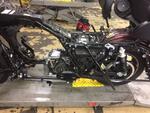
This bike was in much worse shape than mine.On my bike they were able to reuse the heads,and accessories, but on this bike even the heads were in bad shape. I posted a couple of shots of the bike at the beginning and during the tear down.
Let me note, that the 4 bikes that have had these oiling issues were all twin cooled. The oil cooled bikes, (mostly street glides) which predominate our rider group, do not seem to have been affected.
To help in this discussion it is probably best to define what we mean by "sumping"
Sumping is when, in a dry sump engine, an excessive amount of oil puddles in the bottom of the engine case (sump). When the excess reaches a certainly level the rotating parts of the crank shaft come into contact with this oil. Once in contact, the moving parts cause foaming, and significant heating of the oil. In addition as the level increases the rotating parts experience an increasing amount of drag.
From my perspective there are generally 3 levels of sumping.
1.) Mild sumping. In this case one could be cruising down the interstate with the cruise control engaged and not really notice anything out of the ordinary. There would have additional heat coming off the engine, and one's gas mileage will drop on the order of 5-6 mpg. There would not be any immediate apparent damage to the engine, but over the long term the life of the lubricated components would be shortened.
2.) Heavy sumping. Here there would be a noticeable decrease in engine power, with increased engine braking, and a greater amount of heat coming off the engine. If one continues to operate under this condition then the problem could advance to the next stage of extreme sumping. One would be in jeopardy of causing significant engine damage.
3.) Extreme sumping. With this condition the engine will become extremely hot, so much so, that internal engine components will become heat damaged in a very short order. If one continues with this condition the engine will suffer severe damage.
Let's also discuss the function of the lubricating system of the engine.
1.) The oil lubricates the moving parts, reducing friction, keeping moving parts from direct contact with a film of oil, and preventing corrosion.
2.) The oil acts to pick up heat and move it from one part of the engine to another for cooling.
3.) The oil acts to clean the engine of contaminates, carrying them to the oil filter.
5.) The oil can also be used to actuate components within the engine such as a tensioner.
You asked, did all of the 117's suffer from sumping? What I do know is that they all suffered from deficiencies in lubrication. On my 117 I definitely experienced all of the symptoms of sumping, on the others I was told that they had sumped. I was able to observe the damage to all of the pistons of the 3 bikes that were in the shop simultaneously.
You made a good point on the staged 114 bike. Unlike the 117's which had no internal engine work the 114 had been staged with a Harley upgrade kit. So that bike has been opened up and the cam plate removed and a new 8 lobe 2020 oil pump installed. Could the technician have made an error during the process, possibly?
I am not a regular on these forums. I had hoped to have an instructive discussion on my experiences with this issue, and learn from others with a similar problem. It seems that I hit a nerve when I made the comment about "riding like little old ladies". I take it all back, you don't ride "like little old ladies"
The pistons that you commented on came from a 2019 Limited CVO with about 21000 miles, and was about a year old. The rider is mostly a long distance high mileage type who has been riding Harleys for many years. The bike is basically stock. It only has slip on mufflers, all original head pipes, original air cleaner, original stock ECM, and no internal modifications.
The bike did not seize but was driven to the Harley dealer with considerable clatter, which was later identified as coming from the pistons. I was not there for the initial tear down and analysis of the bike, but the same technician that analysed my bike also did this one. Since it was parked next to my bike I got a look at some of the internal parts and took the pictures of the pistons. I was informed by the tech that it had sumped.
This bike was in much worse shape than mine.On my bike they were able to reuse the heads,and accessories, but on this bike even the heads were in bad shape. I posted a couple of shots of the bike at the beginning and during the tear down.
Let me note, that the 4 bikes that have had these oiling issues were all twin cooled. The oil cooled bikes, (mostly street glides) which predominate our rider group, do not seem to have been affected.
To help in this discussion it is probably best to define what we mean by "sumping"
Sumping is when, in a dry sump engine, an excessive amount of oil puddles in the bottom of the engine case (sump). When the excess reaches a certainly level the rotating parts of the crank shaft come into contact with this oil. Once in contact, the moving parts cause foaming, and significant heating of the oil. In addition as the level increases the rotating parts experience an increasing amount of drag.
From my perspective there are generally 3 levels of sumping.
1.) Mild sumping. In this case one could be cruising down the interstate with the cruise control engaged and not really notice anything out of the ordinary. There would have additional heat coming off the engine, and one's gas mileage will drop on the order of 5-6 mpg. There would not be any immediate apparent damage to the engine, but over the long term the life of the lubricated components would be shortened.
2.) Heavy sumping. Here there would be a noticeable decrease in engine power, with increased engine braking, and a greater amount of heat coming off the engine. If one continues to operate under this condition then the problem could advance to the next stage of extreme sumping. One would be in jeopardy of causing significant engine damage.
3.) Extreme sumping. With this condition the engine will become extremely hot, so much so, that internal engine components will become heat damaged in a very short order. If one continues with this condition the engine will suffer severe damage.
Let's also discuss the function of the lubricating system of the engine.
1.) The oil lubricates the moving parts, reducing friction, keeping moving parts from direct contact with a film of oil, and preventing corrosion.
2.) The oil acts to pick up heat and move it from one part of the engine to another for cooling.
3.) The oil acts to clean the engine of contaminates, carrying them to the oil filter.
5.) The oil can also be used to actuate components within the engine such as a tensioner.
You asked, did all of the 117's suffer from sumping? What I do know is that they all suffered from deficiencies in lubrication. On my 117 I definitely experienced all of the symptoms of sumping, on the others I was told that they had sumped. I was able to observe the damage to all of the pistons of the 3 bikes that were in the shop simultaneously.
You made a good point on the staged 114 bike. Unlike the 117's which had no internal engine work the 114 had been staged with a Harley upgrade kit. So that bike has been opened up and the cam plate removed and a new 8 lobe 2020 oil pump installed. Could the technician have made an error during the process, possibly?
I am not a regular on these forums. I had hoped to have an instructive discussion on my experiences with this issue, and learn from others with a similar problem. It seems that I hit a nerve when I made the comment about "riding like little old ladies". I take it all back, you don't ride "like little old ladies"
Last edited by Cruiser1; Mar 8, 2020 at 11:30 PM.
HD Forum Stories
The Best of Harley-Davidson for Lifelong Riders

8 Best Harley-Davidson Motorcycles Ever
Pouria Savadkouei
10 Worst Harley-Davidson Motorcycles Ever
Pouria Savadkouei
Killer Custom's Jail Break Is The Breakout That Refused to Blend In
Verdad Gallardo
Crazy Bunderbike Build Looks Amazing, But Is It Impossible to Ride?
Verdad Gallardo
Harley-Davidson Reveals Super Cool Cafe Racer Concept
Verdad Gallardo
Engraved Rebellion: Inside Bundnerbike's Glam Rock II
Verdad Gallardo
10 Motorcycles You Should Never Buy
Joe Kucinski
10 Things Harley-Davidson Needs to Fix in 2026
Verdad Gallardo
Southpaw Super Glide: A Left-Hand-Drive 1979 Harley FXE Built to Fit the Rider
Verdad Gallardo
Thread Starter
|
Advanced
Joined: Dec 2015
Posts: 69
Likes: 4
From: East, Texas
John, Just to clarify. Our group has many more than 6 bikes. that was a reference to the 6 twin cooled bikes. Most are oil cooled Street Glides and they do not seem to have the problem.
Seasoned HDF Member
Joined: Dec 2005
Posts: 19,859
Likes: 7,980
From: poway
Hi Max,
The pistons that you commented on came from a 2019 Limited CVO with about 21000 miles, and was about a year old. The rider is mostly a long distance high mileage type who has been riding Harleys for many years. The bike is basically stock. It only has slip on mufflers, all original head pipes, original air cleaner, original stock ECM, and no internal modifications.
The bike did not seize but was driven to the Harley dealer with considerable clatter, which was later identified as coming from the pistons. I was not there for the initial tear down and analysis of the bike, but the same technician that analysed my bike also did this one. Since it was parked next to my bike I got a look at some of the internal parts and took the pictures of the pistons. I was informed by the tech that it had sumped.
This bike was in much worse shape than mine.On my bike they were able to reuse the heads,and accessories, but on this bike even the heads were in bad shape. I posted a couple of shots of the bike at the beginning and during the tear down.
Let me note, that the 4 bikes that have had these oiling issues were all twin cooled. The oil cooled bikes, (mostly street glides) which predominate our rider group, do not seem to have been affected.
To help in this discussion it is probably best to define what we mean by "sumping"
Sumping is when, in a dry sump engine, an excessive amount of oil puddles in the bottom of the engine case (sump). When the excess reaches a certainly level the rotating parts of the crank shaft come into contact with this oil. Once in contact, the moving parts cause foaming, and significant heating of the oil. In addition as the level increases the rotating parts experience an increasing amount of drag.
From my perspective there are generally 3 levels of sumping.
1.) Mild sumping. In this case one could be cruising down the interstate with the cruise control engaged and not really notice anything out of the ordinary. There would have additional heat coming off the engine, and one's gas mileage will drop on the order of 5-6 mpg. There would not be any immediate apparent damage to the engine, but over the long term the life of the lubricated components would be shortened.
2.) Heavy sumping. Here there would be a noticeable decrease in engine power, with increased engine braking, and a greater amount of heat coming off the engine. If one continues to operate under this condition then the problem could advance to the next stage of extreme sumping. One would be in jeopardy of causing significant engine damage.
3.) Extreme sumping. With this condition the engine will become extremely hot, so much so, that internal engine components will become heat damaged in a very short order. If one continues with this condition the engine will suffer severe damage.
Let's also discuss the function of the lubricating system of the engine.
1.) The oil lubricates the moving parts, reducing friction, keeping moving parts from direct contact with a film of oil, and preventing corrosion.
2.) The oil acts to pick up heat and move it from one part of the engine to another for cooling.
3.) The oil acts to clean the engine of contaminates, carrying them to the oil filter.
5.) The oil can also be used to actuate components within the engine such as a tensioner.
You asked, did all of the 117's suffer from sumping? What I do know is that they all suffered from deficiencies in lubrication. On my 117 I definitely experienced all of the symptoms of sumping, on the others I was told that they had sumped. I was able to observe the damage to all of the pistons of the 3 bikes that were in the shop simultaneously.
You made a good point on the staged 114 bike. Unlike the 117's which had no internal engine work the 114 had been staged with a Harley upgrade kit. So that bike has been opened up and the cam plate removed and a new 8 lobe 2020 oil pump installed. Could the technician have made an error during the process, possibly?
I am not a regular on these forums. I had hoped to have an instructive discussion on my experiences with this issue, and learn from others with a similar problem. It seems that I hit a nerve when I made the comment about "riding like little old ladies". I take it all back, you don't ride "like little old ladies"
The pistons that you commented on came from a 2019 Limited CVO with about 21000 miles, and was about a year old. The rider is mostly a long distance high mileage type who has been riding Harleys for many years. The bike is basically stock. It only has slip on mufflers, all original head pipes, original air cleaner, original stock ECM, and no internal modifications.
The bike did not seize but was driven to the Harley dealer with considerable clatter, which was later identified as coming from the pistons. I was not there for the initial tear down and analysis of the bike, but the same technician that analysed my bike also did this one. Since it was parked next to my bike I got a look at some of the internal parts and took the pictures of the pistons. I was informed by the tech that it had sumped.
This bike was in much worse shape than mine.On my bike they were able to reuse the heads,and accessories, but on this bike even the heads were in bad shape. I posted a couple of shots of the bike at the beginning and during the tear down.
Let me note, that the 4 bikes that have had these oiling issues were all twin cooled. The oil cooled bikes, (mostly street glides) which predominate our rider group, do not seem to have been affected.
To help in this discussion it is probably best to define what we mean by "sumping"
Sumping is when, in a dry sump engine, an excessive amount of oil puddles in the bottom of the engine case (sump). When the excess reaches a certainly level the rotating parts of the crank shaft come into contact with this oil. Once in contact, the moving parts cause foaming, and significant heating of the oil. In addition as the level increases the rotating parts experience an increasing amount of drag.
From my perspective there are generally 3 levels of sumping.
1.) Mild sumping. In this case one could be cruising down the interstate with the cruise control engaged and not really notice anything out of the ordinary. There would have additional heat coming off the engine, and one's gas mileage will drop on the order of 5-6 mpg. There would not be any immediate apparent damage to the engine, but over the long term the life of the lubricated components would be shortened.
2.) Heavy sumping. Here there would be a noticeable decrease in engine power, with increased engine braking, and a greater amount of heat coming off the engine. If one continues to operate under this condition then the problem could advance to the next stage of extreme sumping. One would be in jeopardy of causing significant engine damage.
3.) Extreme sumping. With this condition the engine will become extremely hot, so much so, that internal engine components will become heat damaged in a very short order. If one continues with this condition the engine will suffer severe damage.
Let's also discuss the function of the lubricating system of the engine.
1.) The oil lubricates the moving parts, reducing friction, keeping moving parts from direct contact with a film of oil, and preventing corrosion.
2.) The oil acts to pick up heat and move it from one part of the engine to another for cooling.
3.) The oil acts to clean the engine of contaminates, carrying them to the oil filter.
5.) The oil can also be used to actuate components within the engine such as a tensioner.
You asked, did all of the 117's suffer from sumping? What I do know is that they all suffered from deficiencies in lubrication. On my 117 I definitely experienced all of the symptoms of sumping, on the others I was told that they had sumped. I was able to observe the damage to all of the pistons of the 3 bikes that were in the shop simultaneously.
You made a good point on the staged 114 bike. Unlike the 117's which had no internal engine work the 114 had been staged with a Harley upgrade kit. So that bike has been opened up and the cam plate removed and a new 8 lobe 2020 oil pump installed. Could the technician have made an error during the process, possibly?
I am not a regular on these forums. I had hoped to have an instructive discussion on my experiences with this issue, and learn from others with a similar problem. It seems that I hit a nerve when I made the comment about "riding like little old ladies". I take it all back, you don't ride "like little old ladies"
2. In your description your #1 sumping should have been noticed, not only riding but at fillups, especially if riding in a group.
3. You were told the bikes were sumping. Again, you don't know if the scored pistons caused the sumping or if sumping caused the scored pistons. I'm inclined to believe the former unless the rider was severely into #3 sumping and failed to notice.
4. What is of concern is the fact that all of the bikes with issues were handled but the same dealer? If so, I would be concerned more about what is going on at that dealer. We are not seeing a lot of failures here like the ones you have experienced. Maybe they were all made close together and shared the same defect?
You do seem to have a reasonable understanding of engine operation tho your group does seem to not be intuned with their bikes as far as possible issues. Number of miles is not a good indicator of motor/rider harmony..
 I've seen bikes with over 100000 miles, where the owner thought everything was fine but the bike was about to self destruct.