When you click on links to various merchants on this site and make a purchase, this can result in this site earning a commission. Affiliate programs and affiliations include, but are not limited to, the eBay Partner Network.
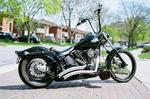
My bike (04 night train) has developed a noticeable sound coming from the front of the primary. It's there at all times with the bike running, and when I shut it down there is a noticeable clunking.
I'm thinking it's the compensator, and I can easily pull the primary cover off to access it, but what are the signs that the compensator is no longer good? I'm all for improving my bikes, but I dont have 500$ to drop on a compensator if it's not the problem, so just wondering what I should be looking for.
Harley "upgraded" the compensator for the 96ci engine in '07.... prior to that, the compensators (Shovel Heads, EVOs, early Twin Cams) were much better and almost trouble free. That doesn't mean it can't be your compensator, but it could be other things too..
For example.... Some early twin cams would have the compensator bolt come loose... it was prevalent enough that they came out with a new compensator bolt torque procedure in a May 2005 Service Bulletin (M-1170)... basically changed the torque spec from a straight torque value to Torque value plus additional degrees of tightening.... new spec is to torque to 75 ft-lbs and then tighten the bolt an additional 45° to 50°, with 50° MAXIMUM ...
Time to open up the primary and check stuff out...
EDIT:... as far as how to check if it's bad, I've never personally seen a bad, pre-"'07 upgraded" compensator. They early ones are pretty simple. The compensating sprocket #21 rides against a sliding cam #20 that is against the cover assembly (with springs) #22. If it's bad, I would suspect the cam/back of the sprocket is severely worn or damaged, or maybe a spring in the cover assembly is broken...
Last edited by hattitude; Aug 1, 2019 at 09:21 AM.
Harley "upgraded" the compensator for the 96ci engine in '07.... prior to that, the compensators (Shovel Heads, EVOs, early Twin Cams) were much better and almost trouble free. That doesn't mean it can't be your compensator, but it could be other things too..
For example.... Some early twin cams would have the compensator bolt come loose... it was prevalent enough that they came out with a new compensator bolt torque procedure in a May 2005 Service Bulletin (M-1170)... basically changed the torque from a straight torque setting to Torque plus degrees.... new spec is to torque to 75 ft-lbs and then tighten the bolt an additional 45° to 50°, with 50° MAXIMUM ...
Time to open up the primary and check stuff out...
Thanks for that info! I didnt realize the early compensator was a better design...gives more reason for me to like the older stuff like I do! Ahaha
You're right time to get the primary opened up for a look. Appreciate that service bulletin spec, thanks!
Could be a simple matter of the chain needing adjustment. i had one on a shovelhead that was so loose the chain was beating on the primary.
Also,I've never had to replace an old style compensator. I just replaced the comp. sprocket on my current bike [06 Ultra] because the teeth where the chain rides were looking thin,comp looked barely used. But,my bike has 103,000 miles on it.
Last edited by hdbob2006; Aug 1, 2019 at 11:27 AM.
Mine has been doing it since 2007. Now has 50K on it. ..Sounds like a rotary tiller is a creek grave bed at idle.Those parts were just cast surfaces. And also It's the fingers that are a little rough and gauded. And Harley's hunting idle that make the sound uneven. Perfectly fine running down the road.
It's not going to break. If you do go in, be sure to check spline on alternator rotor. Add a signature line with your bike,year and all the letters. Two cylinders will clunk with cut off, especially carbs ones. FI cut's the air, so not so much. My compensator will clack if I nail in in 2nd or 3rd. Normal. It's designed to smooth impulses riding down the road. So you do not want it too tight. Like I say, cruising at say 45 in 4th, I can not hear it. If it's not broken, it's probably OK. There is no pressure load check. And Belleville springs do not wear out since the can only move till flat. They do have a fatigue life and I have seen one broke but is was not the spring, it was the housing. And I think from adbuse..
Last edited by Jackie Paper; Aug 1, 2019 at 11:45 AM.
Just in case you have a loose compensator nut......
Awesome, thank you!
Originally Posted by RIPSAW
Mine has been doing it since 2007. Now has 50K on it. ..Sounds like a rotary tiller is a creek grave bed at idle.Those parts were just cast surfaces. And also It's the fingers that are a little rough and gauded. And Harley's hunting idle that make the sound uneven. Perfectly fine running down the road.
It's not going to break. If you do go in, be sure to check spline on alternator rotor. Add a signature line with your bike,year and all the letters. Two cylinders will clunk with cut off, especially carbs ones. FI cut's the air, so not so much. My compensator will clack if I nail in in 2nd or 3rd. Normal. It's designed to smooth impulses riding down the road. So you do not want it too tight. Like I say, cruising at say 45 in 4th, I can not hear it. If it's not broken, it's probably OK. There is no pressure load check. And Belleville springs do not wear out since the can only move till flat. They do have a fatigue life and I have seen one broke but is was not the spring, it was the housing. And I think from adbuse..
Thank you for the info and pics! Have to wait till Tuesday to dig into it since my dealer is closed u till then and at the very least I need an outer primary gasket. Really hoping I find nothing or something easy and silly.
Could be a simple matter of the chain needing adjustment. i had one on a shovelhead that was so loose the chain was beating on the primary.
Also,I've never had to replace an old style compensator. I just replaced the comp. sprocket on my current bike [06 Ultra] because the teeth where the chain rides were looking thin,comp looked barely used. But,my bike has 103,000 miles on it.
I'm glad I made this post if for nothing else I have learned that the compensator design I have on my bike is the good one. While I'm in there I'm gonna check the chain tension, the shoe, etc.
Mshrd, have you tried the M1170 procedure. I had loaned my heavy torque wrench and of course, what is one day turns into you have to ask for it back and tried it. I found when I came around, the compensator wound around changing my lines. I sat there pondering it, but never did decide it made sense.
"Mshrd, have you tried the M1170 procedure. I had loaned my heavy torque wrench and of course, what is one day turns into you have to ask for it back and tried it. I found when I came around, the compensator wound around changing my lines. I sat there pondering it, but never did decide it made sense."
I have used the procedure on my '01 Springer...
I didn't bother with all the scribing of lines, etc... If you look at the pic in M1170, all that scribing of lines, amounts to an additional 1/8th turn of the bolt after reaching 75ft-lbs of torque.
Another way to think of it is.... Every torque angle gauge is a circle, the circle contains 360°... So every 1/4 turn is 90°..... 45° is 1/8th of a full turn...
It also helps, once at the proper torque, to switch to a breaker bar. That way any additional movement of the breaker bar is the bolt moving, and not "give" in the torque wrench. You can also position the breaker bar's handle to 12:00 high.... it may be easier for you to visualize a 1/8th turn...
I have a cheap torque angle gauge, but in this case it would have taken longer to set it up than to just estimate.... I torqued to 75ft-lbs, then switched to my breaker bar and tightened the bolt another 1/8th of a full turn....
Worked for me...
One of these days I'm gonna buy one of them newfangled digital torque/angle wrenches..... don't need one, they just look really cool and I like tools...
7 Surprising Harley-Davidson Products that Are Not Motorcycles
Slideshow: The bar-and-shield logo shows up on far more than motorcycles, some of the company's most unexpected products have nothing to do with riding.
Slideshow: From the troubled AMF years to modern misfires, these bikes earned reputations for reliability issues, questionable engineering, or disappointing performance.
Crazy Bunderbike Build Looks Amazing, But Is It Impossible to Ride?
Slideshow: The Swiss custom shop has taken a Harley Softail and stretched it into something so long and low that it looks closer to a rolling sculpture than a conventional motorcycle.
Engraved Rebellion: Inside Bundnerbike's Glam Rock II
Slideshow: A standard cruiser becomes an intricate metal canvas in the hands of a Swiss custom house known for pushing Harley-Davidson platforms far beyond their factory brief.
Slideshow: Harley-Davidson's challenges aren't abstract; they show up in dropping shipments, shrinking dealer traffic, and strategic decisions that aren't yet translating into growth.





 Noisy compensator?