





LO RNG code

Seasoned HDF Member
Joined: Aug 2006
Posts: 24,564
Likes: 30,922
From: Pennsylvania

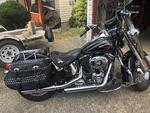
2017 FXDB. About 10k miles.
Issue: LO Range on dash and flashing on LED fuel light (Tank is full)
-Recent upgrades went from FXDB rear fender to FXDL full fender and light and LED flush mount fuel gauge.
And No issues
-Fuel level works (resistance check)
-Not a bad ground
-New led flush mount also resistance checked
-Fuel pressure holds above 55psi
-New quantum pump and regulator
-All fuel wires not rusted or have any corrosion (Also no cuts and pinches)
-Not a dead or bad battery
-No bad fuses
What am I missing?
Possibly a bad Speedo with bad or false reading?
Issue: LO Range on dash and flashing on LED fuel light (Tank is full)
-Recent upgrades went from FXDB rear fender to FXDL full fender and light and LED flush mount fuel gauge.
And No issues
-Fuel level works (resistance check)
-Not a bad ground
-New led flush mount also resistance checked
-Fuel pressure holds above 55psi
-New quantum pump and regulator
-All fuel wires not rusted or have any corrosion (Also no cuts and pinches)
-Not a dead or bad battery
-No bad fuses
What am I missing?
Possibly a bad Speedo with bad or false reading?
2. If so, revisit what you did and the LED flush mount fuel gauge you installed.
3. May want to put the old fuel gauge back in and see if it corrects the problem.
4. You have a CAN BUS wiring system and the gauge you installed may not play well with the CAN BUS.
5. See Below:
It seems everything has become increasingly computerized in the past decade or so. We have everything from network-connected refrigerators to pet feeders you can monitor from across the globe and cars that drive themselves (until they don’t).
Naturally, our motorcycles have followed suit. Gone are the days of cleaning your ignition points and your pilot jets to keep your ol’ BSA going.
Thanks to decades of engineering iteration, vehicles are more complex than ever. Instead of one or two computers, most modern vehicles are equipped with an array of control units that are individually responsible for systems such as engine management, anti-lock braking, traction control, and chassis systems.
These computer modules work in unison to conduct a symphony of ones and zeros, transferring information between each other to keep things running as intended.
It’s All About Communication
With some vehicles having more than 100 individual control units, manufacturers needed an efficient system for them to communicate with each other. Enter the CAN bus standard.
All these control modules utilize a standardized networking communication protocol called controller area network (CAN) bus to transmit and receive data in real time. The CAN system is able to link each of a vehicle’s computers over a network of just two wires.
Think of it as the central nervous system of the machine.
A motorcycle’s electronic components, like the engine control unit (ECU), ABS module, and display unit, can communicate with each other by sending and receiving messages through the CAN bus. Messages can range from simple status updates (such as speed or throttle position) to more complex things, like detailed error messages or specific control commands from one module to another.
For example, let’s picture a scenario where the traction control module detects wheel slip. It immediately sends a dispatch to the ECU to cut power to the rear wheel until traction is regained, at which point power output returns to normal.
All this happens seamlessly in mere fractions of a second, often with the high-horsepower machine’s pilot oblivious to the life-saving intervention—save for the TC light blinking away on the dash.
Shiny Sides Up
The main advantage of the CAN bus system is, as I mentioned above, real-time communication. This is what makes features such as sophisticated, lean-sensitive ABS or traction control that require high-speed communication and feedback between components possible.
Another advantage, believe it or not, is reduced complexity. The two-wire system replaces the multitude of individual cables that would be required to connect each computer individually, thus cutting weight and saving space.
Finally, in diagnostics and troubleshooting, mechanics often have a much easier time when they can connect diagnostic tools to the CAN system to read error codes, monitor sensor data, and identify potential issues within the motorcycle's systems quickly and accurately.
Rubber Sides Down
But can the CAN have disadvantages? Well, although it often benefits mechanics with the proprietary diagnostics software, it’s obviously not as easy as popping your float bowl off your carburetor and blowing it out with some carb cleaner to get you back on the road when something does go wrong.
Another problem—as many riders are likely already aware—is the CAN bus system’s extreme sensitivity to change. Trying to power a GPS or phone charger from the wrong wire or even installing turn signals or fuel gauge with significantly different power requirements to the factory ones can cause problems with the CAN system, including mysterious error codes or disabling the bike altogether in extreme cases.
This is because CAN works on a very narrow and specific voltage range and utilizes changes in voltage to carry messages between components. Changing power draw in either direction can adversely affect these messages and suddenly they’re all Greek to the CAN system, generating error codes.
Next time you want to install auxiliary lights or a louder horn, you’ll have to do your homework to see if your bike uses CAN bus. Some machines even monitor the status of your turn signals and something as simple as upgrading your indicators could cause a CAN bus fault.
Many motorcycles come equipped with accessory circuits specifically to avoid these situations. If you don’t have that option, some other workarounds include CAN-friendly accessories that are designed with your bike in mind or separate control modules that work with a CAN system and will not interfere with its operation.
Unfortunately, aftermarket manufacturers are not always clear about whether their products will play nicely with CAN, so some digging may be required. Often, if you have an issue, the computer will point you in the correct direction via the display. That’s not guaranteed, though, and a trip to your dealer may be in your future if you get really stuck.
If you’re electrically accessorizing something like a new BMW R 1300 GS, I’d suggest doing one thing at a time if you’re not 100% sure of compatibility. That way you can easily go back and remedy the issue if one does present itself.
We CAN’t Have it All
Overall, the advantages of CAN bus make it a reliable and efficient communication protocol for managing the complex electronic systems in modern motorcycles. It contributes to better performance, safety, and user experience.
While it is true that our bikes have become more complex and often can’t be serviced without at least some help from the dealer, on the whole, systems like CAN bus make for a better overall user experience.
The high-speed and data-dense communication make sophisticated systems such as dynamic suspension control, high-performance ABS, lean-sensitive traction control systems, and stability control systems possible. Without CAN bus technology, we wouldn’t have the spectacular machines we have come to love from today’s motorcycle market.
So, for now, CAN bus is an automotive industry standard that’s here to stay—at least until someone comes up with the next, better standard.
NOTE:
The above information, while credible, is worth what you paid for it and should not be considered gospel.
Do due diligence, research and have a H-D Field Service Manual before working on your bike.
You will probably have many opinions and suggestions presented; make sure you research the person providing the helpful information as there are some who provide good information that is useful and some who speak out of other orifices with gibberish. You will figure out this quickly.

2nd Gear
Joined: May 2024
Posts: 6
Likes: 0
From: Colorado
1. Was it working correctly prior to you making changes?
2. If so, revisit what you did and the LED flush mount fuel gauge you installed.
3. May want to put the old fuel gauge back in and see if it corrects the problem.
4. You have a CAN BUS wiring system and the gauge you installed may not play well with the CAN BUS.
5. See Below:
It seems everything has become increasingly computerized in the past decade or so. We have everything from network-connected refrigerators to pet feeders you can monitor from across the globe and cars that drive themselves (until they don’t).
Naturally, our motorcycles have followed suit. Gone are the days of cleaning your ignition points and your pilot jets to keep your ol’ BSA going.
Thanks to decades of engineering iteration, vehicles are more complex than ever. Instead of one or two computers, most modern vehicles are equipped with an array of control units that are individually responsible for systems such as engine management, anti-lock braking, traction control, and chassis systems.
These computer modules work in unison to conduct a symphony of ones and zeros, transferring information between each other to keep things running as intended.
It’s All About Communication
With some vehicles having more than 100 individual control units, manufacturers needed an efficient system for them to communicate with each other. Enter the CAN bus standard.
All these control modules utilize a standardized networking communication protocol called controller area network (CAN) bus to transmit and receive data in real time. The CAN system is able to link each of a vehicle’s computers over a network of just two wires.
Think of it as the central nervous system of the machine.
A motorcycle’s electronic components, like the engine control unit (ECU), ABS module, and display unit, can communicate with each other by sending and receiving messages through the CAN bus. Messages can range from simple status updates (such as speed or throttle position) to more complex things, like detailed error messages or specific control commands from one module to another.
For example, let’s picture a scenario where the traction control module detects wheel slip. It immediately sends a dispatch to the ECU to cut power to the rear wheel until traction is regained, at which point power output returns to normal.
All this happens seamlessly in mere fractions of a second, often with the high-horsepower machine’s pilot oblivious to the life-saving intervention—save for the TC light blinking away on the dash.
Shiny Sides Up
The main advantage of the CAN bus system is, as I mentioned above, real-time communication. This is what makes features such as sophisticated, lean-sensitive ABS or traction control that require high-speed communication and feedback between components possible.
Another advantage, believe it or not, is reduced complexity. The two-wire system replaces the multitude of individual cables that would be required to connect each computer individually, thus cutting weight and saving space.
Finally, in diagnostics and troubleshooting, mechanics often have a much easier time when they can connect diagnostic tools to the CAN system to read error codes, monitor sensor data, and identify potential issues within the motorcycle's systems quickly and accurately.
Rubber Sides Down
But can the CAN have disadvantages? Well, although it often benefits mechanics with the proprietary diagnostics software, it’s obviously not as easy as popping your float bowl off your carburetor and blowing it out with some carb cleaner to get you back on the road when something does go wrong.
Another problem—as many riders are likely already aware—is the CAN bus system’s extreme sensitivity to change. Trying to power a GPS or phone charger from the wrong wire or even installing turn signals or fuel gauge with significantly different power requirements to the factory ones can cause problems with the CAN system, including mysterious error codes or disabling the bike altogether in extreme cases.
This is because CAN works on a very narrow and specific voltage range and utilizes changes in voltage to carry messages between components. Changing power draw in either direction can adversely affect these messages and suddenly they’re all Greek to the CAN system, generating error codes.
Next time you want to install auxiliary lights or a louder horn, you’ll have to do your homework to see if your bike uses CAN bus. Some machines even monitor the status of your turn signals and something as simple as upgrading your indicators could cause a CAN bus fault.
Many motorcycles come equipped with accessory circuits specifically to avoid these situations. If you don’t have that option, some other workarounds include CAN-friendly accessories that are designed with your bike in mind or separate control modules that work with a CAN system and will not interfere with its operation.
Unfortunately, aftermarket manufacturers are not always clear about whether their products will play nicely with CAN, so some digging may be required. Often, if you have an issue, the computer will point you in the correct direction via the display. That’s not guaranteed, though, and a trip to your dealer may be in your future if you get really stuck.
If you’re electrically accessorizing something like a new BMW R 1300 GS, I’d suggest doing one thing at a time if you’re not 100% sure of compatibility. That way you can easily go back and remedy the issue if one does present itself.
We CAN’t Have it All
Overall, the advantages of CAN bus make it a reliable and efficient communication protocol for managing the complex electronic systems in modern motorcycles. It contributes to better performance, safety, and user experience.
While it is true that our bikes have become more complex and often can’t be serviced without at least some help from the dealer, on the whole, systems like CAN bus make for a better overall user experience.
The high-speed and data-dense communication make sophisticated systems such as dynamic suspension control, high-performance ABS, lean-sensitive traction control systems, and stability control systems possible. Without CAN bus technology, we wouldn’t have the spectacular machines we have come to love from today’s motorcycle market.
So, for now, CAN bus is an automotive industry standard that’s here to stay—at least until someone comes up with the next, better standard.
NOTE:
The above information, while credible, is worth what you paid for it and should not be considered gospel.
Do due diligence, research and have a H-D Field Service Manual before working on your bike.
You will probably have many opinions and suggestions presented; make sure you research the person providing the helpful information as there are some who provide good information that is useful and some who speak out of other orifices with gibberish. You will figure out this quickly.
2. If so, revisit what you did and the LED flush mount fuel gauge you installed.
3. May want to put the old fuel gauge back in and see if it corrects the problem.
4. You have a CAN BUS wiring system and the gauge you installed may not play well with the CAN BUS.
5. See Below:
It seems everything has become increasingly computerized in the past decade or so. We have everything from network-connected refrigerators to pet feeders you can monitor from across the globe and cars that drive themselves (until they don’t).
Naturally, our motorcycles have followed suit. Gone are the days of cleaning your ignition points and your pilot jets to keep your ol’ BSA going.
Thanks to decades of engineering iteration, vehicles are more complex than ever. Instead of one or two computers, most modern vehicles are equipped with an array of control units that are individually responsible for systems such as engine management, anti-lock braking, traction control, and chassis systems.
These computer modules work in unison to conduct a symphony of ones and zeros, transferring information between each other to keep things running as intended.
It’s All About Communication
With some vehicles having more than 100 individual control units, manufacturers needed an efficient system for them to communicate with each other. Enter the CAN bus standard.
All these control modules utilize a standardized networking communication protocol called controller area network (CAN) bus to transmit and receive data in real time. The CAN system is able to link each of a vehicle’s computers over a network of just two wires.
Think of it as the central nervous system of the machine.
A motorcycle’s electronic components, like the engine control unit (ECU), ABS module, and display unit, can communicate with each other by sending and receiving messages through the CAN bus. Messages can range from simple status updates (such as speed or throttle position) to more complex things, like detailed error messages or specific control commands from one module to another.
For example, let’s picture a scenario where the traction control module detects wheel slip. It immediately sends a dispatch to the ECU to cut power to the rear wheel until traction is regained, at which point power output returns to normal.
All this happens seamlessly in mere fractions of a second, often with the high-horsepower machine’s pilot oblivious to the life-saving intervention—save for the TC light blinking away on the dash.
Shiny Sides Up
The main advantage of the CAN bus system is, as I mentioned above, real-time communication. This is what makes features such as sophisticated, lean-sensitive ABS or traction control that require high-speed communication and feedback between components possible.
Another advantage, believe it or not, is reduced complexity. The two-wire system replaces the multitude of individual cables that would be required to connect each computer individually, thus cutting weight and saving space.
Finally, in diagnostics and troubleshooting, mechanics often have a much easier time when they can connect diagnostic tools to the CAN system to read error codes, monitor sensor data, and identify potential issues within the motorcycle's systems quickly and accurately.
Rubber Sides Down
But can the CAN have disadvantages? Well, although it often benefits mechanics with the proprietary diagnostics software, it’s obviously not as easy as popping your float bowl off your carburetor and blowing it out with some carb cleaner to get you back on the road when something does go wrong.
Another problem—as many riders are likely already aware—is the CAN bus system’s extreme sensitivity to change. Trying to power a GPS or phone charger from the wrong wire or even installing turn signals or fuel gauge with significantly different power requirements to the factory ones can cause problems with the CAN system, including mysterious error codes or disabling the bike altogether in extreme cases.
This is because CAN works on a very narrow and specific voltage range and utilizes changes in voltage to carry messages between components. Changing power draw in either direction can adversely affect these messages and suddenly they’re all Greek to the CAN system, generating error codes.
Next time you want to install auxiliary lights or a louder horn, you’ll have to do your homework to see if your bike uses CAN bus. Some machines even monitor the status of your turn signals and something as simple as upgrading your indicators could cause a CAN bus fault.
Many motorcycles come equipped with accessory circuits specifically to avoid these situations. If you don’t have that option, some other workarounds include CAN-friendly accessories that are designed with your bike in mind or separate control modules that work with a CAN system and will not interfere with its operation.
Unfortunately, aftermarket manufacturers are not always clear about whether their products will play nicely with CAN, so some digging may be required. Often, if you have an issue, the computer will point you in the correct direction via the display. That’s not guaranteed, though, and a trip to your dealer may be in your future if you get really stuck.
If you’re electrically accessorizing something like a new BMW R 1300 GS, I’d suggest doing one thing at a time if you’re not 100% sure of compatibility. That way you can easily go back and remedy the issue if one does present itself.
We CAN’t Have it All
Overall, the advantages of CAN bus make it a reliable and efficient communication protocol for managing the complex electronic systems in modern motorcycles. It contributes to better performance, safety, and user experience.
While it is true that our bikes have become more complex and often can’t be serviced without at least some help from the dealer, on the whole, systems like CAN bus make for a better overall user experience.
The high-speed and data-dense communication make sophisticated systems such as dynamic suspension control, high-performance ABS, lean-sensitive traction control systems, and stability control systems possible. Without CAN bus technology, we wouldn’t have the spectacular machines we have come to love from today’s motorcycle market.
So, for now, CAN bus is an automotive industry standard that’s here to stay—at least until someone comes up with the next, better standard.
NOTE:
The above information, while credible, is worth what you paid for it and should not be considered gospel.
Do due diligence, research and have a H-D Field Service Manual before working on your bike.
You will probably have many opinions and suggestions presented; make sure you research the person providing the helpful information as there are some who provide good information that is useful and some who speak out of other orifices with gibberish. You will figure out this quickly.

Stellar HDF Member


Joined: Jan 2017
Posts: 2,697
Likes: 2,093
From: Massachusetts
In my past experience, or should I say mistake. Leaving the connector for the fuel gauge disconnected, will trigger the low range warning. Meaning, that once the BCM/ECM loses communication to the sender, and the message appears. Maybe check the connector pins for a bent or pushed in one. Check wiring to the sender circuit. Its just a variable ground.If I recall. On the bike side , if you jump out the sender connector, the gauge should go full and the lo rng message should go away. Something to try. Good Luck
Last edited by jake24lt; May 23, 2024 at 09:29 AM.
Grand HDF Member

Joined: Aug 2014
Posts: 3,622
Likes: 1,625
From: Eastern Ohio
Ok well did my research and plenty of it. Which is why I stated all the issues that wasn’t wrong with it and so on. These mods have been done before plenty of times. I’ve even personally done it to a 2016 Fxdb. Bike doesn’t have ABS, phone charger, blah, blah, blah. **** what a mistake coming here. Totally aware of CAN bus, tuning, the flash that you need to do for the rear tail light and so on. “Go to the dealer” wtf. No ****! They’re stumped as well. “Go back to the fuel gauge” what?!? No way, you don’t think I thought of that. Forget it. I most definitely came to the wrong place. Just need to know if anyone has ran into this issue. A simple yes and here’s the issue or just do not respond. Just like you said it’s a bunch of gibberish. Wanna know the PSI of the tires as well?!? Must have put the air caps on the wrong tires.
2nd don't let the door hit you in the ***...

HDF Community Team


Joined: Nov 2012
Posts: 6,192
Likes: 2,424
From: USA

If it only happens with the new gauge, the problem is with the gauge.
If you want this broken out as it's own thread, which would help clarity, let me know.

Seasoned HDF Member


Joined: Sep 2008
Posts: 14,211
Likes: 11,337
From: San Diego, CA
2017 FXDB. About 10k miles.
Issue: LO Range on dash and flashing on LED fuel light (Tank is full)
-Recent upgrades went from FXDB rear fender to FXDL full fender and light and LED flush mount fuel gauge.
And No issues
-Fuel level works (resistance check)
-Not a bad ground
-New led flush mount also resistance checked
-Fuel pressure holds above 55psi
-New quantum pump and regulator
-All fuel wires not rusted or have any corrosion (Also no cuts and pinches)
-Not a dead or bad battery
-No bad fuses
What am I missing?
Possibly a bad Speedo with bad or false reading?
Wow... Just wow...
We only know what you post in your thread. No one knows what you have done, or not done, unless you post it... We are not mind readers...
You post your question in an old, dead thread. Then when people offer you thoughts and suggestions on your problem, you ridicule them....?
"you’re a different kind of special."
If you should post again, I can guarantee I won't bore you again with a response.
HD Forum Stories
The Best of Harley-Davidson for Lifelong Riders

Jason Momoa Is Turning Classic Harleys Into PHEVs
Verdad Gallardo
Harley-Davidson Fat Boy Becomes a Dark, Decepticon-Inspired Custom
Verdad Gallardo
6 Weirdest Harley-Davidsons Ever Sold to the Public
Verdad Gallardo
7 Times Harley-Davidson Chucked Tradition Out the Window
Verdad Gallardo
7 Surprising Harley-Davidson Products that Are Not Motorcycles
Verdad Gallardo
8 Best Harley-Davidson Motorcycles Ever
Pouria Savadkouei
10 Worst Harley-Davidson Motorcycles Ever
Pouria Savadkouei
Killer Custom's Jail Break Is The Breakout That Refused to Blend In
Verdad Gallardo
Crazy Bunderbike Build Looks Amazing, But Is It Impossible to Ride?
Verdad Gallardo
Thread
Thread Starter
Forum
Replies
Last Post