







Anyone use a solenoid starter button?
Supporter


Joined: Sep 2006
Posts: 3,714
Likes: 650
From: San Ramon, Ca


My 84 Shovel had one.
That thing ate those hitachi starters
& solenoids like peanuts. When eng was hot,
I would use it. Sometimes had to nudge it w/the
kicker.
I've never known of one on a newer one.
Couldn't hurt
That thing ate those hitachi starters
& solenoids like peanuts. When eng was hot,
I would use it. Sometimes had to nudge it w/the
kicker.
I've never known of one on a newer one.
Couldn't hurt

Tourer
Joined: Nov 2011
Posts: 324
Likes: 1
From: USA
So this button bypasses the solenoid relay and carries the entire load of the starter? Must be one heavy duty button to be able to handle close to 1k watts without burning the contacts. What gauge wire did you use for the bypass circuit?

Banned
Joined: May 2008
Posts: 4,790
Likes: 3,003
From: NJ Shore and IRB Fla
I would jump the terminals with a screwdriver on the 79

Road Warrior
Joined: Dec 2011
Posts: 1,805
Likes: 47
From: Lake Tahoe California
I think what these covers do is allow the operator to manually push the solenoid forward, which, itself, makes the contacts for the starter to turn. Instead of electrically (magnetically) moving the solenoid via the use of the low-power switch on your handlebars, you are manually, physically moving the solenoid. It is the solenoid that makes the electrical contact for the starter. There is no "electricity" moving through the solenoid starter button, nor does the solenoid starter button carry any power.

Road Captain
Joined: Sep 2007
Posts: 621
Likes: 0
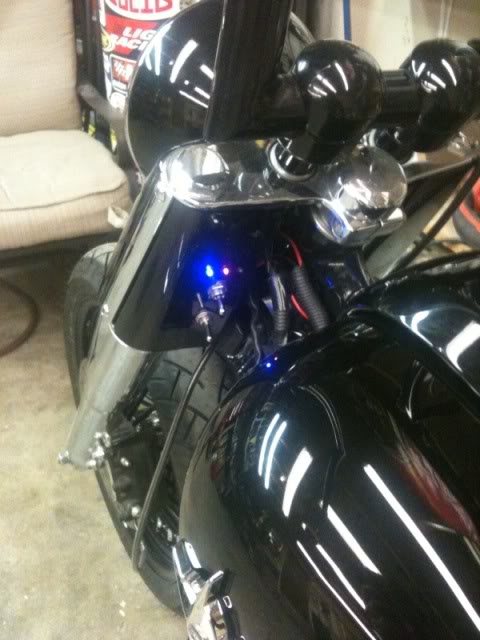
Got one on my fatboy. Got rid of all the switches off my bars and tank. Put the headlight and air-ride switches, along with idiot/neutral lights on the back of the fork panel. Starter button was easy to install, and once you get a feel for where it is, it's easy to reach without looking, even though those hot pipes are sooooo close lol.
HD Forum Stories
The Best of Harley-Davidson for Lifelong Riders

7 Surprising Harley-Davidson Products that Are Not Motorcycles
Verdad Gallardo
8 Best Harley-Davidson Motorcycles Ever
Pouria Savadkouei
10 Worst Harley-Davidson Motorcycles Ever
Pouria Savadkouei
Killer Custom's Jail Break Is The Breakout That Refused to Blend In
Verdad Gallardo
Crazy Bunderbike Build Looks Amazing, But Is It Impossible to Ride?
Verdad Gallardo
Harley-Davidson Reveals Super Cool Cafe Racer Concept
Verdad Gallardo
Engraved Rebellion: Inside Bundnerbike's Glam Rock II
Verdad Gallardo
10 Motorcycles You Should Never Buy
Joe Kucinski
10 Things Harley-Davidson Needs to Fix in 2026
Verdad Gallardo
Tourer
Joined: Nov 2011
Posts: 324
Likes: 1
From: USA
I think what these covers do is allow the operator to manually push the solenoid forward, which, itself, makes the contacts for the starter to turn. Instead of electrically (magnetically) moving the solenoid via the use of the low-power switch on your handlebars, you are manually, physically moving the solenoid. It is the solenoid that makes the electrical contact for the starter. There is no "electricity" moving through the solenoid starter button, nor does the solenoid starter button carry any power.