










Softtail Photo Game Thread
Seasoned HDF Member


Joined: Jul 2012
Posts: 81,309
Likes: 36,894
From: Oklahoma City

Surprisingly there are none still standing in Oklahoma according to all the resources I checked. Why surprising? Oklahoma is (was) one of the largest brick manufacturing areas in the country.

Supporter
Joined: Jun 2012
Posts: 2,912
Likes: 73
From: Pittsburgh, PA

..maybe another regional thing, we have tons of those things around here.
Here's a row of twelve of them, leftovers from an old mill and now just ornaments in the parkign lot of a major shopping center...
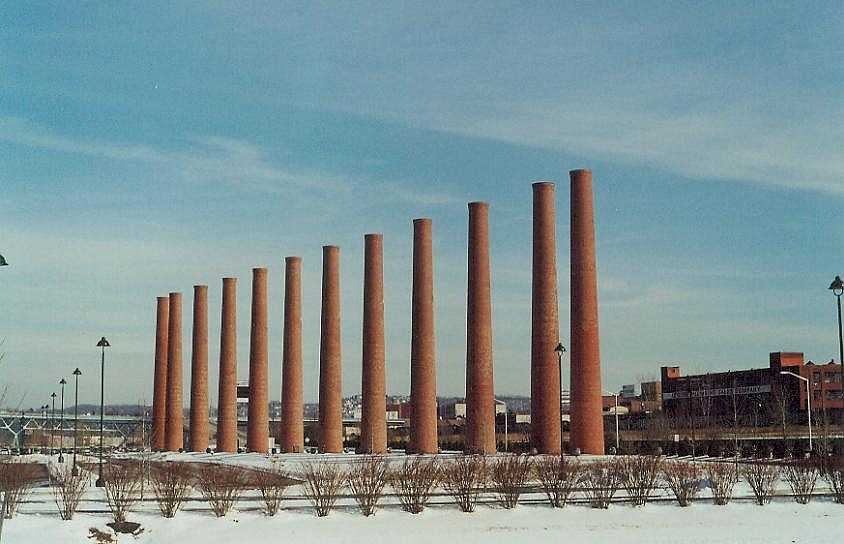
If you can find one shorter, go for it...
Here's a row of twelve of them, leftovers from an old mill and now just ornaments in the parkign lot of a major shopping center...
If you can find one shorter, go for it...

Road Master
Joined: Jul 2013
Posts: 862
Likes: 2
From: WI
Been hammered with cold AND wet. I don't mind riding in either, but it's a bad combination. Hopefully someone will have good luck. I'd sure like to see the guys that can still ride have some fun.
Man, it took me forever to read all 130 plus pages. And every time I get ready to get involved in the game it's on a tuff challenge like this. Hahaha there's nothing like that here in Cali.
Mike
Mike
Supporter
Joined: Jun 2012
Posts: 2,912
Likes: 73
From: Pittsburgh, PA


Road Warrior


Joined: Aug 2012
Posts: 1,553
Likes: 36
From: Four Corners
I got one in town (only one for hundreds of miles) if it would ever stop raining/snowing dang nabit!
HD Forum Stories
The Best of Harley-Davidson for Lifelong Riders

7 Surprising Harley-Davidson Products that Are Not Motorcycles
Verdad Gallardo
8 Best Harley-Davidson Motorcycles Ever
Pouria Savadkouei
10 Worst Harley-Davidson Motorcycles Ever
Pouria Savadkouei
Killer Custom's Jail Break Is The Breakout That Refused to Blend In
Verdad Gallardo
Crazy Bunderbike Build Looks Amazing, But Is It Impossible to Ride?
Verdad Gallardo
Harley-Davidson Reveals Super Cool Cafe Racer Concept
Verdad Gallardo
Engraved Rebellion: Inside Bundnerbike's Glam Rock II
Verdad Gallardo
10 Motorcycles You Should Never Buy
Joe Kucinski
10 Things Harley-Davidson Needs to Fix in 2026
Verdad Gallardo
Road Warrior
Joined: Aug 2012
Posts: 1,553
Likes: 36
From: Four Corners
Pretty cool story though...
The 116-year-old power house is the oldest known steam-powered AC power plant left in the world. The story of the Durango power plant begins in the late 1800s, when Thomas Edison and Nikola Tesla were trying to convince municipalities to adopt their competing forms of transmitting electricity. Edison was promoting his DC (direct current) form of transmission, while Tesla was urging companies to adopt his AC (alternating current) method.
AC ultimately won the electric wars – it’s the method used to transmit electricity today – but only after the method was tested and proven in the San Juan Mountains.
In the 1880s, L.L. Nunn, a seafood-restaurant owner in Durango, invested in the Gold King Mine, above Telluride. The mine soon exhausted the wood around the mine for generating power, and had to then laboriously haul coal in by horseback. It was a lot of time and money for little return, so Nunn borrowed $100,000 from the mine and persuaded George Westinghouse to come out here and build an AC power plant in Ames, near Ophir, in 1891.
It was the first commercial use of AC power in the world. Nunn was so taken with AC power’s success that he later built a school in Telluride to teach students how to use and develop AC power.
Following the success of the Ames plant, in 1893 Durango built the first municipal steam-powered AC power plant in the world. The plant powered the city’s businesses, residences, and streetcar system. (Doctors at the local hospital would call the plant before surgery to make sure power would be available throughout the operation.) Taking a cue from Durango’s success, in 1895 Telluride also began receiving AC energy from the Ames plant. In 1895, the first Eastern AC power plant, at Niagra, NY, was built – AC power had become the standard for the future of electricity transmission.
Located on the banks of the Animas River in a historic coal-fired, steam-generated AC powerplant, is the Durango Discovery Museum. In 1892, the Durango Light and Power Company embraced a fledgling technology known as AC power, the object of both marvel and derision. Outlawed as too dangerous in some Eastern states, the founders' investment soon became the standard for powering the world. They installed this new technology in a building crafted with Mission-style architecture, the first known use of this style for a commercial building outside of California. Once built, the plant provided AC power for Durango street lights before AC was available in the great cities of the East. The plant provided power to Durango through the town's early development. It soon became part of the Western Colorado power grid. Reflecting the West's changing emphasis on raw energy sources, it was converted from coal-fired to gas-fired in the mid-1940s. Its size and adaptability made it useful long after other early power generating plants had been torn down and replaced. It eventually became part of Western Colorado Power, which provided electricity to Colorado's Western Slope.
In the mid-1970s, the Powerhouse was shut down, boarded up, and the site—which sits on the banks of the Animas River—became an eyesore. It eventually was acquired by the City of Durango. Unable to find a use for the building, the city considered tearing it down. Finding a viable use for the building was compounded by the daunting and expensive task of removing asbestos—not to mention the decades of pigeon droppings. The Durango Powerhouse was listed on the State and National Registers of Historic Places and became one of Colorado Preservation, Inc.'s Most Endangered Places.
By 1999, the Children's Museum of Durango, founded in 1994, had outgrown its 1,100 square foot attic facility. Needing space to serve older visitors and accommodate yearly growth, the museum prepared a comprehensive business plan that proposed converting the Powerhouse and its site to an interactive science museum. In 2002, the Durango City Council passed a resolution supporting the rebirth of the Powerhouse as the Durango Discovery Museum.
Was a balmy 44* as I rode through town.

The 116-year-old power house is the oldest known steam-powered AC power plant left in the world. The story of the Durango power plant begins in the late 1800s, when Thomas Edison and Nikola Tesla were trying to convince municipalities to adopt their competing forms of transmitting electricity. Edison was promoting his DC (direct current) form of transmission, while Tesla was urging companies to adopt his AC (alternating current) method.
AC ultimately won the electric wars – it’s the method used to transmit electricity today – but only after the method was tested and proven in the San Juan Mountains.
In the 1880s, L.L. Nunn, a seafood-restaurant owner in Durango, invested in the Gold King Mine, above Telluride. The mine soon exhausted the wood around the mine for generating power, and had to then laboriously haul coal in by horseback. It was a lot of time and money for little return, so Nunn borrowed $100,000 from the mine and persuaded George Westinghouse to come out here and build an AC power plant in Ames, near Ophir, in 1891.
It was the first commercial use of AC power in the world. Nunn was so taken with AC power’s success that he later built a school in Telluride to teach students how to use and develop AC power.
Following the success of the Ames plant, in 1893 Durango built the first municipal steam-powered AC power plant in the world. The plant powered the city’s businesses, residences, and streetcar system. (Doctors at the local hospital would call the plant before surgery to make sure power would be available throughout the operation.) Taking a cue from Durango’s success, in 1895 Telluride also began receiving AC energy from the Ames plant. In 1895, the first Eastern AC power plant, at Niagra, NY, was built – AC power had become the standard for the future of electricity transmission.
Located on the banks of the Animas River in a historic coal-fired, steam-generated AC powerplant, is the Durango Discovery Museum. In 1892, the Durango Light and Power Company embraced a fledgling technology known as AC power, the object of both marvel and derision. Outlawed as too dangerous in some Eastern states, the founders' investment soon became the standard for powering the world. They installed this new technology in a building crafted with Mission-style architecture, the first known use of this style for a commercial building outside of California. Once built, the plant provided AC power for Durango street lights before AC was available in the great cities of the East. The plant provided power to Durango through the town's early development. It soon became part of the Western Colorado power grid. Reflecting the West's changing emphasis on raw energy sources, it was converted from coal-fired to gas-fired in the mid-1940s. Its size and adaptability made it useful long after other early power generating plants had been torn down and replaced. It eventually became part of Western Colorado Power, which provided electricity to Colorado's Western Slope.
In the mid-1970s, the Powerhouse was shut down, boarded up, and the site—which sits on the banks of the Animas River—became an eyesore. It eventually was acquired by the City of Durango. Unable to find a use for the building, the city considered tearing it down. Finding a viable use for the building was compounded by the daunting and expensive task of removing asbestos—not to mention the decades of pigeon droppings. The Durango Powerhouse was listed on the State and National Registers of Historic Places and became one of Colorado Preservation, Inc.'s Most Endangered Places.
By 1999, the Children's Museum of Durango, founded in 1994, had outgrown its 1,100 square foot attic facility. Needing space to serve older visitors and accommodate yearly growth, the museum prepared a comprehensive business plan that proposed converting the Powerhouse and its site to an interactive science museum. In 2002, the Durango City Council passed a resolution supporting the rebirth of the Powerhouse as the Durango Discovery Museum.
Was a balmy 44* as I rode through town.
Last edited by yzergod; Oct 31, 2013 at 06:10 PM.