




Power Vision users

Tourer
Joined: Apr 2010
Posts: 283
Likes: 3
From: Guymon, OK

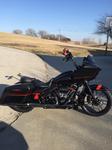
I've been following this tread closely. I have a '13 Street Glide that I Stage 1'd myself and I used a PV for the tuner. I used the tune provided by Fuel Moto for a couple weeks, then started auto tuning it. Seemed like it was actually getting further and further away from where I wanted to be. Back firing and popping. Fuel mileage getting worse and worse. I emailed Jaimie and he sent me a new tune that took MOST of the popping on decel out, but there's still a little there. Mileage got a little better. When I get home from this deployment I'm going to try my hand at AT again. Lot's of good info here. Thanks.
Tourer
Joined: Aug 2009
Posts: 368
Likes: 22
From: southwest Iowa
Power Vision users
I'm running the auto tune pro set up with a fuel moto map & their headers. I've ran two auto tune sessions, first was 0% avg change, 15% max. Second session was again 0% avg & 6% max. I know the fuel moto tune is spot on, doesn't seem like there's much point in going any further? Bike is a twin cooled 14. Also getting low to mid 40's in mpg with two up ez riding, engine temp stays around 205-210 going down the hiway.

Road Master
Joined: Jul 2010
Posts: 1,042
Likes: 86
From: Centeral Coast, California
I'm running the auto tune pro set up with a fuel moto map & their headers. I've ran two auto tune sessions, first was 0% avg change, 15% max. Second session was again 0% avg & 6% max. I know the fuel moto tune is spot on, doesn't seem like there's much point in going any further? Bike is a twin cooled 14. Also getting low to mid 40's in mpg with two up ez riding, engine temp stays around 205-210 going down the hiway.

Thread Starter
|
Road Warrior
Joined: Jun 2014
Posts: 1,297
Likes: 57
From: N. IL
Ok.....so after that last Auto tune, noticed my e.t. higher than normal at 290? Wonder if PV in trying to lean out too much? Knowing it stays around 14.6????
Maybe I'll just reflash the map from moto and start the auto tune process over? It was running temps of 250-270
Maybe I'll just reflash the map from moto and start the auto tune process over? It was running temps of 250-270
Road Master
Joined: Jul 2010
Posts: 1,042
Likes: 86
From: Centeral Coast, California
Don't walk backward, keep moving forward in your AT runs IF you like everything else that the PV is doing for you thus far. Like Cliff said, he toyed with his tuning for about a month before he felt like he'd done all that he could do, and while I can't remember how long it took me, it certainly took more AT's than just two or three. That's for sure.
Let's see what Cliff has to say. He may have a different perspective, and his will be as good if not better than mine.
Last edited by gipper; Jul 22, 2015 at 01:20 PM.

6th Gear
Joined: May 2015
Posts: 11
Likes: 2
From: NH
I will also watch this thread closely. I'm having the same problem where autotune seems to lean things out too much, resulting in increased heat and decreased performance.
This is on a 2009 Road King Classic. 96", Wood 222 cams, KnightProwler lifters, FuelMoto intake, FuelMoto Jackpots. MPG is around 35-37 now.
I've gone back to the original FuelMoto tune for now. I'll get back to the autotune when I'm not busy riding.
-Tom
This is on a 2009 Road King Classic. 96", Wood 222 cams, KnightProwler lifters, FuelMoto intake, FuelMoto Jackpots. MPG is around 35-37 now.
I've gone back to the original FuelMoto tune for now. I'll get back to the autotune when I'm not busy riding.
-Tom
Thread Starter
|
Road Warrior
Joined: Jun 2014
Posts: 1,297
Likes: 57
From: N. IL
Ok.....I decided to auto tune again today. Lite traffic, easy on the throttle. Temps went to 266 for a high. Haven't figured out the rhythm or reason, lack of experience I suppose.
Bike does run very good......for a '12 103.
I'm kinda thinking once temps are in line and desired fuel mpg is met, I'll close this out for a little while. Then start to understand the manual fine tuning that is available.
Bike does run very good......for a '12 103.
I'm kinda thinking once temps are in line and desired fuel mpg is met, I'll close this out for a little while. Then start to understand the manual fine tuning that is available.

Seasoned HDF Member


Joined: Jan 2007
Posts: 20,616
Likes: 4,440
From: anacoco, la
Ok.....I decided to auto tune again today. Lite traffic, easy on the throttle. Temps went to 266 for a high. Haven't figured out the rhythm or reason, lack of experience I suppose.
Bike does run very good......for a '12 103.
I'm kinda thinking once temps are in line and desired fuel mpg is met, I'll close this out for a little while. Then start to understand the manual fine tuning that is available.
Bike does run very good......for a '12 103.
I'm kinda thinking once temps are in line and desired fuel mpg is met, I'll close this out for a little while. Then start to understand the manual fine tuning that is available.
HD Forum Stories
The Best of Harley-Davidson for Lifelong Riders

7 Surprising Harley-Davidson Products that Are Not Motorcycles
Verdad Gallardo
8 Best Harley-Davidson Motorcycles Ever
Pouria Savadkouei
10 Worst Harley-Davidson Motorcycles Ever
Pouria Savadkouei
Killer Custom's Jail Break Is The Breakout That Refused to Blend In
Verdad Gallardo
Crazy Bunderbike Build Looks Amazing, But Is It Impossible to Ride?
Verdad Gallardo
Harley-Davidson Reveals Super Cool Cafe Racer Concept
Verdad Gallardo
Engraved Rebellion: Inside Bundnerbike's Glam Rock II
Verdad Gallardo
10 Motorcycles You Should Never Buy
Joe Kucinski
10 Things Harley-Davidson Needs to Fix in 2026
Verdad Gallardo
Road Master
Joined: Jul 2010
Posts: 1,042
Likes: 86
From: Centeral Coast, California
skratch: Is that to say that it should not be getting hot during AT, or that it's going to get hot during AT? Conventional wisdom would say to me that it shouldn't get hot during AT, but I don't really understand timing vs. AFR, etc.

Cruiser
Joined: Oct 2010
Posts: 182
Likes: 13
From: Ohio
Keep in mind that these bikes, at least thru 2013 are air cooled. 260 degrees running temps in hot/humid weather is really nothing to raise an eyebrow over.
There are several things that we tune for, first and foremost and in any and all cases is how the engine performs in all areas. This is, and always has been the best way to tune, no matter what path you take to get there, or what an A/F meter or anyone or anything else tells you.
Unless you have a dyno, full throttle runs evaluated "by the seat of your pants" are highly flawed, unless the tune is WAY off to where the engine is surging, "flat", popping back thru the air cleaner, pinging, or just plain woln't get out of it's own way. Once you get close, small changes for WOT tuning are EXTREMELY difficult to evaluate without a dyno, drag strip, or at least a good WOT run between two mile markers with a stopwatch.
This is why I like to use a good known MAP from a good source to work from. I also like to er slightly rich at WOT and conservative for timing, even if you loose a small amount of power. This creates a buffer and allows for poor quality fuel, or less than ideal DA, etc.
Once you have a good baseline to work from, like the MAP I used from Fuel Moto, the fun can begin.
Without writing a book here, I simply evaluated their tune in all areas, and logged enough miles and tanks of fuel thru it to know where it shined and where it was lacking. For WOT runs, it was excellent. Idle, off idle and "normal" driving range very good, but you could smell it was just a tad rich on light decell, and fuel economy was just under 40mpg's no matter how I rode the bike.
I set a personal goal to equal my friends 2012 CVO bike, which was stone stock aside from a 2 into 1 exhaust and custom dyno tune. He was KILLING me on fuel consumption from day one getting around 41-44mpgs when I couldn't get to 40 mpg's if I dropped the bike out of a C-130 for part of the trip!
Anyhow, I tuned light part throttle to about 30 percent and 3000 or so rpms for at least 3 sessions, accepted the changes and ran that MAP for quite a while. I did this because I was fine with the rest of the MAP, and wanted to address fuel economy and power/efficiency in the "normal" driving range first.
I saved it to slot #3, then ran another one to slot #4 and tuned on that some with using the quick tune features of the PV. Since I do a LOT of short rides over various routes, and seldom over 55mph, it quickly becomes difficult to really know if one MAP is superior to another just running them a few miles. You've got to log several tanks of fuel thru each one, have enough self control to mimic the riding style, make a small change, do it all over again, and keep good notes.
Even though I do "high performance" stuff for a living and strive for the best results from these things in all areas, I try not to be overly **** about it, or at least detailed enough to tune something to the brink of extinction. With that said, I do like my stuff to work like it's supposed to in all areas, so I just don't accept poor fuel economy and down on power a bit from something like this 2012 103ci engine as a brick wall I can't get past. So basically you've got to spend enough time with the tuner to become intimately familiar with it's features, how to use them, make small changes, then ride the bike, evaluate what you've done, log the MPG's and take good notes.
Long rides with other riders, filling up at the same stations, and making comparisons really helps let you know how well your efforts are working out, especially when those folks have hired professionals to do all their work for them. It's a tough pill to swallow right to start with when you've just bought 2012 technology, and the guy that bought CVO bike making 20 percent more power also uses considerably LESS fuel to do the same thing your bike is doing.
So after all my efforts the day came for a long ride to New York. We split the trip up hitting secondary roads for about 30 percent of it, then Interstate the rest of the way, and Interstate all the way back (ran the bag off of them BTW) a few days later. I was nicely rewarded with the worst tank logging 41mpgs, and best of 44mpgs, and each time my friend filled his CVO bike, we used almost EXACTLY the same amount of fuel each time. So I basically reached the goals I set for the bike, and I also felt that power output was about as good as you'll ever get out of one of these 103's without a cam change. It really wasn't all that bad for hard runs, but certainly not as good as any of the other bikes I've owned with similar bolt on modifications.
The next step for the bike was going to be cams, but like I stated earlier, it went on down the road to someone who wanted it more than I did, and I replaced it with a CVO Road King.......Cliff
There are several things that we tune for, first and foremost and in any and all cases is how the engine performs in all areas. This is, and always has been the best way to tune, no matter what path you take to get there, or what an A/F meter or anyone or anything else tells you.
Unless you have a dyno, full throttle runs evaluated "by the seat of your pants" are highly flawed, unless the tune is WAY off to where the engine is surging, "flat", popping back thru the air cleaner, pinging, or just plain woln't get out of it's own way. Once you get close, small changes for WOT tuning are EXTREMELY difficult to evaluate without a dyno, drag strip, or at least a good WOT run between two mile markers with a stopwatch.
This is why I like to use a good known MAP from a good source to work from. I also like to er slightly rich at WOT and conservative for timing, even if you loose a small amount of power. This creates a buffer and allows for poor quality fuel, or less than ideal DA, etc.
Once you have a good baseline to work from, like the MAP I used from Fuel Moto, the fun can begin.
Without writing a book here, I simply evaluated their tune in all areas, and logged enough miles and tanks of fuel thru it to know where it shined and where it was lacking. For WOT runs, it was excellent. Idle, off idle and "normal" driving range very good, but you could smell it was just a tad rich on light decell, and fuel economy was just under 40mpg's no matter how I rode the bike.
I set a personal goal to equal my friends 2012 CVO bike, which was stone stock aside from a 2 into 1 exhaust and custom dyno tune. He was KILLING me on fuel consumption from day one getting around 41-44mpgs when I couldn't get to 40 mpg's if I dropped the bike out of a C-130 for part of the trip!
Anyhow, I tuned light part throttle to about 30 percent and 3000 or so rpms for at least 3 sessions, accepted the changes and ran that MAP for quite a while. I did this because I was fine with the rest of the MAP, and wanted to address fuel economy and power/efficiency in the "normal" driving range first.
I saved it to slot #3, then ran another one to slot #4 and tuned on that some with using the quick tune features of the PV. Since I do a LOT of short rides over various routes, and seldom over 55mph, it quickly becomes difficult to really know if one MAP is superior to another just running them a few miles. You've got to log several tanks of fuel thru each one, have enough self control to mimic the riding style, make a small change, do it all over again, and keep good notes.
Even though I do "high performance" stuff for a living and strive for the best results from these things in all areas, I try not to be overly **** about it, or at least detailed enough to tune something to the brink of extinction. With that said, I do like my stuff to work like it's supposed to in all areas, so I just don't accept poor fuel economy and down on power a bit from something like this 2012 103ci engine as a brick wall I can't get past. So basically you've got to spend enough time with the tuner to become intimately familiar with it's features, how to use them, make small changes, then ride the bike, evaluate what you've done, log the MPG's and take good notes.
Long rides with other riders, filling up at the same stations, and making comparisons really helps let you know how well your efforts are working out, especially when those folks have hired professionals to do all their work for them. It's a tough pill to swallow right to start with when you've just bought 2012 technology, and the guy that bought CVO bike making 20 percent more power also uses considerably LESS fuel to do the same thing your bike is doing.
So after all my efforts the day came for a long ride to New York. We split the trip up hitting secondary roads for about 30 percent of it, then Interstate the rest of the way, and Interstate all the way back (ran the bag off of them BTW) a few days later. I was nicely rewarded with the worst tank logging 41mpgs, and best of 44mpgs, and each time my friend filled his CVO bike, we used almost EXACTLY the same amount of fuel each time. So I basically reached the goals I set for the bike, and I also felt that power output was about as good as you'll ever get out of one of these 103's without a cam change. It really wasn't all that bad for hard runs, but certainly not as good as any of the other bikes I've owned with similar bolt on modifications.
The next step for the bike was going to be cams, but like I stated earlier, it went on down the road to someone who wanted it more than I did, and I replaced it with a CVO Road King.......Cliff