



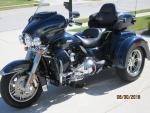


03 road king starter clicks

Seasoned HDF Member


Joined: Mar 2010
Posts: 38,525
Likes: 6,406
From: Honah Lee

Battery is worn out.? Pull it, charge it and then have it checked....Could be something else but start simple...That is on 19,000 miles, probably not mechanical unless you let off key a lot rather then hold it in starting. Some people do that and put twice or three times wear on starter and solenoid. Not the bar switch..
Rev. 111015
Some electrical 101 and a little more..
Remember, the best made brand new battery that has been on a maintenance charger for 3 days that has a loose or bad connection is no better then a boat anchor with a loose rope. The connection can get loose after one ride if the battery is not anchored and the wires are short and get tugged in a direction that can unscrew the bolts.
After a good 24+ hour maintenance low amperage charge, with the charge light in the solid green and the battery has set about 24 hours off charge, voltage should be about 12.8 volts.
12.8 = full charged
12.6 = 75% charged
12.3 = 50% charged (Lot of new modern cars with system protection will not even click at this point but will have good headlight beams showing)
12.0 =25% charged
Always check both the terminals at the battery lead and also at the terminal on the wire. That helps to verify connection. With a DC volt meter (one that has a feature to lock high and low reading is best) hooked across the battery terminals and reading 12.8 or so, crank motor and while its cranking it should not drop below about 9.6 volts and as soon as it starts and throttled up to 2000 rpm, voltage should read around 14.8 volts. The 2000 rpm is the bench mark standard. Ignore idle output. Ignore output above 2000rpm unless it exceeds 14.9 volts. That is a sure indication that regulator is bad.
The crank check shows a rough check of the reserve amperage capacity of the battery while cranking with a 150-200 amp load on it. The 14.8 shows a good alternator and if you leave it on a while as the regulatory will drop the voltage a little showing itself working. However, with the lights and stuff always on, it will never drop back much. If you have a lot of options, most modern bikes will not show 14.8 charging volts at idle but stock newer bikes will be close. Older bikes with lower amperage output not so much. However, 2000 rpm is the bench mark for the standard 14.8 volts.
If you think battery is good and something is draining it sitting, now would be a good time to check for drain problems. Go to Harbor Freight and get you a AC/DC meter for under $25 or so. http://www.harborfreight.com/ac-dc-d...ter-37772.html Make sure it has DC amps draw, DC voltage, resistance and AC voltage. Key off. Remove the negative cable off the battery. Set meter on DC amps. Hook the meter lead to cable and the other to battery. How many milliamps (mA) is it drawing? It should be no more then 6 mA which is the ECM (1), speedometer (1), tac,TSSM (1),HFSM (1) and voltage regulator (1)
When a battery wears out, a good charge will show fairly good voltage, but the battery can still have very low amperage capacity which will show in the crude crank test above, but it really should be checked after a good charge by removing it from bike and getting a free check at a place like AutoZone that has a fancy load meter check that gives you a print out of the battery health. Battery MUST BE CHARGED to check it. Be sure they set their meter to correct cold cranking amperage stated on the battery. Never charge the AGM absorbed glass mat battery with a regular car battery charger unless it is a newer one that says safe with this type of battery. Also, by taking battery out you now know you have good connections. Vibration tends to loosen the connections or a little corrosion will prevent charging or cause starting problems. Be forwarned, these checks quite often are incorrect due to the low amperage of these small batteries and junk checking equipment. If bike is charging , no load on battery when key is off and you are still having problems…REPLACE THE BATTERY. If battery is more then 3-4 years old.. REPLACE THE BATTERY.
Using the maintenance charger can get more years from a battery but be careful here. You do not want the last start 5 miles from home. If it still grunts when you first hit starter or kicks back with a bang, replace it. After a few years, charge and pull battery and have it checked for cold cranking amperage ever spring. Even then, if it grunts most ever start, I would replace it. Most battery checkers at AutoZone and places like that do not do really well on the low amperage setting on small batteries. Not sure why but they tend to say they are OK when they are weak. If they have one that fits your bike, Wal-Mart's AGM absorbed glass mat battery is just as good as any for one third to half the money of a Harley Battery. Do not put an old fashion one with vent tubes on a modern TC Harley. Do not jump, push start or run bike with a half dead battery except in a real emergency. If a bike battery is down and you jump it, throwing all that amps to it from a big car battery especially one that is running can wreck a bike regulator or charging system. Charging a worn out battery can kill alternator stator or the voltage regulator or both. Probably ending in a big dollar repair in parts alone.
It is also a good idea to always check your battery at 2000 RPM with your meter set to AC. If by chance, the regulator goes bad, sometimes it will let AC come thru. That is a sure sign of a bad regulator. The older stators with two wires are a two phase AC system. Lot of people call it a single phase but it is two phase. The AC voltage you see appears single since you check it AC across the two wires since there is no earth ground. If you were to check one wire to an earth ground, it would show one half the voltage that you would see when you check the two wires together on the bike. Same with the other. Together they double and are two phase. The newer three-wire system is a 3-phase AC system for the higher amperage output.
Also remember, when starting a Harley, hit the starter and hold it in till it is firing on both cylinders and running before letting up. If you let up before it’s running, quiet often, it actually take an FI motor longer to start. There is a fraction of a second more for a long stroke Harley then a multi-cylinder car for it to get going. If you do not do this, it will kick back with a bang, sneeze thru the intake or crank a lot longer the second time or shame on you the third time. Also, if you have a habit of doing this, the starter solenoid switch contact will only have half the life it could. You cannot hurt the starter. The starter gear has a sprag clutch. There are drive pins in it that as the gas motor catches and run, it outruns the starter motor drive and disengages it from the electric motor. If you hold it in a little too long and listen carefully, you will hear the sprag clutch run up the ramps and slip. Makes a sizzle hum. This will show you your starter sprag clutch is OK.
Rev. 111015
Some electrical 101 and a little more..
Remember, the best made brand new battery that has been on a maintenance charger for 3 days that has a loose or bad connection is no better then a boat anchor with a loose rope. The connection can get loose after one ride if the battery is not anchored and the wires are short and get tugged in a direction that can unscrew the bolts.
After a good 24+ hour maintenance low amperage charge, with the charge light in the solid green and the battery has set about 24 hours off charge, voltage should be about 12.8 volts.
12.8 = full charged
12.6 = 75% charged
12.3 = 50% charged (Lot of new modern cars with system protection will not even click at this point but will have good headlight beams showing)
12.0 =25% charged
Always check both the terminals at the battery lead and also at the terminal on the wire. That helps to verify connection. With a DC volt meter (one that has a feature to lock high and low reading is best) hooked across the battery terminals and reading 12.8 or so, crank motor and while its cranking it should not drop below about 9.6 volts and as soon as it starts and throttled up to 2000 rpm, voltage should read around 14.8 volts. The 2000 rpm is the bench mark standard. Ignore idle output. Ignore output above 2000rpm unless it exceeds 14.9 volts. That is a sure indication that regulator is bad.
The crank check shows a rough check of the reserve amperage capacity of the battery while cranking with a 150-200 amp load on it. The 14.8 shows a good alternator and if you leave it on a while as the regulatory will drop the voltage a little showing itself working. However, with the lights and stuff always on, it will never drop back much. If you have a lot of options, most modern bikes will not show 14.8 charging volts at idle but stock newer bikes will be close. Older bikes with lower amperage output not so much. However, 2000 rpm is the bench mark for the standard 14.8 volts.
If you think battery is good and something is draining it sitting, now would be a good time to check for drain problems. Go to Harbor Freight and get you a AC/DC meter for under $25 or so. http://www.harborfreight.com/ac-dc-d...ter-37772.html Make sure it has DC amps draw, DC voltage, resistance and AC voltage. Key off. Remove the negative cable off the battery. Set meter on DC amps. Hook the meter lead to cable and the other to battery. How many milliamps (mA) is it drawing? It should be no more then 6 mA which is the ECM (1), speedometer (1), tac,TSSM (1),HFSM (1) and voltage regulator (1)
When a battery wears out, a good charge will show fairly good voltage, but the battery can still have very low amperage capacity which will show in the crude crank test above, but it really should be checked after a good charge by removing it from bike and getting a free check at a place like AutoZone that has a fancy load meter check that gives you a print out of the battery health. Battery MUST BE CHARGED to check it. Be sure they set their meter to correct cold cranking amperage stated on the battery. Never charge the AGM absorbed glass mat battery with a regular car battery charger unless it is a newer one that says safe with this type of battery. Also, by taking battery out you now know you have good connections. Vibration tends to loosen the connections or a little corrosion will prevent charging or cause starting problems. Be forwarned, these checks quite often are incorrect due to the low amperage of these small batteries and junk checking equipment. If bike is charging , no load on battery when key is off and you are still having problems…REPLACE THE BATTERY. If battery is more then 3-4 years old.. REPLACE THE BATTERY.
Using the maintenance charger can get more years from a battery but be careful here. You do not want the last start 5 miles from home. If it still grunts when you first hit starter or kicks back with a bang, replace it. After a few years, charge and pull battery and have it checked for cold cranking amperage ever spring. Even then, if it grunts most ever start, I would replace it. Most battery checkers at AutoZone and places like that do not do really well on the low amperage setting on small batteries. Not sure why but they tend to say they are OK when they are weak. If they have one that fits your bike, Wal-Mart's AGM absorbed glass mat battery is just as good as any for one third to half the money of a Harley Battery. Do not put an old fashion one with vent tubes on a modern TC Harley. Do not jump, push start or run bike with a half dead battery except in a real emergency. If a bike battery is down and you jump it, throwing all that amps to it from a big car battery especially one that is running can wreck a bike regulator or charging system. Charging a worn out battery can kill alternator stator or the voltage regulator or both. Probably ending in a big dollar repair in parts alone.
It is also a good idea to always check your battery at 2000 RPM with your meter set to AC. If by chance, the regulator goes bad, sometimes it will let AC come thru. That is a sure sign of a bad regulator. The older stators with two wires are a two phase AC system. Lot of people call it a single phase but it is two phase. The AC voltage you see appears single since you check it AC across the two wires since there is no earth ground. If you were to check one wire to an earth ground, it would show one half the voltage that you would see when you check the two wires together on the bike. Same with the other. Together they double and are two phase. The newer three-wire system is a 3-phase AC system for the higher amperage output.
Also remember, when starting a Harley, hit the starter and hold it in till it is firing on both cylinders and running before letting up. If you let up before it’s running, quiet often, it actually take an FI motor longer to start. There is a fraction of a second more for a long stroke Harley then a multi-cylinder car for it to get going. If you do not do this, it will kick back with a bang, sneeze thru the intake or crank a lot longer the second time or shame on you the third time. Also, if you have a habit of doing this, the starter solenoid switch contact will only have half the life it could. You cannot hurt the starter. The starter gear has a sprag clutch. There are drive pins in it that as the gas motor catches and run, it outruns the starter motor drive and disengages it from the electric motor. If you hold it in a little too long and listen carefully, you will hear the sprag clutch run up the ramps and slip. Makes a sizzle hum. This will show you your starter sprag clutch is OK.
Last edited by Jackie Paper; Nov 20, 2015 at 06:31 AM.

Seasoned HDF Member


Joined: Jan 2006
Posts: 11,471
Likes: 2,998
From: Charleston, SC
There is a starter relay under one of the side covers, p/n 31504-91A.
It's probably going bad and it's easy to replace. Can usually get it at Autozone.
Your bike has two relays side by side. I forget what the second one is for, but you can usually swap them to see if the starter relay has gone bad...
It's probably going bad and it's easy to replace. Can usually get it at Autozone.
Your bike has two relays side by side. I forget what the second one is for, but you can usually swap them to see if the starter relay has gone bad...
Last edited by lp; Nov 20, 2015 at 06:59 AM.

HDF Community Team


Joined: Nov 2012
Posts: 6,189
Likes: 2,419
From: USA

Harley uses a Nippondenso starter motor unit, with the typical denso solenoid problem and fix. The contacts and plunger get burned, and the starter motor clicks instead of engaging.
You can usually get it to actually work by pressing the starter button on the handlebar repeatedly (or by turning the key on your Toyota/Honda/etc back and forth repeatedly). The problem gradually gets worse.
There are a zillion starter solenoid repair kits out there to fix the problem with replacement contacts and maybe a new plunger.
The free way to fix it is to remove the solenoid cover, pull out the plunger, clean it and the contacts at the bottom.
Here's a simple and clear walk-through of it.
http://www.repairkitsuk.com/3.html
You can usually get it to actually work by pressing the starter button on the handlebar repeatedly (or by turning the key on your Toyota/Honda/etc back and forth repeatedly). The problem gradually gets worse.
There are a zillion starter solenoid repair kits out there to fix the problem with replacement contacts and maybe a new plunger.
The free way to fix it is to remove the solenoid cover, pull out the plunger, clean it and the contacts at the bottom.
Here's a simple and clear walk-through of it.
http://www.repairkitsuk.com/3.html
Last edited by foxtrapper; Nov 20, 2015 at 09:34 AM.

Seasoned HDF Member

Joined: Sep 2005
Posts: 5,072
Likes: 104
From: Prescott, AZ
Harley uses a Nippondenso starter motor unit, with the typical denso solenoid problem and fix. The contacts and plunger get burned, and the starter motor clicks instead of engaging.
You can usually get it to actually work by pressing the starter button on the handlebar repeatedly (or by turning the key on your Toyota/Honda/etc back and forth repeatedly). The problem gradually gets worse.
There are a zillion starter solenoid repair kits out there to fix the problem with replacement contacts and maybe a new plunger.
The free way to fix it is to remove the solenoid cover, pull out the plunger, clean it and the contacts at the bottom.
Here's a simple and clear walk-through of it.
http://www.repairkitsuk.com/3.html
You can usually get it to actually work by pressing the starter button on the handlebar repeatedly (or by turning the key on your Toyota/Honda/etc back and forth repeatedly). The problem gradually gets worse.
There are a zillion starter solenoid repair kits out there to fix the problem with replacement contacts and maybe a new plunger.
The free way to fix it is to remove the solenoid cover, pull out the plunger, clean it and the contacts at the bottom.
Here's a simple and clear walk-through of it.
http://www.repairkitsuk.com/3.html
+1
99.99% This is exactly your issue.m i had an 04 doing the exact same thing as your - cheched everything like you have, talked to my Indy - he told me how to remove cover and clean it - he explained how overr the years and all the starting/firing just builds up small 'burn' spots - all normal.
Little emory cloth and you should be good to go -
At first i was nervous to pull that cap - lol - super easy.
Sold that bike and now have a 2015 - want to buy one of those 'push buttons' have several friends that have them - nice 'plan B' for the future
Read the link - remove your cover - clean up and report back
You will thank 'Foxtrapper' He beat me to punch - surprised it took 14 posts
Last edited by harley0711; Nov 20, 2015 at 10:12 AM.
Seasoned HDF Member
Joined: Sep 2005
Posts: 5,072
Likes: 104
From: Prescott, AZ

Road Master
Joined: Jun 2013
Posts: 1,239
Likes: 1,171
From: St. Catharines, Ontario
the contacts inside the solenoid are seldom in good enough shape to clean up. but you can get away with reversing the circular contact that bridges them when the solenoid is energized. But if you take the thing apart that far, why not replace the stationary contacts with the new ones in the kit mentioned in post 4
Seasoned HDF Member
Joined: Mar 2010
Posts: 38,525
Likes: 6,406
From: Honah Lee
The click I here in the video sound like the starter relay and not the loud clunk the starter solenoid makes but it is a video that you are not there to isolate sound. Takes a pretty weak battery that cannot pull in solenoid since it is pulling starter gear out a ways before it actually engages starter just before engagement.
Last edited by Jackie Paper; Sep 14, 2018 at 11:11 AM.
HD Forum Stories
The Best of Harley-Davidson for Lifelong Riders

7 Surprising Harley-Davidson Products that Are Not Motorcycles
Verdad Gallardo
8 Best Harley-Davidson Motorcycles Ever
Pouria Savadkouei
10 Worst Harley-Davidson Motorcycles Ever
Pouria Savadkouei
Killer Custom's Jail Break Is The Breakout That Refused to Blend In
Verdad Gallardo
Crazy Bunderbike Build Looks Amazing, But Is It Impossible to Ride?
Verdad Gallardo
Harley-Davidson Reveals Super Cool Cafe Racer Concept
Verdad Gallardo
Engraved Rebellion: Inside Bundnerbike's Glam Rock II
Verdad Gallardo
10 Motorcycles You Should Never Buy
Joe Kucinski
10 Things Harley-Davidson Needs to Fix in 2026
Verdad Gallardo
Seasoned HDF Member
Joined: Sep 2005
Posts: 5,072
Likes: 104
From: Prescott, AZ
The click I here in the video sound like the starter relay and not the loud clunk the starter solenoid makes but it is a video that you are not there to isolate sound. Takes a pretty weak battery that cannot pull in solenoid since it is pulling starter gear out a ways before it actually engages starter just before engagement.
Of course / like you - Iam not there - but I will make tou a friendly wager

Road Warrior
Joined: May 2005
Posts: 1,301
Likes: 24
From: Minden LA
I guess the title of this thread says it all. I push the button and I hear a click down where the starter is but nothing happens. Lights don't dim as if the batter has a bad connection. Battery is fully charged. What can it be. I road it home yesterday parked it. Went to start today and all it did was click. After about three or four tries it started right up two times then now just clicks. One click not a run of clicks like a bad connection. 31,000 km on it. The battery terminals are tight and clean.
randy
randy