


Torque & Back Pressure, how does it work

Thread Starter
|
Road Master


Joined: Feb 2010
Posts: 905
Likes: 51
From: New Jersey
 Torque & Back Pressure, how does it work
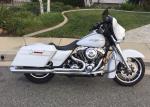
So, I was debating on going back to my stock head pipe because our friends a Fuel Moto said the problem I experiencing was caused by Dresser Duals not creating enough torque at lower RPM ranges and suggested my stock head pipe would be better than what I had. Turns out, they were correct. The stock head pipe is working better for me. Then one of the guys at the shop mentioned that there wasn't enough back pressure in the true duals. He didn't have time to give me a lesson on what that meant, so I figured I'd ask my buddies on the forum. Are the back pressure the shop mentioned, and the torque Fuel Moto mentioned, one and the same, or is one the result of the other?
Thanks!
Thanks!
Road Warrior

Joined: Aug 2014
Posts: 1,937
Likes: 320
From: Vancouver, WA
Simply speaking, back pressure happens when the exhaust can't flow out as fast as the piston comes up on it's exhaust stroke so it compresses slightly on the exhaust stroke and the velocity increases as it exits (venturi effect) creating lower pressure which allows more of a charge to be pulled into the cylinder during the intake stoke. So with lower back pressure as the true duals have, you'll sacrifice low end torque for higher RPM horsepower because of a more free flowing exhaust but our bikes aren't used so much for top end and that's why most feel that low end torque is more important to them. I agree with that.
Last edited by RG Pilot; Jun 30, 2016 at 12:51 PM.
Thread Starter
|
Road Master
Joined: Feb 2010
Posts: 905
Likes: 51
From: New Jersey
Simply speaking, back pressure happens when the exhaust can't flow out as fast as the piston comes up on it's exhaust stroke so it compresses slightly on the exhaust stroke and the velocity increases as it exits (venturi effect) creating lower pressure which allows more of a charge to be pulled into the cylinder during the intake stoke.
Road Warrior
Joined: Aug 2014
Posts: 1,937
Likes: 320
From: Vancouver, WA
Correct. The cylinder is able to get more of a fuel/air charge at low RPM when throttle is applied. Exhaust gasses are evacuated more completely when there is some back pressure at low RPM due to scavenging of the gasses cause by the venturi effect. Sounds counter-intuitive but basically, that's what happens. Then as RPM increases, flow also increases so less back pressure is best for high RPM and that's where horsepower comes in. Cam profiles have a lot to do with this as well.
Last edited by RG Pilot; Jun 30, 2016 at 01:23 PM.

Road Warrior
Joined: Jun 2014
Posts: 1,357
Likes: 91
From: Michigan
I disagree, without sufficient back pressure the exhaust gas velocity will not increase enough to create negative pressure in the combustion chamber before TDC, which in turn ensures all exhaust gases are evacuated as well as helps pull vaporized fuel in during the valve overlap.
Trending Topics

Outstanding HDF Member
Joined: Jul 2013
Posts: 2,083
Likes: 247
From: Tulsa, OK
http://www.hotbikeweb.com/custom-mot...nical-analysis
Read and be educated.
It's all about velocity, expansion, volume and resistance, not back pressure, smaller pipes equals less expansion room which aids in velocity, too much expansion room and you slow the gas flow down, too much and get reversion. Also going true dual you lost the scavenging effect where high speed exhasut pulse from 1 cylinder creates a low pressure void at the collector which helps pull the gasses out faster.
Read and be educated.
It's all about velocity, expansion, volume and resistance, not back pressure, smaller pipes equals less expansion room which aids in velocity, too much expansion room and you slow the gas flow down, too much and get reversion. Also going true dual you lost the scavenging effect where high speed exhasut pulse from 1 cylinder creates a low pressure void at the collector which helps pull the gasses out faster.
Last edited by bettingpython; Jun 30, 2016 at 04:07 PM.
HD Forum Stories
The Best of Harley-Davidson for Lifelong Riders

7 Surprising Harley-Davidson Products that Are Not Motorcycles
Verdad Gallardo
8 Best Harley-Davidson Motorcycles Ever
Pouria Savadkouei
10 Worst Harley-Davidson Motorcycles Ever
Pouria Savadkouei
Killer Custom's Jail Break Is The Breakout That Refused to Blend In
Verdad Gallardo
Crazy Bunderbike Build Looks Amazing, But Is It Impossible to Ride?
Verdad Gallardo
Harley-Davidson Reveals Super Cool Cafe Racer Concept
Verdad Gallardo
Engraved Rebellion: Inside Bundnerbike's Glam Rock II
Verdad Gallardo
10 Motorcycles You Should Never Buy
Joe Kucinski
10 Things Harley-Davidson Needs to Fix in 2026
Verdad Gallardo
Ultimate HDF Member
Joined: Mar 2012
Posts: 6,129
Likes: 143
From: Santa Cruz
Exactly! Ya want back pressure stick a potato in the pipe. Correct reversion is what you should be after...