



thunder max ?

Thread Starter
|
Cruiser
Joined: Dec 2006
Posts: 183
Likes: 2
From:
 thunder max ?
Every sencemy builderinstalled my thundrmax Ive had a dead spot from 2500 to3000 rpm. Yesterday he put in different map because he couldnt get rid of the flat spot. Now the bike is missin, jumpinand poppin, my question is how much will the auto tune fix and how long will it take, or do you have to be real close before the auto tune will do any good ( The bike runs great now at wot)

Road Captain
Joined: Jun 2006
Posts: 606
Likes: 0
From: nashvegas
RE: thunder max ?
You should try to be as close to a match as possible. The learned curve will depend upon the variables of the chosen mapand the actual build of the bike.I notice you have quite an agressive build so search and go from there. Now you can reload your last map if you saved the auto tune settings and improve upon it, that is if you saved all of your parameters.

Ultimate HDF Member
Joined: Feb 2006
Posts: 5,939
Likes: 3
From: TX
RE: thunder max ?
ORIGINAL: glens
As I understand it, the BLM has hard limits. You'll just have to step your way out of the rough spots manually to get a "floating" BLM for the troubled areas too.
As I understand it, the BLM has hard limits. You'll just have to step your way out of the rough spots manually to get a "floating" BLM for the troubled areas too.
"It was my experience" that if I fould a flat spot (rich/lean/whatever), I would intentionally run the bike in that range and "force the sytem to learn" in that "problem" area. THe DTT learns pretty quick, so it's a fairly simply process. In fact, all the systems I've install or helped with are usually tuned in pretty darn good in an hour or two. Admittedlt, they will continue to learn for a long time, but we can get them pretty close in a fairly short time frame.

Tourer
Joined: Jun 2006
Posts: 285
Likes: 0
From:
RE: thunder max ?
The Tmax is defaulted to only adjust the offsets 5% per session but you can change that. It is defaulted to make adjustments overall at 10% but you can change it to as much as 50%. Click confure > closed loop module settings,,, and there it is.
My bike ran great right from the install but the mileage was only 33 mpg. Mostly riding 30 or so miles per day to and from work. Went on a 350 mile ride last weekend and during the trip, notice I was getting a lot more miles. Filled up twice since then and now getting 38. It doesnt learn quickly. You have to ride it a bit. If it were me,I would put the old map in there, set it to adjust 15% per session, 30% overall (since you have that particular build)and hit the road for a couple of hundred miles, stopping every 50 miles or so and then restart so that it can adjust..
Maybe some of the experts would disagree but thats what I would do first.
My bike ran great right from the install but the mileage was only 33 mpg. Mostly riding 30 or so miles per day to and from work. Went on a 350 mile ride last weekend and during the trip, notice I was getting a lot more miles. Filled up twice since then and now getting 38. It doesnt learn quickly. You have to ride it a bit. If it were me,I would put the old map in there, set it to adjust 15% per session, 30% overall (since you have that particular build)and hit the road for a couple of hundred miles, stopping every 50 miles or so and then restart so that it can adjust..
Maybe some of the experts would disagree but thats what I would do first.

Outstanding HDF Member
Joined: Jul 2007
Posts: 2,609
Likes: 1
From: Indy area
RE: thunder max ?
Yeah, sorry about bringing up the BLM tables. I open several tabs at once (on dialup, so I can get right to reading) and somehow must've thought I was in a DTT thread.
Trending Topics

Stellar HDF Member


Joined: Jan 2007
Posts: 3,447
Likes: 163
From: Northern VA
RE: thunder max ?
Is the base map you're using a close match to your engine setup? I ask becauseI've had the TMax EFI Controller and Auto Tune module (first generation)on my SG forover 5K miles with a base map that was not a very close match to my bike's setup, but the closest one available. After riding 5K miles (over many months)with the TMAT, I hada dyno run done and discovered the bike was makinga paltry80 HP and 99 TQ max.Low numbers for a 103". Gas mileagewas 30 mpg. Seemed that the culprit had to be the mismatched base map.This prompted me to getthe bikedyno tuned byanauthorized TMax tuner. After thedyno tune, the bike was making 90 HP and 111 TQ max and the fuel mileage increased to 35 mpg.
Ifyour base map is not agood matchforthe bike's set up, then the Auto Tunecan not produce the optimally tuned motorcycle, no matter how many milesyouput on the bike. It can onlymodify the base map to a certain extent, then it can do no more. Itstill took a trained tech to tune the bike using theSmartlink Software program and a dynoto get thebike tunedoptimally. However, if the base map is a good match for the bike's configuration, then the ATshould tune it perfectlywithno need for a dyno tune.
My advice: keep searching for a better base map, and if you can't find one, get the bike dyno tuned by a certified TMAT tuner.
BTW, I'm definitely a fan of the TMAT. Good luck.
Ifyour base map is not agood matchforthe bike's set up, then the Auto Tunecan not produce the optimally tuned motorcycle, no matter how many milesyouput on the bike. It can onlymodify the base map to a certain extent, then it can do no more. Itstill took a trained tech to tune the bike using theSmartlink Software program and a dynoto get thebike tunedoptimally. However, if the base map is a good match for the bike's configuration, then the ATshould tune it perfectlywithno need for a dyno tune.
My advice: keep searching for a better base map, and if you can't find one, get the bike dyno tuned by a certified TMAT tuner.
BTW, I'm definitely a fan of the TMAT. Good luck.
HD Forum Stories
The Best of Harley-Davidson for Lifelong Riders
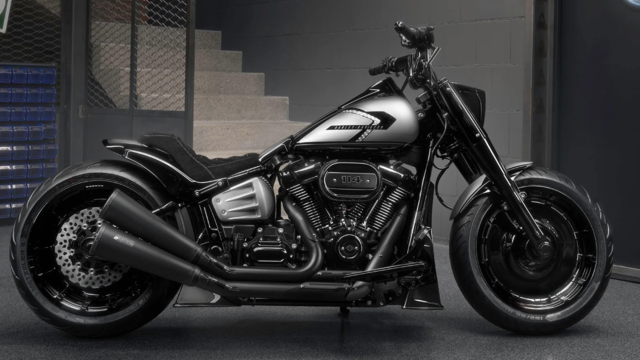
Harley-Davidson Fat Boy Becomes a Dark, Decepticon-Inspired Custom
Verdad Gallardo
6 Weirdest Harley-Davidsons Ever Sold to the Public
Verdad Gallardo
7 Times Harley-Davidson Chucked Tradition Out the Window
Verdad Gallardo
7 Surprising Harley-Davidson Products that Are Not Motorcycles
Verdad Gallardo
8 Best Harley-Davidson Motorcycles Ever
Pouria Savadkouei
10 Worst Harley-Davidson Motorcycles Ever
Pouria Savadkouei
Killer Custom's Jail Break Is The Breakout That Refused to Blend In
Verdad Gallardo
Crazy Bunderbike Build Looks Amazing, But Is It Impossible to Ride?
Verdad Gallardo
Harley-Davidson Reveals Super Cool Cafe Racer Concept
Verdad Gallardo
Outstanding HDF Member
Joined: Jul 2007
Posts: 2,609
Likes: 1
From: Indy area
RE: thunder max ?
Or just ride what you got and periodically modify the base map according to what the autotune has learned. Pretty soon you'll have autotune tables that will "float" and not bounce hard off their ceilings/floors.

Outstanding HDF Member
Joined: Aug 2006
Posts: 2,094
Likes: 5
From: SE Wisconsin
RE: thunder max ?
I'm ready to buy a TMax, is the installation instructions available online? How about the maps?
I want to make sure there is a map close to what I have and one close to what I am going to do.
I want to make sure there is a map close to what I have and one close to what I am going to do.