2000 RK trans Hearst swap issue


Thread Starter
|
6th Gear
Joined: Jun 2025
Posts: 14
Likes: 0
From: NV
 Update
I swapped in the 2000 adjuster and test road. Bike will shift but still has an issue with second, I have to hold up on the shifter for it to fully engage. On hard acceleration it feels like there is some binding like the gears are not meshing with each other. Almost feels like it’s slipping. I’ve adjusted the primary chain and clutch a bunch of times and still feels the same. Any ideas?
Seasoned HDF Member
Joined: Dec 2005
Posts: 19,957
Likes: 8,048
From: poway
I swapped in the 2000 adjuster and test road. Bike will shift but still has an issue with second, I have to hold up on the shifter for it to fully engage. On hard acceleration it feels like there is some binding like the gears are not meshing with each other. Almost feels like it’s slipping. I’ve adjusted the primary chain and clutch a bunch of times and still feels the same. Any ideas?
Pull the fork shaft and make sure it's straight. Examine the shift forks.
Thread Starter
|
6th Gear
Joined: Jun 2025
Posts: 14
Likes: 0
From: NV
has new shift forks and shifts fine on the table, pawl was adjusted and centered in 3rd per the manual
Seasoned HDF Member
Joined: Dec 2005
Posts: 19,957
Likes: 8,048
From: poway
What did the old forks look like?
This is the new shift drum with bottom neutral?
Have you checked for shift linkage binding?
Thread Starter
|
6th Gear
Joined: Jun 2025
Posts: 14
Likes: 0
From: NV
Update
So the shifting issue has been fixed, the front shifter wore a groove in the case from the old setup because it was loose as all hell and when all tight it was hitting the primary not allowing it to fully shift. The slipping/binding feeling is still there so I am going to order a new complete clutch kit and swap it out to see if that goes away. I will update when done. I also ended up buying a 08 road glide today so I have something to ride in the mean time.

HDF Community Team


Joined: Jan 2020
Posts: 1,434
Likes: 801
From: Colorado

What year clutch hub,since it 97 or older, could be a spring plate coming apart.
If not that, then pull clutch, get back wheel of the ground so you can spin back tires to spin inner clutch hub, against outer outer stationary hub via primary chain to comp, and see how much the outer clutch hub front face moves in and out. If clutch hub bearing is about trashed, not seated flush to bottom of outer hub basket channel, or inner hub start of spines cracked off so its not tram to input shaft of trans, as inner clutch hubs is spinning, your going to see the outer hub front edge dancing way more than the normal 1/8" is should be with Good bearing seated all the way flush to bottom of basket channel. The more the stationary outer basket in dancing in and out on the inner hub spinning (say more than a 1/4" due to bearing or inner hub cracked spines), the worse the clutch will be with it not fully releasing instead.
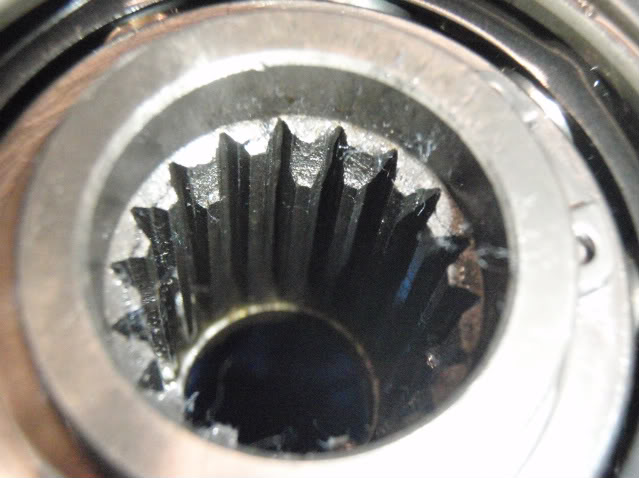
Later 2000 clutch assembly that uses jutter springs on bottom of outer hub, not jutter plate in center of discs, and can see how inner hub rides on input shaft that keeps is tram to shaft,so bearing od is on outer hub, inner race rides on inner hub, and if two not concentric to each other as one is rotating, its problem in the bearing.

The other one, check for denting of the hub surfaces for the clutch plate tabs.
Light denting can be cleaned up, while heaver denting,

forget it and its time for new part.
The last trick , when the clutch steel and friction plates are cut, then are stamp cut. So this means one side of the tabs will be sharped edge, while the other rounded.
So when installing the plates, I will always install the rounded side edge of the tabs inward, sharp side out. When you pull the clutch lever in, your off the throttle, when when letting the lever out, your on the throttle, and with rounded side in with the way the plates are coming back together, smoother feel on the lever and clutch engagement. As for steel plates, it not worn, warped or too blue from over heating.hard spotting, quick bead blast has them right as rain to be reused, and regarding friction discs (and spring plate), just a mater of how much extra power your throwing at it over stock amounts, that the friction plates and spring plate needs to be upgraded.
Also, lets work our way back to clutch slip on engagement in the first place, since Organic plates will have a bit of slip as they are starting to lock up, allows you to slip the clutch more with ease when needed , while when you get into inorganic friction plates, they slip way less, and can turn the clutch lever an on/off switch instead.
On strip rig, inorganic all the way way since they lock up a lot faster, while on touring rig that may be a gear too high for starts, like the factory organic greater slip ability without chatter/more forgiving lever use instead.
So are you talking slipping all the time when engagement and on power and time for stronger diagram spring 12,
or just clutch slipping as your first applying power a touch to long for your liking, and time to change out from organic plates, to inorganic friction plates instead (so long as problem is not back in the clutch hubs or bearing, or clutch steel plates have not been over heated, dark blue and disc steel plates not deep blue with hardened heat spots on them, that like ice to the friction plates).
If not that, then pull clutch, get back wheel of the ground so you can spin back tires to spin inner clutch hub, against outer outer stationary hub via primary chain to comp, and see how much the outer clutch hub front face moves in and out. If clutch hub bearing is about trashed, not seated flush to bottom of outer hub basket channel, or inner hub start of spines cracked off so its not tram to input shaft of trans, as inner clutch hubs is spinning, your going to see the outer hub front edge dancing way more than the normal 1/8" is should be with Good bearing seated all the way flush to bottom of basket channel. The more the stationary outer basket in dancing in and out on the inner hub spinning (say more than a 1/4" due to bearing or inner hub cracked spines), the worse the clutch will be with it not fully releasing instead.
Later 2000 clutch assembly that uses jutter springs on bottom of outer hub, not jutter plate in center of discs, and can see how inner hub rides on input shaft that keeps is tram to shaft,so bearing od is on outer hub, inner race rides on inner hub, and if two not concentric to each other as one is rotating, its problem in the bearing.
The other one, check for denting of the hub surfaces for the clutch plate tabs.
Light denting can be cleaned up, while heaver denting,
forget it and its time for new part.
The last trick , when the clutch steel and friction plates are cut, then are stamp cut. So this means one side of the tabs will be sharped edge, while the other rounded.
So when installing the plates, I will always install the rounded side edge of the tabs inward, sharp side out. When you pull the clutch lever in, your off the throttle, when when letting the lever out, your on the throttle, and with rounded side in with the way the plates are coming back together, smoother feel on the lever and clutch engagement. As for steel plates, it not worn, warped or too blue from over heating.hard spotting, quick bead blast has them right as rain to be reused, and regarding friction discs (and spring plate), just a mater of how much extra power your throwing at it over stock amounts, that the friction plates and spring plate needs to be upgraded.
Also, lets work our way back to clutch slip on engagement in the first place, since Organic plates will have a bit of slip as they are starting to lock up, allows you to slip the clutch more with ease when needed , while when you get into inorganic friction plates, they slip way less, and can turn the clutch lever an on/off switch instead.
On strip rig, inorganic all the way way since they lock up a lot faster, while on touring rig that may be a gear too high for starts, like the factory organic greater slip ability without chatter/more forgiving lever use instead.
So are you talking slipping all the time when engagement and on power and time for stronger diagram spring 12,
or just clutch slipping as your first applying power a touch to long for your liking, and time to change out from organic plates, to inorganic friction plates instead (so long as problem is not back in the clutch hubs or bearing, or clutch steel plates have not been over heated, dark blue and disc steel plates not deep blue with hardened heat spots on them, that like ice to the friction plates).
Last edited by Dano523; Jun 26, 2025 at 02:22 AM.

Thread
Thread Starter
Forum
Replies
Last Post
CAPTUSNESQ
Primary/Transmission/Driveline/Clutch
0
Nov 9, 2019 03:51 PM
goldthwaite
Primary/Transmission/Driveline/Clutch
2
May 5, 2009 06:51 AM
Lucky Scott
Primary/Transmission/Driveline/Clutch
1
Dec 31, 2007 03:45 PM