



Break In Method

Grand HDF Member
Joined: Mar 2007
Posts: 4,928
Likes: 285
From: Edmond Oklahoma

I've been all around this and I think riding somewhat normal is will work fine.
I personally like the Mototune method but I can understand the fear from folks who don’t understand engines and mechanics. My dealer's advice when I walked out the door is about the same as the directions in the owners manual. I did question him about the speed limitation for the first 50 miles because that didn't make sense to me. He thinks it keeps the rider at a safer speed incase something fails on the bike (belt sprocket?) because of incorrect assembly. OK, I’ll buy that.
The manual and dealerships also say not to ride at the same speed for the first 500 miles. I take that to really mean don't ride at the same RPM, but nobody I asked seemed to have a good explanation for that procedure. My guess, based on many years of breaking in engines including aircraft engines, is that procedure insures an even break in of the whole cylinder. Higher RPMs stretch out the piston and crank, so varying the speed makes sure the engine is run at higher RPMs (higher meaning between 3300 RPMs and 4000 RPMs).
So, I think you can achieve a good break-in with normal riding making sure you stretch up to 3500 RPMs now and then for the first 250 miles and 4000 and 4500 RPMs up to 500 miles. It’s really not hard to reach those RPMs when accelerating up to normal cruising speeds, most of us do it in normal riding anyways. Most riders will have a harder time holding the revs below 3500 for the first 250 miles because that is not as high as most think.
That is my 2 cents.
Beary
I personally like the Mototune method but I can understand the fear from folks who don’t understand engines and mechanics. My dealer's advice when I walked out the door is about the same as the directions in the owners manual. I did question him about the speed limitation for the first 50 miles because that didn't make sense to me. He thinks it keeps the rider at a safer speed incase something fails on the bike (belt sprocket?) because of incorrect assembly. OK, I’ll buy that.
The manual and dealerships also say not to ride at the same speed for the first 500 miles. I take that to really mean don't ride at the same RPM, but nobody I asked seemed to have a good explanation for that procedure. My guess, based on many years of breaking in engines including aircraft engines, is that procedure insures an even break in of the whole cylinder. Higher RPMs stretch out the piston and crank, so varying the speed makes sure the engine is run at higher RPMs (higher meaning between 3300 RPMs and 4000 RPMs).
So, I think you can achieve a good break-in with normal riding making sure you stretch up to 3500 RPMs now and then for the first 250 miles and 4000 and 4500 RPMs up to 500 miles. It’s really not hard to reach those RPMs when accelerating up to normal cruising speeds, most of us do it in normal riding anyways. Most riders will have a harder time holding the revs below 3500 for the first 250 miles because that is not as high as most think.
That is my 2 cents.
Beary

Cruiser
Joined: Jun 2008
Posts: 156
Likes: 0
From: Iowa
I have 225 on mine think I may do the 30-60 mph roll on’s to seat the piston rings so I don’t get as much blow by. I have been ridding on the interstate after 87 miles but I very the rpms at least a few hundred. The motor should be good from 0-3500 rpms but think I need to stretch to 4500 to reach that range.

Ultimate HDF Member
Joined: Feb 2006
Posts: 5,939
Likes: 3
From: TX
I've been using the method from that link for years ~ both on new bikes and performance builds.
It works. I have not had a single problem as a result of it.
Some may say they have never had a problem with mellow break-in too. What they don't know is that their motor is also more mellow than one that was done quick, right from the get-go.
When I do a build, I use a MAP "close" to the build and as soon as the lifters pump up and quiet down I go out and do the "ring seating runs". The next miles come on the way to the dyno shop where the motor gets a FULL TUNE ~ none of this 40~50% crap that you sometimes hear about.
After that, the original oil gets changed and then again about 500 miles and then at approx 2500, they get your favorite synthetic (AMSoil, Redline, etc.)
It works. I have not had a single problem as a result of it.
Some may say they have never had a problem with mellow break-in too. What they don't know is that their motor is also more mellow than one that was done quick, right from the get-go.
When I do a build, I use a MAP "close" to the build and as soon as the lifters pump up and quiet down I go out and do the "ring seating runs". The next miles come on the way to the dyno shop where the motor gets a FULL TUNE ~ none of this 40~50% crap that you sometimes hear about.
After that, the original oil gets changed and then again about 500 miles and then at approx 2500, they get your favorite synthetic (AMSoil, Redline, etc.)

Road Master
Joined: Jan 2009
Posts: 922
Likes: 0
From: Bow, NH
Another thing to remembersis to avoid full throttle accelerations during the break in period. Taking the motor gradually up what ever RPM you want is fine. Probably with worst thing you could do is take a new bike home on the highway and set cruise contriol to 65 MPH for a 100 miles stretch.
I usually choose the backroads with hills to break in my bikes. Different topography adds to the vaiations of conditions in break-in. I just hit 250 miles yesterday with my EGC and it was the first time I actually took it on the highway (sixth gear is great).
I haven't taken it past 3,500 RPMs yet but will be doning so on short bursts today.
I usually choose the backroads with hills to break in my bikes. Different topography adds to the vaiations of conditions in break-in. I just hit 250 miles yesterday with my EGC and it was the first time I actually took it on the highway (sixth gear is great).
I haven't taken it past 3,500 RPMs yet but will be doning so on short bursts today.

Outstanding HDF Member
Joined: Nov 2008
Posts: 2,246
Likes: 19
From: Cypress, TX
I've been using the method from that link for years ~ both on new bikes and performance builds.
It works. I have not had a single problem as a result of it.
Some may say they have never had a problem with mellow break-in too. What they don't know is that their motor is also more mellow than one that was done quick, right from the get-go.
When I do a build, I use a MAP "close" to the build and as soon as the lifters pump up and quiet down I go out and do the "ring seating runs". The next miles come on the way to the dyno shop where the motor gets a FULL TUNE ~ none of this 40~50% crap that you sometimes hear about.
After that, the original oil gets changed and then again about 500 miles and then at approx 2500, they get your favorite synthetic (AMSoil, Redline, etc.)
It works. I have not had a single problem as a result of it.
Some may say they have never had a problem with mellow break-in too. What they don't know is that their motor is also more mellow than one that was done quick, right from the get-go.
When I do a build, I use a MAP "close" to the build and as soon as the lifters pump up and quiet down I go out and do the "ring seating runs". The next miles come on the way to the dyno shop where the motor gets a FULL TUNE ~ none of this 40~50% crap that you sometimes hear about.
After that, the original oil gets changed and then again about 500 miles and then at approx 2500, they get your favorite synthetic (AMSoil, Redline, etc.)
I have used this method on every bike I have owned race or street. Works well.
HD Forum Stories
The Best of Harley-Davidson for Lifelong Riders

Jason Momoa Is Turning Classic Harleys Into PHEVs
Verdad Gallardo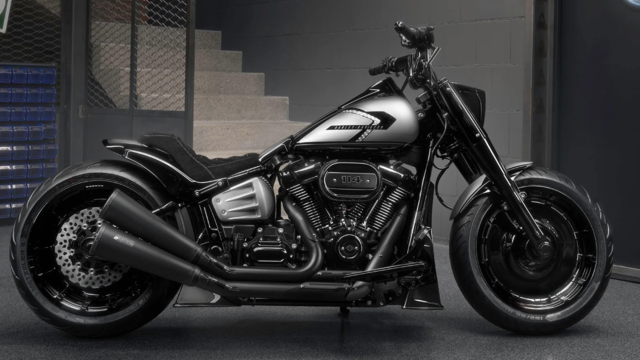
Harley-Davidson Fat Boy Becomes a Dark, Decepticon-Inspired Custom
Verdad Gallardo
6 Weirdest Harley-Davidsons Ever Sold to the Public
Verdad Gallardo
7 Times Harley-Davidson Chucked Tradition Out the Window
Verdad Gallardo
7 Surprising Harley-Davidson Products that Are Not Motorcycles
Verdad Gallardo
8 Best Harley-Davidson Motorcycles Ever
Pouria Savadkouei
10 Worst Harley-Davidson Motorcycles Ever
Pouria Savadkouei
Killer Custom's Jail Break Is The Breakout That Refused to Blend In
Verdad Gallardo
Crazy Bunderbike Build Looks Amazing, But Is It Impossible to Ride?
Verdad Gallardo
Extreme HDF Member
Joined: Sep 2005
Posts: 11,615
Likes: 50
From: Baton Rouge, LA
I would advise doing some research before applying the Motortuneusa recommendations. In 50 years of fooling with cars and MC's I've never seen one vehicle manufacturer that recommends a procedure as described there, or any other hard-break-in technique. I would go by the book and concentrate on varying the speeds continually. No need to baby it, but don't lug it or rev it beyond the recommendations.

Road Warrior
Joined: Nov 2006
Posts: 1,738
Likes: 7
From: St. Charles, IL
Most high end vehicles like Mercedes, BMW, Porsche all have you break in the engine HARD. As others have said, they've broken in many a HD engine HARD and they work better than the engines that are broken in by the rediculous HD way of staying below 50mph for the first 1000 miles, then below 60 for the next 4000. I laughed at my salesman when he said this to me.
But, as with oil debates, it's your engine your bike, do with it how you will.
But, as with oil debates, it's your engine your bike, do with it how you will.