







this re-mapping deal ? scam ?

Tourer
Joined: Dec 2006
Posts: 301
Likes: 1
From: Miami, Fla.

get back to us with that conversation result..
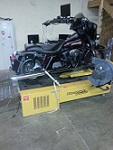
took the bike to Doc, and it's remarkable what a difference the TTS made
I have 40 years experience in the fuel injection industry and i'm here to tell ya the SERT is like working on a space shuttle with a crescent wrench
I have 40 years experience in the fuel injection industry and i'm here to tell ya the SERT is like working on a space shuttle with a crescent wrench

Seasoned HDF Member


Joined: Apr 2008
Posts: 10,135
Likes: 4,780
From: Sandpoint, Idaho
I don't disagree with you on this, but if he is anywhere near the expert that people claim he is (and that I don't dispute) then he would be able to do a very adequate tune with a SERT.
He can tune the SERT, he just wants to sell the TTS. There might be some personal animosity with him and SE that's comes into play as well, that is held over since SE dropped TTS. You can get he same tune from a SERT as a TTS. Heck, you can even use the SERT MAPs in the TTS (mt6) and the software is pretty much identical. If you can tune one you should definately be able to tune the other.

Ultimate HDF Member
Joined: May 2008
Posts: 7,439
Likes: 884
From: 'Noke, VA
He can tune the SERT, he just wants to sell the TTS. There might be some personal animosity with him and SE that's comes into play as well, that is held over since SE dropped TTS. You can get he same tune from a SERT as a TTS. Heck, you can even use the SERT MAPs in the TTS (mt6) and the software is pretty much identical. If you can tune one you should definately be able to tune the other.
I know that, my point is that if he already had the SERT (not SEPST) then DOC had him waste his money by buying the TTS, he could of had him send his SERT in to TTS for the upgrade if he wanted to be able to run mt8 MAPs. Would've cost him 100 bucks instead of 400 or so. IMO purchasing a TTS when you already have a SERT would be a waste of money. The gains are not worth the extra money. If someone has the SERT and wants to be able to V-tune, or have access to a few more tables, then the upgrade would be the way to go.
HD Forum Stories
The Best of Harley-Davidson for Lifelong Riders

7 Surprising Harley-Davidson Products that Are Not Motorcycles
Verdad Gallardo
8 Best Harley-Davidson Motorcycles Ever
Pouria Savadkouei
10 Worst Harley-Davidson Motorcycles Ever
Pouria Savadkouei
Killer Custom's Jail Break Is The Breakout That Refused to Blend In
Verdad Gallardo
Crazy Bunderbike Build Looks Amazing, But Is It Impossible to Ride?
Verdad Gallardo
Harley-Davidson Reveals Super Cool Cafe Racer Concept
Verdad Gallardo
Engraved Rebellion: Inside Bundnerbike's Glam Rock II
Verdad Gallardo
10 Motorcycles You Should Never Buy
Joe Kucinski
10 Things Harley-Davidson Needs to Fix in 2026
Verdad Gallardo

Getting back to the original question of whether a dyno tune is necessary when installing an AC and exhaust, here is the dyno sheet from my 08 RG in stock tune:

The bottom blue line is my stock RG as is the blue line in the fuel graph.
Now here is the same bike on the same dyno with AC and D&D 2:1 and no tuner.

As you can see with the AC and exhaust the fuel mix was actually pretty good. I think it just depends on the bike, but the dealer service writer assured me on the stock graph that the 17:1 mix wouldn't hurt my engine.
Now here is my 09 with AC and D&D 2:1 Boss that D&D claimed didn't need a tuner, so it doesn't have one in these runs.

You can see the fuel line is just about the same as the 08 in stock condition, so maybe D&D was right and the AC and exhaust didn't change anything. I can't say for sure since I didn't do a baseline on it.
The bottom blue line is my stock RG as is the blue line in the fuel graph.
Now here is the same bike on the same dyno with AC and D&D 2:1 and no tuner.
As you can see with the AC and exhaust the fuel mix was actually pretty good. I think it just depends on the bike, but the dealer service writer assured me on the stock graph that the 17:1 mix wouldn't hurt my engine.
Now here is my 09 with AC and D&D 2:1 Boss that D&D claimed didn't need a tuner, so it doesn't have one in these runs.
You can see the fuel line is just about the same as the 08 in stock condition, so maybe D&D was right and the AC and exhaust didn't change anything. I can't say for sure since I didn't do a baseline on it.

Outstanding HDF Member
Joined: Jan 2010
Posts: 2,916
Likes: 31
From: earth
I'm curious about that top chart stock A/F trace, it is way north of stoich. Stock tune is cruise stoich, it is not legitimately lean as many tend to believe. Even a bone stock bike should not have a 17:1+ average AFR line from idle to redline, especially in an open loop WOT run. Maybe some of the dyno tuners can chime in here, is this a typical dyno result from a stock bike WOT run. I also don’t understand why the stock baseline is a 4th gear run, but the after mods and tune runs are in 5th gear, seem an inequitable comparison to me. I know my Twin Scan WEGO will capture some transient spikes in a few cells, but I just can't help but be suspicious of the calibration of the O2 sensors, or maybe the way the Dyno A/F line reads is just deceptive, to someone like myself that is mostly inexperienced at reading dyno sheets. I guess I just find it difficult to accept the accuracy of the O2 feedback of a relatively short WOT run, knowing how misleading transients can be in the system I use, which captures data and averages it over a much longer time frame. Not claiming anything in your dyno sheet is false or intentionally deceptive, it just doesn’t make sense to me. While monitoring real-time feedback under actual operating conditions with the onboard O2 data logging system, I have consistently observed that any change in the intake or exhaust will absolutely effect A/F across the entire map, and anything that promotes more free flowing intake or exhaust always results in a leaner condition. Even simply cleaning the air filter will be evident in the A/F values in the tables. I think this tuning issue is more of a matter of what is an individual willing to accept as “good enough” for a tune. Obviously I’m going for optimized, but that’s my choice, not everybody’s choice, it don’t make me right or them wrong. On its worst day EFI is far more precise fuel metering than a carb, a carb just will not accommodate perfect fuel metering across the entire operating spectrum, but there are plenty of carbed bikes that have racked up many miles over many years, on their marginal at best tune condition. So if a marginal tune doesn’t kill a carbed bike, will a less marginal tune kill an EFI bike? I don’t think so, but I want to know that my bike’s tune condition is optimized. Will a “properly” tuned bike make more power, run stonger with better drivability characteristics? I’m pretty well convinced it will. If somebody want to run voltage splitters, relocate their ACT, or put a shim under the ET sensor, that cool, just don’t try to tell me it is equally effective a real tune, and don’t’ try to tell me a proper tune isn’t necessary because that’s my decision to make based on what I think is important.