



FP3 HELP, no green cells on Autotune

Former Sponsor
Joined: Apr 2012
Posts: 330
Likes: 180
From: Santa fe Springs, Ca

Introduction
One of the many benefits of the Fuelpak FP3 is the AutoTune feature. This feature allows users to precisely tune their motorcycle for their intake and exhaust combination, avoiding the costly and demanding dyno runs or the installation of additional equipment. AutoTune can also help international users tune their motorcycle for the specific fuel blends available in their area.
When to use it/not to use it:
AutoTune can be utilized where a Vance & Hines map is not provided or to further fine tune a specific intake and exhaust combination to the unique variations of an individual bike.
Most combinations can be cross referenced with one of numerous maps Vance & Hines provides. The AutoTune works best with an existing map from the Vance & Hines database. This will now utilize specifically tuned ignition tables, Accel Enrichment, Decel Enleanment, AFR (Air Fuel Ratio) Tables and Rev Limit changes, to facilitate calibrating the Volumetric Efficiency (VE) Tables. AutoTune calibrates the VE tables with a unique V&H developed algorithm for fast and accurate tuning.
How it works:
To understand how AutoTune works, the differences between calibrating a bike's ECM and tuning a motorcycle must be defined. The ECM knows what volume of air is flowing through the engine for the stock intake and exhaust systems. However, when the intake and/or exhaust systems change, the Volumetric Efficiency of the cylinders change. AutoTune properly calibrates the Volumetric Efficiency Tables by utilizing the high precision range of the the factory narrowband O2 sensors to target the optimum Air Fuel Ratio (AFR) of 14.4. When the bike is in AutoTune mode it monitors the difference of the O2 voltages above or below the 14.4 desired AFR. These differences are recorded, calculated and VE tables change. After calibration, the FP3 can change the AFR. For example, richer AFR can be selected for better power and engine running, or a leaner AFR in some areas during light loads and cruising for fuel economy.
While running AutoTune, FP3 is calculating VE Table/tables and other aspects of the ECM settings. Which comprise the tuning of the motorcycle. These changes are saved and not made in real time. Volumetric Efficiency ables are modified AFTER "Apply Learned Values" or "Finish" has been selected. Then flash the calibrated map to the ECM.
How to Use It:
Select a map to tune
When entering Autotune for the first time, you will need to select a map to start from. The maps listed are all the maps stored on your FP3. Choose the map and press continue.
Flashing the new map (what changes are made)
After selecting a starting map, the app loads this map to the autotune memory and prepares it for the autotuning session. Changes include setting the AFR table to closed loop everywhere and zeroing out the transient fueling. During the AutoTune process the Accel Enrichment and Decel Enleanment will be shut off to avoid erroneous readings. The overall riding experience is not optimized. This DOES NOT reflect the way the bike will run after the AutoTune tables have been populated with the learned values. This is only a temporary condition.
Recommendations for Best AutoTune Results
These changes are then flashed to the ECU (follow the on-screen prompts to complete the flashing operation). After flashing the Autotune map, the app presents a grid of white squares. You are now ready to ride and begin the tuning process. The bike will need to be warmed up to normal operating temperature (approx 200 deg F) before autotune will begin. As you ride, the squares will turn orange or green. White squares are completely unlearned cells. Orange indicates partially learned. Green squares are completely learned. Once a square turns green, the learning for that cell is complete and additional riding in that zone will not refine the learned value. You do not need to keep your phone on and the FP3 app active during the autotune process. However, if you have a way to display the screen while riding, it can be informative to see areas that are learned and what other areas you need to cover. The FP3 unit will need to be plugged into the bike for autotuning to occur. Do not be concerned if you need to turn the bike off - the FP3 will pick up the tuning process once the engine is restarted and the engine is up to temperature.
Riding recommendations (what to expect and what the map will look like. What you can and can’t do in the app.)
When riding during the autotune process, you will want to cover as many different throttle angle and rpm combinations as possible. You will not want to use cruise control. Ride up and down some hills in addition to stop-and-go traffic and freeway miles. Avoid abrupt throttle changes so the FP3 can adequately sample each cell. Try to cover as many of the cells as is possible, but there is no need (nor is it even possible) to cover every cell. Most riders can get good results in three 30-45 minute sessions of riding. All cells do not need to be green to have a complete autotune session. Normal Autotune session will show mostly green with 25-30% orange. The shape of the colored cells in the Autotune grid should resemble a football shape. Low throttle positions/low rpm (top left) to high throttle positions/high rpm (bottom right). See below for an example (results may vary).
While the FP3 is in the autotune mode, you will not be able to access certain portions of the app. You will not be able to view/edit maps nor will you be able to search for a new map.
Once FP3 has learned a number of cells, you can “apply” or “finish” the autotuning session. When you first ride the bike in autotune be aware that the characteristics are often quite different so start out slowly.
Applying the changes
If you “apply” the autotuning values, a new map is created and flashed to the bike. Follow the on-screen dialogs during this process. After applying the learned values, the FP3 remains in Autotune mode and will continue to learn. The “apply” function should only be used if you will immediately be starting another autotune session. If you are done riding for the day or have completed your second autotune session you should complete the autotuning session by “finishing” the session.
Finishing Autotune
Finishing the Autotune session applies any learned values (just like in the apply process) and also returns the AFR table and transient fuel to their original values. This new, final map is then flashed to the bike (follow the on-screen dialogs to complete this process). FP3 is then taken out of Autotune mode. After the VE Tables have been calibrated and saved to the map, the AFR tables can be tailored to individual rider preference or better developed by dyno pros. The AFR tables of a Vance & Hines map have been set to a custom blend offering a combination of WOT performance and part throttle economy.
Cruiser

Joined: Jul 2017
Posts: 223
Likes: 48
From: Ohio
Another bro's misfortune would never make me feel better...
Sorry to hear you are wrestling stereo gremlins too...
It's always something..
What was supposed to be a $20k bike new back then..
And it has fiddy cent brackets in it.
Bastards..
I'll have it back together soon..
Couldn't find a cheap hardware store solution that I liked so I ordered the kit from chopperdave...
If it gives me anymore bullshit I'll light it on fire.
I won't let it win.
Lol
Sorry to hear you are wrestling stereo gremlins too...
It's always something..
What was supposed to be a $20k bike new back then..
And it has fiddy cent brackets in it.
Bastards..
I'll have it back together soon..
Couldn't find a cheap hardware store solution that I liked so I ordered the kit from chopperdave...
If it gives me anymore bullshit I'll light it on fire.
I won't let it win.
Lol
Last edited by SFinley70; Sep 14, 2017 at 10:15 PM.
Road Master


Joined: Sep 2007
Posts: 963
Likes: 145
From: Displaced hillbilly
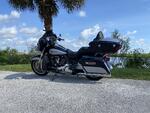
After doing a few auto tune sessions the last few weeks, took advantage of the good weather and took a ride over to Flagler Beach and down thru Daytona and back and then stopped for fuel where the DTE registered an all time high. Pretty stoked to see the mileage improve this much.
Road Master
Joined: Sep 2007
Posts: 963
Likes: 145
From: Displaced hillbilly
Little update here. Since adjusting the O2 sensor to .8 in advanced auto tune settings I’ve been able to get quite a bit of cells to populate green. Bike seems to run pretty good and mpg has really improved. Unfortunately it seems to have become an incenarator in the process. Things really came to a head during Biketoberfest. Traffic was really bad and the bike seemed to really putting off some heat. The second day I ended taking my laser thermometer with me so I could measure the head temps, and I was getting temps on the rear cylinder in excess of 100 degrees higher than the front. A day or so later I was playing around with the sensor screens and happen to notice that the rear O2 sensor never seemed to move off of .9. Now that would indicate a rich mixture and I assume the ECM would try and lean it out, which probably was the reason for the excessive heat. I made the assumption that probably the rear O2 sensor was failing since they are the original ones and the bike has over 52,000 miles on it. I went ahead and picked up a couple new ones and installed them along with the original base map. Temps seemed to stay in a much more acceptable range. After a few days decided to auto tune again. Once again the temps seemed to rise. Not sure exactly what is going on, but it seems that maybe the FP3 is not reading the data correctly and putting the VE tables for the rear cylinder out of whack. Little discouraged by this inability to auto tune as I really want to do a cam upgrade soon, but if I can’t get the bike to auto tune it’s going to really be hard to get a map for a new cam really dialed in.
Cruiser
Joined: Jul 2017
Posts: 223
Likes: 48
From: Ohio
Little update here. Since adjusting the O2 sensor to .8 in advanced auto tune settings I’ve been able to get quite a bit of cells to populate green. Bike seems to run pretty good and mpg has really improved. Unfortunately it seems to have become an incenarator in the process. Things really came to a head during Biketoberfest. Traffic was really bad and the bike seemed to really putting off some heat. The second day I ended taking my laser thermometer with me so I could measure the head temps, and I was getting temps on the rear cylinder in excess of 100 degrees higher than the front. A day or so later I was playing around with the sensor screens and happen to notice that the rear O2 sensor never seemed to move off of .9. Now that would indicate a rich mixture and I assume the ECM would try and lean it out, which probably was the reason for the excessive heat. I made the assumption that probably the rear O2 sensor was failing since they are the original ones and the bike has over 52,000 miles on it. I went ahead and picked up a couple new ones and installed them along with the original base map. Temps seemed to stay in a much more acceptable range. After a few days decided to auto tune again. Once again the temps seemed to rise. Not sure exactly what is going on, but it seems that maybe the FP3 is not reading the data correctly and putting the VE tables for the rear cylinder out of whack. Little discouraged by this inability to auto tune as I really want to do a cam upgrade soon, but if I can’t get the bike to auto tune it’s going to really be hard to get a map for a new cam really dialed in.
Road Master
Joined: Sep 2007
Posts: 963
Likes: 145
From: Displaced hillbilly
Whats really odd is when I installed the new O2 sensors and flashed the canned map, when cruising down the highway i was getting almost opposite readings from the front and rear sensors. I was starting to think there was an issue with the new front one. After an attempt to auto tune, I reverted back to the canned map and now both almost register the exact same reading. Very puzzling as to what is going on with it.
HD Forum Stories
The Best of Harley-Davidson for Lifelong Riders

8 Best Harley-Davidson Motorcycles Ever
Pouria Savadkouei
10 Worst Harley-Davidson Motorcycles Ever
Pouria Savadkouei
Killer Custom's Jail Break Is The Breakout That Refused to Blend In
Verdad Gallardo
Crazy Bunderbike Build Looks Amazing, But Is It Impossible to Ride?
Verdad Gallardo
Harley-Davidson Reveals Super Cool Cafe Racer Concept
Verdad Gallardo
Engraved Rebellion: Inside Bundnerbike's Glam Rock II
Verdad Gallardo
10 Motorcycles You Should Never Buy
Joe Kucinski
10 Things Harley-Davidson Needs to Fix in 2026
Verdad Gallardo
Southpaw Super Glide: A Left-Hand-Drive 1979 Harley FXE Built to Fit the Rider
Verdad Gallardo
Cruiser
Joined: Jul 2017
Posts: 223
Likes: 48
From: Ohio
Whats really odd is when I installed the new O2 sensors and flashed the canned map, when cruising down the highway i was getting almost opposite readings from the front and rear sensors. I was starting to think there was an issue with the new front one. After an attempt to auto tune, I reverted back to the canned map and now both almost register the exact same reading. Very puzzling as to what is going on with it.
Cruiser
Joined: Jul 2017
Posts: 223
Likes: 48
From: Ohio
2018 autotune session question
Hey Chris did you guys ever sort out autotune for us guys with the 2008 etc Harleys ? Is it still necessary for us to change the o2 voltage to .8 volts to populate green cells ? Curious if any of the last updates have fixed this issue. I went out for a ride today ( no a long one ) decided to run my autotune since i did a few things over the winter and i went in advance setting change my O2 voltage to .8 volts and all I could populate was orange cells and no green.. last time i ran autotune was September 2017 and on the same ride i was able to populate green cells but not this time. Just curious if the 02 voltage has Been corrected and thats why .8 volts is not populating like before??? Is it still necessary for us to change 02 voltage