









splice electrical

Thread Starter
|
Road Captain
Joined: Jun 2014
Posts: 653
Likes: 0
From: Whittier ca
 splice electrical
Whats the best way to splice into the stock electrical wires. For instance splitting stock tail light brake and running light to also run side mount liscense plate brake light plus white tag lights.
What is needed? What type of connector should i use? Solder or no?
What is needed? What type of connector should i use? Solder or no?

Road Warrior
Joined: May 2010
Posts: 1,718
Likes: 15
From: Bay area, CA
Solder, and shrink wrap. If you wanna get crazy put a little silicon on the joint before you shrink wrap

Tourer
Joined: May 2013
Posts: 365
Likes: 1
From: under a rock in the swamp
Solder using a linemans splice Wrap it self vulcanizing tape as seen in link below and heat shrink over it, That splice will be better then the original wire.

Seasoned HDF Member


Joined: Mar 2010
Posts: 38,543
Likes: 6,418
From: Honah Lee
Solder, a tight layer of plastic electric tape or electrical stretch tape (what I use), shrink wrap and a little rtv rubbed under the edges. Will make it to the moon. You need the tape since most cheap shrinkwrap is way too thin for the vibration on a bike. You need to duplicate the wire insulation thickness but keep it neat.. Never use clip on junk on a bike,car boat or sex. If you do, it about a year, it will not work.
Lots of good tips in this thread ....here's some info posted by Citoriplus:
Here's a cheap way to help get good solder connections when you need to lengthen, shorten, or add lines in the bikes electrical system.
The biggest problem with soldering wires on a bike is you need to be an octopus. You need a couple of extra hands to hold the wires whileyou use solder with one hand and the iron in the other. So I came up with a simple and cheap way to make a couple of different wire holders.
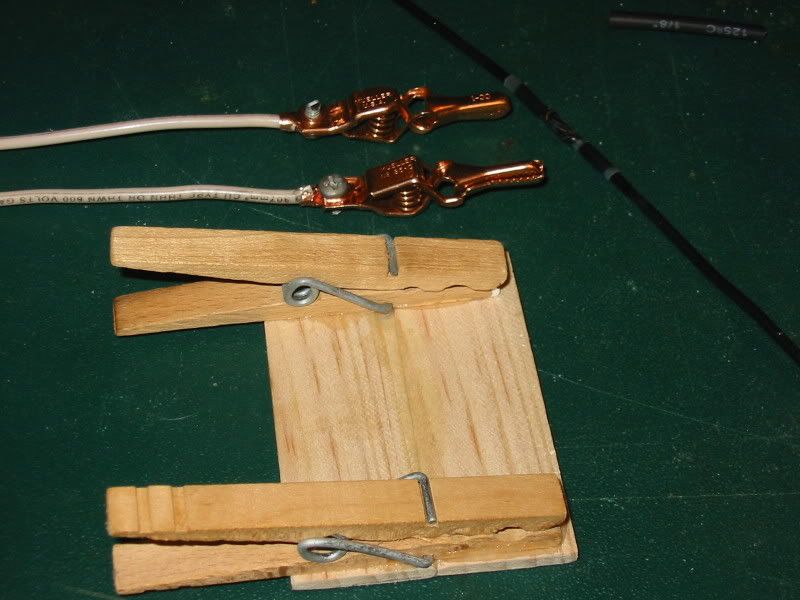
I think I spent a grand total of less than a buck for both of them, and that's because I wanted to get a new pair of alligator clips. The wood one was made from a pair of cloths pins glued to a couple of pieces of a paint mixing stick I got from Home Depot for free. The clips I swiped off the wife. This one is good for any wires that you can lay on a table, or you can glue a magnet to the back and stick it to any steel surface.
The other one with the alligator clips I mademade from the clips and a one foot long piece of scrap 12ga solid copper wire. Its great for using where you can use a clamp or vise grips on the wire between the clips and bend the ends to wherever you need them. Just be careful of using metal clips like these. A hot iron on the wores will have the teeth melting through the wire insulation. So you might considerfiling the teeth down a little and covering them with some tape or shrink tubing.
Soldering wires isn't rocket science, but it does take a little practice to do well all the time. But here's a tip for making solder connections that are nearly bullet proof. Once you get the wires soldered properly, like this.
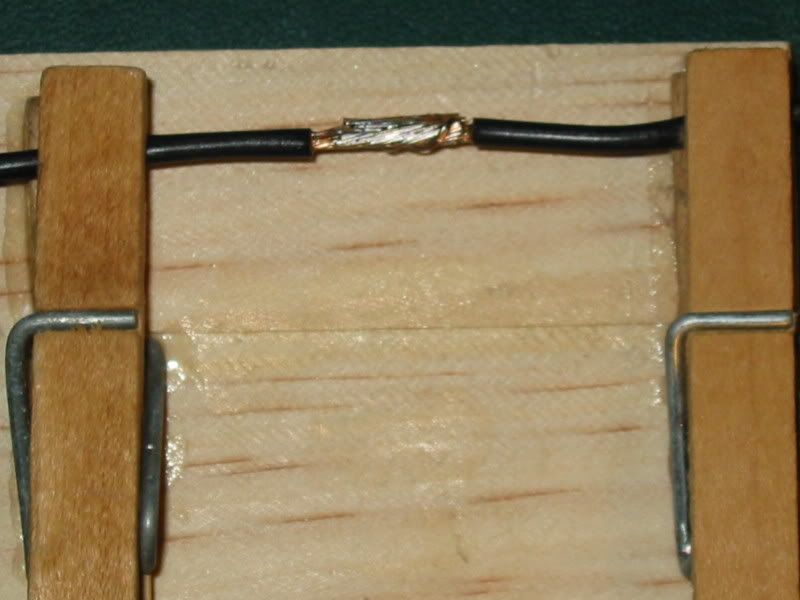
Get some of the wives nail polish or some of this liguid tape and paint the exposed wire and solder connection.
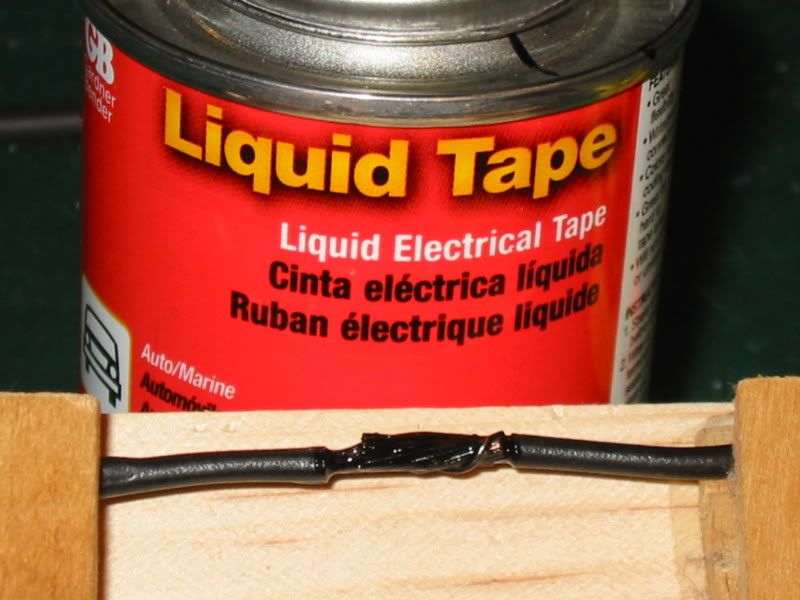
When you ‘paint’ the connection pay particular attention to the ends of the insulation and make sure its well coated. This will prevent any moisture from migrating up the wire strands and corroding them. It won't bother anything today, but a couple of years down the road it will drive you nuts trying to find the electrical gremlins.
Once its dry use a good grade of heat shrink tubing to seal and protect the connection.
Done right the connection will be only slightly larger than the original wire size and last a lifetime.
This is what it looks like before I heated the shrink tubing.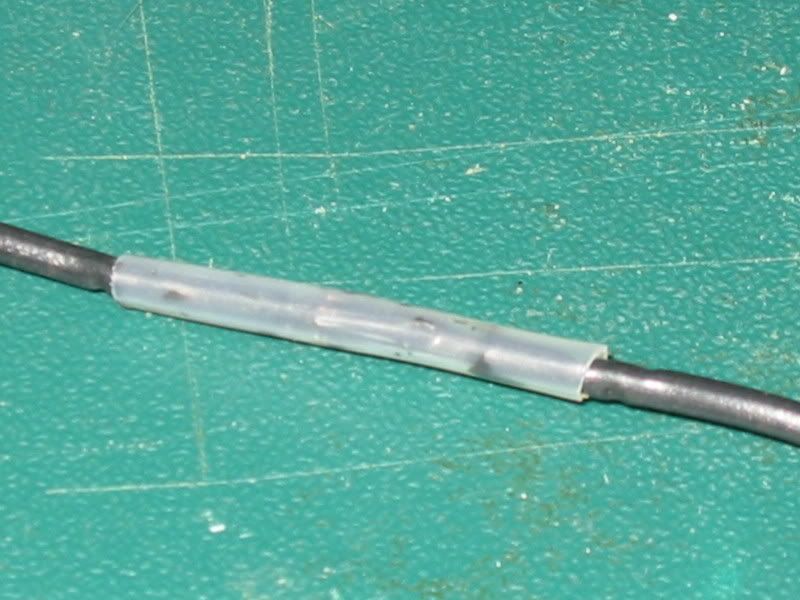
And after.
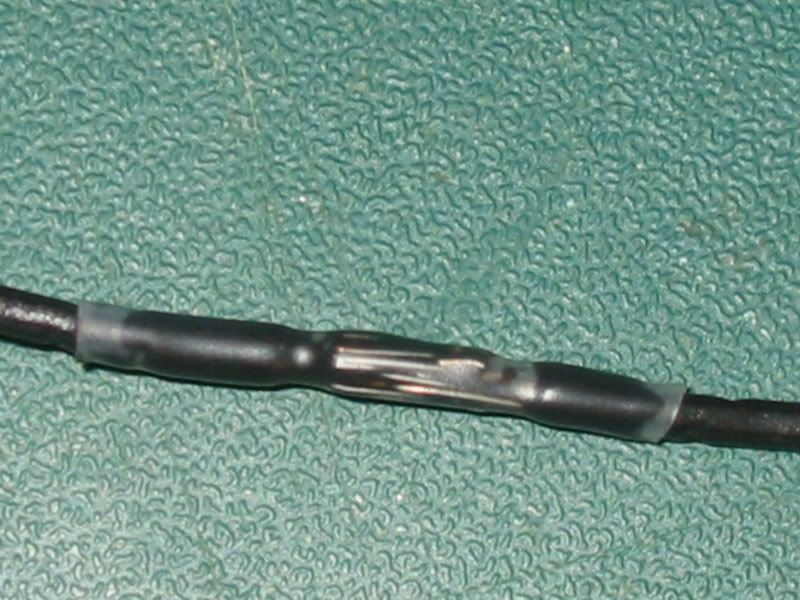
And here's one where I spliced one wire to an existing line.
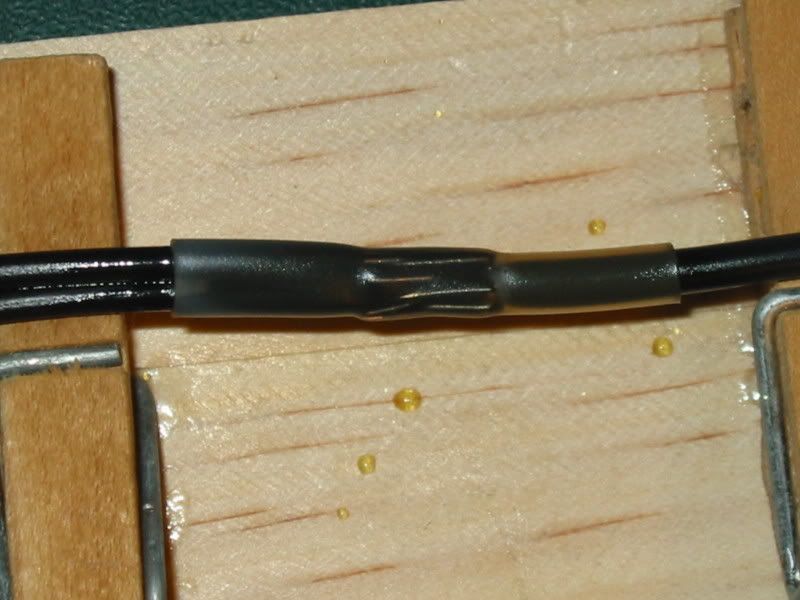
Ride safe.
The biggest problem with soldering wires on a bike is you need to be an octopus. You need a couple of extra hands to hold the wires whileyou use solder with one hand and the iron in the other. So I came up with a simple and cheap way to make a couple of different wire holders.
I think I spent a grand total of less than a buck for both of them, and that's because I wanted to get a new pair of alligator clips. The wood one was made from a pair of cloths pins glued to a couple of pieces of a paint mixing stick I got from Home Depot for free. The clips I swiped off the wife. This one is good for any wires that you can lay on a table, or you can glue a magnet to the back and stick it to any steel surface.
The other one with the alligator clips I mademade from the clips and a one foot long piece of scrap 12ga solid copper wire. Its great for using where you can use a clamp or vise grips on the wire between the clips and bend the ends to wherever you need them. Just be careful of using metal clips like these. A hot iron on the wores will have the teeth melting through the wire insulation. So you might considerfiling the teeth down a little and covering them with some tape or shrink tubing.
Soldering wires isn't rocket science, but it does take a little practice to do well all the time. But here's a tip for making solder connections that are nearly bullet proof. Once you get the wires soldered properly, like this.
Get some of the wives nail polish or some of this liguid tape and paint the exposed wire and solder connection.
When you ‘paint’ the connection pay particular attention to the ends of the insulation and make sure its well coated. This will prevent any moisture from migrating up the wire strands and corroding them. It won't bother anything today, but a couple of years down the road it will drive you nuts trying to find the electrical gremlins.
Once its dry use a good grade of heat shrink tubing to seal and protect the connection.
Done right the connection will be only slightly larger than the original wire size and last a lifetime.
This is what it looks like before I heated the shrink tubing.
And after.
And here's one where I spliced one wire to an existing line.
Ride safe.
Seasoned HDF Member
Joined: Mar 2010
Posts: 38,543
Likes: 6,418
From: Honah Lee
Impressive setup. I was taught in one of my shipyard electrical classes that wires should be turned 90 degrees and twisted together. You want the bond in the wire, not the solder joint. Does make for a slightly larger bulge when you bend it back in line. How long does it take for that liquid electrical tape to dry?
Trending Topics
Impressive setup. I was taught in one of my shipyard electrical classes that wires should be turned 90 degrees and twisted together. You want the bond in the wire, not the solder joint. Does make for a slightly larger bulge when you bend it back in line. How long does it take for that liquid electrical tape to dry?
Allow 10 minutes minimum between coats. A minimum of two coats is recommended.
Allow 4 hours minimum dry time before use.
Allow Liquid Electrical Tape to dry completely before restoring power.
HD Forum Stories
The Best of Harley-Davidson for Lifelong Riders

7 Surprising Harley-Davidson Products that Are Not Motorcycles
Verdad Gallardo
8 Best Harley-Davidson Motorcycles Ever
Pouria Savadkouei
10 Worst Harley-Davidson Motorcycles Ever
Pouria Savadkouei
Killer Custom's Jail Break Is The Breakout That Refused to Blend In
Verdad Gallardo
Crazy Bunderbike Build Looks Amazing, But Is It Impossible to Ride?
Verdad Gallardo
Harley-Davidson Reveals Super Cool Cafe Racer Concept
Verdad Gallardo
Engraved Rebellion: Inside Bundnerbike's Glam Rock II
Verdad Gallardo
10 Motorcycles You Should Never Buy
Joe Kucinski
10 Things Harley-Davidson Needs to Fix in 2026
Verdad Gallardo

Outstanding HDF Member

Joined: Dec 2012
Posts: 2,557
Likes: 235
From: Texas
There are two ways to approach splicing wires...professional and amateur.
Solder spliced, whether it is a union telegraph splice that is twisted and soldered, or a lap splice where the ends are tinned and then laid side-by-side and then soldered, and then the soldered connection is covered by electrical tape or shrink tubing is strictly amateur. It will work, but it looks like it was done by a novice in the driveway somewhere. And, regardless of how it looks or who does it, it is a substandard repair at best. A professional will never touch a newly stripped wire if at all possible because the body oils in the skin are very caustic and eventually will cause corrosion. Lap splicing is substandard to union telegraph splicing because there needs to be a solid mechanical connection before soldering...and professionals will only use solder splicing on solid core wires.
Stranded wires, like is used in automotive and aviation, is not designed to be spliced like the above methods...for stranded wires, a mechanical crimp splice or a heat-shrink-solder sleeve is the preferred method by professionals. A properly done mechanical splice on stranded wire will beat a lap or union telegraph splice for mechanical integrity and circuit reliability.
The absolute best method to splice stranded wires is to use the . With these, the stripped wire is never touched, the sleeve is heated until the solder band melts and makes a secure connection and the sleeve shrinks over the wire and makes a complete environmental seal.
I use these most of the time or an uninsulated barrel splice properly crimped with a ratcheting crimp tool and covered with heat shrink otherwise. Yeah, they cost more, but then so does a Harley Davidson...
And, you should never, EVER cover any splice with electrical tape except for a temporary emergency measure, and especially so if it is going to be subjected to the elements like on a motorcycle.
Y'all can do it any way y'all want, but I am going to stick with the way I learned in the US Navy repairing wiring in big-*** helicopters and supersonic fighter jets...followed by 25 years repairing airplane wiring.
Solder spliced, whether it is a union telegraph splice that is twisted and soldered, or a lap splice where the ends are tinned and then laid side-by-side and then soldered, and then the soldered connection is covered by electrical tape or shrink tubing is strictly amateur. It will work, but it looks like it was done by a novice in the driveway somewhere. And, regardless of how it looks or who does it, it is a substandard repair at best. A professional will never touch a newly stripped wire if at all possible because the body oils in the skin are very caustic and eventually will cause corrosion. Lap splicing is substandard to union telegraph splicing because there needs to be a solid mechanical connection before soldering...and professionals will only use solder splicing on solid core wires.
Stranded wires, like is used in automotive and aviation, is not designed to be spliced like the above methods...for stranded wires, a mechanical crimp splice or a heat-shrink-solder sleeve is the preferred method by professionals. A properly done mechanical splice on stranded wire will beat a lap or union telegraph splice for mechanical integrity and circuit reliability.
The absolute best method to splice stranded wires is to use the . With these, the stripped wire is never touched, the sleeve is heated until the solder band melts and makes a secure connection and the sleeve shrinks over the wire and makes a complete environmental seal.
I use these most of the time or an uninsulated barrel splice properly crimped with a ratcheting crimp tool and covered with heat shrink otherwise. Yeah, they cost more, but then so does a Harley Davidson...
And, you should never, EVER cover any splice with electrical tape except for a temporary emergency measure, and especially so if it is going to be subjected to the elements like on a motorcycle.
Y'all can do it any way y'all want, but I am going to stick with the way I learned in the US Navy repairing wiring in big-*** helicopters and supersonic fighter jets...followed by 25 years repairing airplane wiring.