




Electrical problem?
Thread Starter
|
Novice
Joined: Aug 2008
Posts: 15
Likes: 0
From: Dacula, GA.
 Electrical problem?
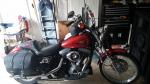
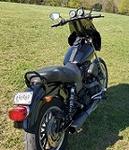
Got a 1993 FXDWG for a great price as it needs a little TLC. Put in a new battery and it starts and runs great. Got it in storage as I'm in the process of moving. I go over and start it every couple of days. After about a week or of this, it wouldn't start, battery was low. Had a '92 Super and never had a problem letting it set a few days or weeks and having the battery dead. Called the previous owner for thoughts and he said he had the same problem once and found that though he had turned off the switch on the tank, he had left the engine switch on.
Do I need to turn off both switches or does this indicate some problem?
Do I need to turn off both switches or does this indicate some problem?
Ultimate HDF Member
Joined: Apr 2014
Posts: 6,322
Likes: 2,500
From: Tennessee
You probably have a charging problem or a bad battery.
A cheap multimeter will tell you if the charging system is functioning, if it is then it's probably a weak/bad battery.

Seasoned HDF Member


Joined: Jul 2008
Posts: 9,282
Likes: 1,139
From: southeast PA
Starting up the bike every couple of days is more harmful than helpful. It will create condensation inside the motor and that's not what you want in there. If you want to run it you need to get on it and ride until it's fully warmed up. At least 20 minutes or so, depending on the outside temps.
Also, by starting and running it for a few minutes will not charge it up enough to make up for the power drained by the starter motor. Get the battery load tested. If you need a new one, get it. And get a battery tender that you leave on while the bike is not being used.
Also, by starting and running it for a few minutes will not charge it up enough to make up for the power drained by the starter motor. Get the battery load tested. If you need a new one, get it. And get a battery tender that you leave on while the bike is not being used.

Outstanding HDF Member
Joined: Sep 2014
Posts: 2,717
Likes: 273
From: Minnesota
nevil's got it right.
Just starting and idleing doesn't run the rpm high enough for a proper charge or warm up the engine enough.
Charge the battery and leave the bike alone until your ready to use it
Just starting and idleing doesn't run the rpm high enough for a proper charge or warm up the engine enough.
Charge the battery and leave the bike alone until your ready to use it
Thread Starter
|
Novice
Joined: Aug 2008
Posts: 15
Likes: 0
From: Dacula, GA.
Appreciate the replies but as stated in the original post, battery is brand new. Metering indicates no apparent shorts to ground. Brought the battery home and fully recharged it but haven't reinstalled. There is no power at storage for the tender. And, like I say, I never had this problem with the '92. I could leave that thing sit for several days or weeks even. Never had to use a tender (not that I probably should have), never had electrical/starting problems.

Road Warrior
Joined: May 2005
Posts: 1,301
Likes: 24
From: Minden LA
Starting up the bike every couple of days is more harmful than helpful. It will create condensation inside the motor and that's not what you want in there. If you want to run it you need to get on it and ride until it's fully warmed up. At least 20 minutes or so, depending on the outside temps.
Also, by starting and running it for a few minutes will not charge it up enough to make up for the power drained by the starter motor. Get the battery load tested. If you need a new one, get it. And get a battery tender that you leave on while the bike is not being used.
Also, by starting and running it for a few minutes will not charge it up enough to make up for the power drained by the starter motor. Get the battery load tested. If you need a new one, get it. And get a battery tender that you leave on while the bike is not being used.
Seasoned HDF Member
Joined: Jul 2008
Posts: 9,282
Likes: 1,139
From: southeast PA
What kind of battery did you buy? They are not all equal.
If a new battery isn't fully charge when installed, then run down by starting it up and not being ridden, it may not work as it should. I still say you should get it load tested.
Since you don't have power where it's stored, you're probably better off taking it home and putting it on a tender there.
If a new battery isn't fully charge when installed, then run down by starting it up and not being ridden, it may not work as it should. I still say you should get it load tested.
Since you don't have power where it's stored, you're probably better off taking it home and putting it on a tender there.
Trending Topics

Road Captain
Joined: Oct 2015
Posts: 706
Likes: 30
From: Alaska
I discovered a wire under the seat of my bike that was hot even when the ignition switch was off. It does go through the main 40 amp fuse though. Maybe you could pull the fuse on your bike when you let it sit and see if that stops the battery from going down.
Last edited by AKFXD; Nov 12, 2015 at 10:30 PM.
HD Forum Stories
The Best of Harley-Davidson for Lifelong Riders

7 Surprising Harley-Davidson Products that Are Not Motorcycles
Verdad Gallardo
8 Best Harley-Davidson Motorcycles Ever
Pouria Savadkouei
10 Worst Harley-Davidson Motorcycles Ever
Pouria Savadkouei
Killer Custom's Jail Break Is The Breakout That Refused to Blend In
Verdad Gallardo
Crazy Bunderbike Build Looks Amazing, But Is It Impossible to Ride?
Verdad Gallardo
Harley-Davidson Reveals Super Cool Cafe Racer Concept
Verdad Gallardo
Engraved Rebellion: Inside Bundnerbike's Glam Rock II
Verdad Gallardo
10 Motorcycles You Should Never Buy
Joe Kucinski
10 Things Harley-Davidson Needs to Fix in 2026
Verdad Gallardo
Road Warrior
Joined: Jun 2012
Posts: 1,832
Likes: 67
From: Phoenix
Starting the engine takes a lot of juice, and it takes a good amount of run time to put that juice back in the battery. Even if it's a new battery, regularly starting the bike but not riding will kill the battery. How long it takes for the battery to no longer have sufficient power to crank the engine depends on how long the bike runs, how many electrical systems the bike has, what temperature the bike's stored in, and what battery it is.
I assume by "the switch on the tank," you mean the key switch, and the "engine switch" is the kill switch. Leaving the kill switch on but the key switch off shouldn't drain power, because if I'm not mistaken, the kill switch comes after the key switch in the circuit. Batteries will lose power over time if they just sit, which may be why the previous owner had the same problem.
All that being said, there could be another electrical problem we're not aware of. Start with the simple things first, though, and put the battery back on the bike now that it's charged. Don't start it unless you plan on riding it, and see if it happens again. If it does and the bike hasn't sat for very long, you'll be looking at three possibilities: something draws excessive power from the battery while it sits, there's a problem with the charging system, or it's just a bad battery.
Also, re-reading my post, I think I should take a shot for every time I wrote "battery." Keep us posted, OP.
I assume by "the switch on the tank," you mean the key switch, and the "engine switch" is the kill switch. Leaving the kill switch on but the key switch off shouldn't drain power, because if I'm not mistaken, the kill switch comes after the key switch in the circuit. Batteries will lose power over time if they just sit, which may be why the previous owner had the same problem.
All that being said, there could be another electrical problem we're not aware of. Start with the simple things first, though, and put the battery back on the bike now that it's charged. Don't start it unless you plan on riding it, and see if it happens again. If it does and the bike hasn't sat for very long, you'll be looking at three possibilities: something draws excessive power from the battery while it sits, there's a problem with the charging system, or it's just a bad battery.
Also, re-reading my post, I think I should take a shot for every time I wrote "battery." Keep us posted, OP.

Outstanding HDF Member

Joined: Dec 2012
Posts: 2,557
Likes: 235
From: Texas
If you are not using a multimeter, get one. Set the multimeter to read amps, take off the negative cable from the battery and connect the positive lead of the meter to the cable and the negative lead to the negative terminal of the battery. You should read very little amps to nothing with everything turned off. If your system is draining due to parasitic leaking when it is shut down you will see it. If you are reading anything above say around 100 miliamps, look for a leak, possibly in your voltage regulator.
If you read nothing or very little, then your system is not draining your battery when it is turned off, this indicates that your battery or charging system is AFU.
If you read nothing or very little, then your system is not draining your battery when it is turned off, this indicates that your battery or charging system is AFU.