When you click on links to various merchants on this site and make a purchase, this can result in this site earning a commission. Affiliate programs and affiliations include, but are not limited to, the eBay Partner Network.
Dyna Glide ModelsSuper Glide, Super Glide Sport, Super Glide Custom, Dyna Glide Convertible, Super Glide T-Sport, Dyna Glide Police, Dyna Switchback, Low Rider, Street Bob, Fat Bob and Wide Glide.
Better safe than sorry right? Especially on engine components. I think you made the right choice by using unpainted washers. ARP Tech support may provide info also.
Here is some info I found that may put your mind at ease. We were always told to do it by the book, to avoid trouble. The book being the aircraft Maintenance Manual. At home I search out info online when I'm not sure about stuff. While there's some very knowledgeable members on websites such as this one, sometimes an issue comes up that is debatable. Good info can be found online it just takes some research to find the correct answer. The link below you may find interesting. In the link, scroll down to the first answer by CoryPad.
When it comes to shouldered/flanged bolts the only thing a washer will do is allow for slippage and allow the bolt to possible loosen up. Washers are only necessary when the clamping force needs to be spread out over a larger area.. Similar to what a platform on top of a column does.. It spreads the load of the floor above for added stability to the structure..
I'll bet ARP says not to use a washer under their flanged bolts..
When it comes to shouldered/flanged bolts the only thing a washer will do is allow for slippage and allow the bolt to possible loosen up. Washers are only necessary when the clamping force needs to be spread out over a larger area.. Similar to what a platform on top of a column does.. It spreads the load of the floor above for added stability to the structure..
I'll bet ARP says not to use a washer under their flanged bolts..
the underside of ARP bolts have a radius to them. The washers they provide actual have a chamfer on one side to accommodate this. They won’t sit flat without the included washer unless the top of the hole it is going in is chamfered also.
Better safe than sorry right? Especially on engine components. I think you made the right choice by using unpainted washers. ARP Tech support may provide info also.
Here is some info I found that may put your mind at ease. We were always told to do it by the book, to avoid trouble. The book being the aircraft Maintenance Manual. At home I search out info online when I'm not sure about stuff. While there's some very knowledgeable members on websites such as this one, sometimes an issue comes up that is debatable. Good info can be found online it just takes some research to find the correct answer. The link below you may find interesting. In the link, scroll down to the first answer by CoryPad.
the underside of ARP bolts have a radius to them. The washers they provide actual have a chamfer on one side to accommodate this. They won’t sit flat without the included washer unless the top of the hole it is going in is chamfered also.
Is that why the washers are champhered? I knew the washer had to have the champher up but never knew why. Very interesting. I have replaced nearly every bolt on my bike with ARP's and they all have washers unless there wasn't enough space, and that is very few of them.
the underside of ARP bolts have a radius to them. The washers they provide actual have a chamfer on one side to accommodate this. They won’t sit flat without the included washer unless the top of the hole it is going in is chamfered also.
Higher strength aircraft hardware is the same way. It prevents stress risers where the head of the bolt meets the shank.
Got the short block and trans case mounted on the Glide Pro engine mounts, and got the Sputhe Stabilizer in. Got everything leveled to the frame, and installed the new Jiffy Stand mount. So much easier to do when everything is out of the way. Will get the transmission installed next, then work my way to the primary. In between I need to mask off the heads and jugs and touch up the paint on those.
Side Note: Called ARP and they would only say “powder coating the washers and using them under max loads would not be recommended”. I then called up a colleague I work with who is a structural engineer, and while he doesn’t do automotive he does some pretty wacky stuff. His opinion was if this was a racing application where everything was under max loads all the time he would not do it. Also anything that would get above 400 degrees, which is the suggested max temp of the powder coating, he would also not use them there. But in a “typical” use it should not make much of a difference, but he would suggested using a split lock in addition to the flat if possible, and also fasten everything to the max torque of the range and use loctite on everything. He is also a rider and understands that motorcycles have fewer fail safes then a car, and said he would be entirely comfortable using them. So for anything high heat, I will either use a hard anodized washer if I can fit it or just a plain SS ARP Washer and for the other areas it will just depend.
Got the Baker OD6 installed today. Old trans had a couple of gears with chipped teeth. Old owners definitively beat in it. Luckily my case didn’t need any modifications like the install instructions said may need to be done. Everything went together smoothly. Seems like a good piece of kit, and the added gear, mainly a cruising gear, will be nice to have long term.
Was hoping to get the primary on also, but swingarm won’t be here until mid July, and while I could probably get it installed with the primary in, it will be loads easier with it out.
Covers are going to be powder coated. Had to move my setup to work, too messy for my garage. Got the Baker shifter pawl and shifter arm also. Just weight of the material is almost double stock. Much stronger steel. Hopefully will never have to worry about the splines stripping.
7 Surprising Harley-Davidson Products that Are Not Motorcycles
Slideshow: The bar-and-shield logo shows up on far more than motorcycles, some of the company's most unexpected products have nothing to do with riding.
Slideshow: From the troubled AMF years to modern misfires, these bikes earned reputations for reliability issues, questionable engineering, or disappointing performance.
Crazy Bunderbike Build Looks Amazing, But Is It Impossible to Ride?
Slideshow: The Swiss custom shop has taken a Harley Softail and stretched it into something so long and low that it looks closer to a rolling sculpture than a conventional motorcycle.
Engraved Rebellion: Inside Bundnerbike's Glam Rock II
Slideshow: A standard cruiser becomes an intricate metal canvas in the hands of a Swiss custom house known for pushing Harley-Davidson platforms far beyond their factory brief.
Slideshow: Harley-Davidson's challenges aren't abstract; they show up in dropping shipments, shrinking dealer traffic, and strategic decisions that aren't yet translating into growth.






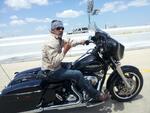

 Powdercoat or not?