





Tuning for dummies?
 Tuning for dummies?
Hey guys,
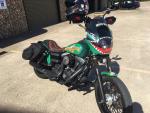
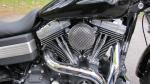
I have decided on the pipes (fatcat 2-1), and the a/c (rsd venturi) that i will be putting on my bike (2011 fxdb) when i get home.
Anyway, i am very new to the whole tuning side of it, I have a friend who has worked on bikes a bit and should have no problem installing the pipes and a/c, but what i'm really confused about is the whole tuning aspect of it.
fuelmoto and drvtwin talked to me about buying a PC-V.
Anyway, what i was wondering if someone (in simple terms) could please tell me what I will need to have my bike working at optimum performance regarding the pipes and a/c. Should i just take it to a dealer and have them tune it, or is it better for me to do it myself? if so, what is involved?
Thanks, appreciate any input.
I have decided on the pipes (fatcat 2-1), and the a/c (rsd venturi) that i will be putting on my bike (2011 fxdb) when i get home.
Anyway, i am very new to the whole tuning side of it, I have a friend who has worked on bikes a bit and should have no problem installing the pipes and a/c, but what i'm really confused about is the whole tuning aspect of it.
fuelmoto and drvtwin talked to me about buying a PC-V.
Anyway, what i was wondering if someone (in simple terms) could please tell me what I will need to have my bike working at optimum performance regarding the pipes and a/c. Should i just take it to a dealer and have them tune it, or is it better for me to do it myself? if so, what is involved?
Thanks, appreciate any input.
Road Master
Joined: May 2010
Posts: 950
Likes: 0
From: ENGLAND
the pipes and a/c will help the air flow into and out of the engine which will add a little HP , but you really need to do a fuel tuner of some sort to get a descent HP TQ increase, either a remap of your existing EFI unit , or a bypass fueller like the PC-V , FUELPAK etc , i like remaps my self there usually undetectable , and keep things tidy and as long as your not going to keep on changing the pipes and A/C , that will be enough and should give a better power and torque increase , were not talking massive here , about 15 -20 % is about it . what it does is changes the original factory settings , Harley,s run lean as standard , this helps them pass the different exhaust emissions regs around the world , but if you change say the exhaust mufflers , the 02 sensors will tell the efi unit its running too weak and the efi will adjust the mix back to the factory setting (lean), any fuel mod will bypass this and add more fuel to the mix , so it will run richer than stock , as a result you get a cooler engine and worse mpg , but a little better throttle response and about 15 HP more , its not great but you will notice it , to get anything like 100hp you will need to spend a lot more money , cams big bore kit etc , because as the saying goes , "you cannot polish a turd" its never going to be a crutch rocket , just a faster than stock Harley , to get a big increase you need hi revs and thats not comming cheap ,
to be honest I'm not doing anything to my 2011 fat bob apart from the rush slip ons (nice sound), its to much money for to little gain in my book , if i want to go faster , ill buy a faster bike .
fitting the pipes and a/c is easy , you could do it with a limited tool kit , its just a few bolts and srews , but , the fuel mod i would get done at a competent indy tuner or main dealers , it will cost a few $ but it will run better for it ,
good luck , i hope you think its worth the money when its done .
to be honest I'm not doing anything to my 2011 fat bob apart from the rush slip ons (nice sound), its to much money for to little gain in my book , if i want to go faster , ill buy a faster bike .
fitting the pipes and a/c is easy , you could do it with a limited tool kit , its just a few bolts and srews , but , the fuel mod i would get done at a competent indy tuner or main dealers , it will cost a few $ but it will run better for it ,
good luck , i hope you think its worth the money when its done .
Last edited by MADDOG187; Jul 20, 2011 at 04:08 AM.
Road Warrior
Joined: Apr 2009
Posts: 1,360
Likes: 4
There is not one best answer for everyone as selecting a tuner is a judgment call based on your expectations and how much an optimum performing bike is worth to you. Unless you have years of Harley tuning experience and have mastered EFI, the only way to get the optimum street performance (and know it) is to hire a competent tuning pro... it is important the tuner be competent, not all dealers have competent tuners. Not all independents are competent.You want smoothness as well as power, WOT power is easy (just about anyone can give you this) smoothness and reliable operation under all conditions and differences in fuel quality takes some skill.
The pro will spend 4 maybe 6 hours using a set of power/AFR measuring equipment priced out of range of the typical consumer to measure performance and operation, and a TTS or SESPT or something similar to reprogram and adjust the ECU for optimum performance for your specific bike for your riding style. There is nothing wrong with the Harley ECU hardware, but you need to reprogram it to provide the most satisfying ride. IMHO reprogramming the stock ECU is the best way to go for long term street riding satisfaction.
Independent testers have shown that you could get close to the optimum street tune yourself by using a TTS tuning kit, if you have about $425 to spare and are willing to put in the sweat equity time. Check it out, seems to be the hot ticket especially for those that like to tinker and not be constrained.
All the name brand tuning systems and fuelers will wake up the bike and give you better power if not smoothness. Just about anything is better than stock, and up to about $500 the more you spend the more sophistication and closer to optimum you get, a good return on the investment IMHO. You just don't know if you've got all you can out of the bike besides your calibrated seat of the pants. That last 5% may or may not be that important to you, however. Above roughly $500 for hardware/software plus sweat equity, I think its diminishing returns, and there is a wide difference of opinion on what the returns are. Lots of marketing claims out there. If you are going to spend that much, suggest hiring a pro.
If you want to get an idea what it takes to tune (just scratching the tuning surface) check out the information and tuning manuals on the mastertune.net web site. Many have successfully tuned a bike for near optimum street performance.Or take a look over at https://www.hdforums.com/forum/elect...-injection-55/
PS:, there is nothing wrong with not sweating the details and just riding what you got with smiles.
The pro will spend 4 maybe 6 hours using a set of power/AFR measuring equipment priced out of range of the typical consumer to measure performance and operation, and a TTS or SESPT or something similar to reprogram and adjust the ECU for optimum performance for your specific bike for your riding style. There is nothing wrong with the Harley ECU hardware, but you need to reprogram it to provide the most satisfying ride. IMHO reprogramming the stock ECU is the best way to go for long term street riding satisfaction.
Independent testers have shown that you could get close to the optimum street tune yourself by using a TTS tuning kit, if you have about $425 to spare and are willing to put in the sweat equity time. Check it out, seems to be the hot ticket especially for those that like to tinker and not be constrained.
All the name brand tuning systems and fuelers will wake up the bike and give you better power if not smoothness. Just about anything is better than stock, and up to about $500 the more you spend the more sophistication and closer to optimum you get, a good return on the investment IMHO. You just don't know if you've got all you can out of the bike besides your calibrated seat of the pants. That last 5% may or may not be that important to you, however. Above roughly $500 for hardware/software plus sweat equity, I think its diminishing returns, and there is a wide difference of opinion on what the returns are. Lots of marketing claims out there. If you are going to spend that much, suggest hiring a pro.
If you want to get an idea what it takes to tune (just scratching the tuning surface) check out the information and tuning manuals on the mastertune.net web site. Many have successfully tuned a bike for near optimum street performance.Or take a look over at https://www.hdforums.com/forum/elect...-injection-55/
PS:, there is nothing wrong with not sweating the details and just riding what you got with smiles.
Last edited by ColdCase; Jul 20, 2011 at 06:28 AM.
Road Warrior
Joined: May 2008
Posts: 1,622
Likes: 1
From: Topeka, KS
Not sure if this answers your question or not but I've put the (SE air cleaner / New Exhaust / Power Commander V) kit on three different touring bikes, 2009 RKC, 2009 Ultra, 2010 Limited. In each case I ordered the kit from Fuel Moto and the power commander came pre-loaded with a map that worked GREAT. I'm mechanically challenged and was able to do the work for all three myself. The 2010 Limited I changed out the head pipes also, not just slip-ons.
Thanks guys,
So if i get a dealer with a competent dealer to do the tuning, is there any gear (other than pipes, a/c - which i am comfortable putting on myself) that I need to supply otherwise?
I'm fine doing things like nuts and bolts but when it comes to things like electronics im a huge numpty.
So if i get a dealer with a competent dealer to do the tuning, is there any gear (other than pipes, a/c - which i am comfortable putting on myself) that I need to supply otherwise?
I'm fine doing things like nuts and bolts but when it comes to things like electronics im a huge numpty.
@AussieTX: Forget the dealer. Buy a DynoJet PowerVision from FuelMoto with a tune on board for your ac/exhaust setup. With just a few 'clicks' on the touch screen, you will have 'tuned' your bike. NOTHING stays on the bike (no mounting harware, etc..) and any other mods you do down the line can easily be accomodated by the PowerVision. Also, the PowerVision can stay ON the bike as a gauge on the handlebars if you want.
Thanks for all the help guys, i really appreciate it.
i'll be sure to upload some pics once i get back to the states and do the mods.
i'll be sure to upload some pics once i get back to the states and do the mods.
Trending Topics
Road Master
Joined: Apr 2011
Posts: 772
Likes: 0
From: Corpus Christi, TX
I went with the PC-V and Auto-Tune. Deviated from the directions a bit regarding placement of the components. The PC-V is in the usual location, but the Auto Tune module is in the "pocket" or hole where the cables pass through from the fuse-box to the center of the frame. I went with a shorter CAN cable, and the main harness cable for the PC-V is behind the fuse box, rather than in front of it.
Honestly, if you're not racing or participating in dyno competitions, a good base map and auto-tune will give you all that you need.
So I recommend a Power Commander with Auto Tune, a Zipper's Thundermax (would have been my first choice, had I been aware of it and had the cash for it), TTS Mastertune, or a Power Vision with Auto Tune. There are probably other choices out there, but those are the ones I'm aware of right now.
The biggest factor for me is that I want the bike to be tuned to my riding style, and to compensate automatically, in real time, for changes in weather and altitude. You can't get that on a dyno. That's why I went with the Auto Tune. The wide band o2 sensors give the tuner the ability to constantly monitor the exact air/fuel ratio and to correctly meter the fuel under any conditions.
I've had people recommend that I try to get a dyno tune "on a good day", meaning under the most ideal weather conditions possible. Sure, this will get the best possible numbers on a graph, but that's not reality. If you've ever raced, you know that you tune your car to the conditions at the track that day, and that time of day. You keep a weather monitor on hand so you can read the conditions accurately, and you adjust what you can to fit those factors.
Auto tune does that for you, as you ride, without worry. You still need a good base map, to give the auto tune a target AFR, and the best base map can only be obtained with a dyno tune. However, there are plenty of good base maps available to get you really close. If you're not racing, don't sweat it. Spend that money on some good tires, suspension upgrades, or something else that's important to you.
It's really not "rocket science" anymore. The best tuners have worked closely with the best aftermarket manufacturers, and together they have made this whole thing simple enough for just about anyone who can turn a wrench and plug in a cable.
Honestly, if you're not racing or participating in dyno competitions, a good base map and auto-tune will give you all that you need.
So I recommend a Power Commander with Auto Tune, a Zipper's Thundermax (would have been my first choice, had I been aware of it and had the cash for it), TTS Mastertune, or a Power Vision with Auto Tune. There are probably other choices out there, but those are the ones I'm aware of right now.
The biggest factor for me is that I want the bike to be tuned to my riding style, and to compensate automatically, in real time, for changes in weather and altitude. You can't get that on a dyno. That's why I went with the Auto Tune. The wide band o2 sensors give the tuner the ability to constantly monitor the exact air/fuel ratio and to correctly meter the fuel under any conditions.
I've had people recommend that I try to get a dyno tune "on a good day", meaning under the most ideal weather conditions possible. Sure, this will get the best possible numbers on a graph, but that's not reality. If you've ever raced, you know that you tune your car to the conditions at the track that day, and that time of day. You keep a weather monitor on hand so you can read the conditions accurately, and you adjust what you can to fit those factors.
Auto tune does that for you, as you ride, without worry. You still need a good base map, to give the auto tune a target AFR, and the best base map can only be obtained with a dyno tune. However, there are plenty of good base maps available to get you really close. If you're not racing, don't sweat it. Spend that money on some good tires, suspension upgrades, or something else that's important to you.
It's really not "rocket science" anymore. The best tuners have worked closely with the best aftermarket manufacturers, and together they have made this whole thing simple enough for just about anyone who can turn a wrench and plug in a cable.
HD Forum Stories
The Best of Harley-Davidson for Lifelong Riders

7 Surprising Harley-Davidson Products that Are Not Motorcycles
Verdad Gallardo
8 Best Harley-Davidson Motorcycles Ever
Pouria Savadkouei
10 Worst Harley-Davidson Motorcycles Ever
Pouria Savadkouei
Killer Custom's Jail Break Is The Breakout That Refused to Blend In
Verdad Gallardo
Crazy Bunderbike Build Looks Amazing, But Is It Impossible to Ride?
Verdad Gallardo
Harley-Davidson Reveals Super Cool Cafe Racer Concept
Verdad Gallardo
Engraved Rebellion: Inside Bundnerbike's Glam Rock II
Verdad Gallardo
10 Motorcycles You Should Never Buy
Joe Kucinski
10 Things Harley-Davidson Needs to Fix in 2026
Verdad Gallardo
Tourer
Joined: Oct 2010
Posts: 348
Likes: 8
From: Hebron, CT
@AussieTX: Forget the dealer. Buy a DynoJet PowerVision from FuelMoto with a tune on board for your ac/exhaust setup. With just a few 'clicks' on the touch screen, you will have 'tuned' your bike. NOTHING stays on the bike (no mounting harware, etc..) and any other mods you do down the line can easily be accomodated by the PowerVision. Also, the PowerVision can stay ON the bike as a gauge on the handlebars if you want.

Thread
Thread Starter
Forum
Replies
Last Post
DHart
Ignition/Tuner/ECM/Fuel Injection
6
Oct 1, 2009 10:22 AM
