




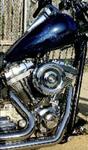





V Rod engine

Road Captain
Joined: Aug 2012
Posts: 658
Likes: 3
From: +^

Well...I would rather ride one than any of the SOA lookalike air-cooled bikes that seem to be cluttering up the place 
The valve adjustment thing is a non-issue for me as I have yet to come across a V Rod that actually needs the valves re-shimmed....that is the joy of shimmed valves, they last for like...ever.
I think a Fatbob with a V Rod motor would sell like hot cakes!
I also think that this scenario is quite likely to happen and sooner than you think and it will sit between Sporties and Dynas in a model range of its own..."V Glides"
The valve adjustment thing is a non-issue for me as I have yet to come across a V Rod that actually needs the valves re-shimmed....that is the joy of shimmed valves, they last for like...ever.
I think a Fatbob with a V Rod motor would sell like hot cakes!
I also think that this scenario is quite likely to happen and sooner than you think and it will sit between Sporties and Dynas in a model range of its own..."V Glides"
+1 on those lame dynas with fairings and long shocks, im surprised when you buy a 1/4 fairing it doesnt come with a SOA patch. i clown those guys every time i ride by them, about the lamest style of bike i have ever seen. thank god most of them are in CA hopefully they get wiped out from splitting lanes....idiots, this forum even has a lame thread club style dynas. the thread should be called d*ck heads on dynas.
No. I'm sure there's a market for a more comfortable and practical version of the V Rod but its not for me. I like my air cooled Super Glide just fine, thank you.
Outstanding HDF Member
Joined: Aug 2011
Posts: 2,325
Likes: 7
From: SE Illinois
Good horsepower numbers don't mean good tq at all. Think of a metric sport bike...they make awesome hp, but shitty torque. The Revolution engine has similar hp to tq ratio characteristics as a sport bike, but torque is helped out by the fact that it's a v-twin instead of an inline.
If they were going to put a Revolution type engine in a Dyna or touring bike...it's going to have to have more displacement & get tq numbers up around 100 at the rear wheel to be worth while.
Horse power is good for bragging rights on the dyno...torque gets the job done. I want that torque that comes on at very low rpms without having to wind out the engine to get the power out of it. Don't get me wrong, the current 1250 Revolution engine is a great engine, but it's a completely different feel than a TC and lacks torque. Increase the displacement to 1600 or 1700 & you move toward solving that problem.
The Revolution solution is a heavier flywheel and a longer stroke; but the engine wasn't designed for it, and you end up with yet another compromise (which the TC motor has been doing since it became a 96" motor.)
More than likely, a new WC motor for the Dyna/bagger line-up will be entirely new.
This has been an interesting read for me. So many different opinions. It's hard for me to imagine making the V rod motor into the style bike that I like. I just always thought it was a shame that they put that much technology into a bike that is so uncomfortable to ride. But then maybe if I were younger I would like the riding position and handling challenges.

Tourer
Joined: Oct 2013
Posts: 344
Likes: 8
From: WMass
The worst thing about the Vrod, is the forwards. A couple models had Mids, and there are aftermarket mid controls available, that are closer ion location to a typical harley with mids.....
Chase
Chase
HD Forum Stories
The Best of Harley-Davidson for Lifelong Riders

Jason Momoa Is Turning Classic Harleys Into PHEVs
Verdad Gallardo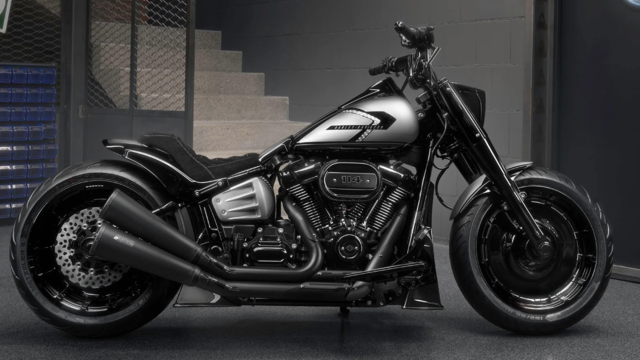
Harley-Davidson Fat Boy Becomes a Dark, Decepticon-Inspired Custom
Verdad Gallardo
6 Weirdest Harley-Davidsons Ever Sold to the Public
Verdad Gallardo
7 Times Harley-Davidson Chucked Tradition Out the Window
Verdad Gallardo
7 Surprising Harley-Davidson Products that Are Not Motorcycles
Verdad Gallardo
8 Best Harley-Davidson Motorcycles Ever
Pouria Savadkouei
10 Worst Harley-Davidson Motorcycles Ever
Pouria Savadkouei
Killer Custom's Jail Break Is The Breakout That Refused to Blend In
Verdad Gallardo
Crazy Bunderbike Build Looks Amazing, But Is It Impossible to Ride?
Verdad Gallardo
Road Warrior
Joined: Oct 2010
Posts: 1,524
Likes: 36
From: San Diego, CA
+1 on those lame dynas with fairings and long shocks, im surprised when you buy a 1/4 fairing it doesnt come with a SOA patch. i clown those guys every time i ride by them, about the lamest style of bike i have ever seen. thank god most of them are in CA hopefully they get wiped out from splitting lanes....idiots, this forum even has a lame thread club style dynas. the thread should be called d*ck heads on dynas.

Outstanding HDF Member
Joined: Aug 2012
Posts: 3,217
Likes: 90
From: Detroit
Let's take a 103" with 92 torque at 3000 rpm, and compare it to a V-Rod with 83 torque at 6750 rpm.
Since the V-Rod is turning roughly twice the rpm at it's torque peak, you can have twice the gear reduction between the engine and the rear wheel at the same vehicle speed. Twice the gear reduction means that the rear-wheel torque is doubled. The amount of rear-wheel torque (twisting force) is what's responsible for accelerating the bike, all other things being equal, and that's why a bike accelerates much faster in 1st gear than it does in 3rd. 1st has a larger gear reduction.
So the bottom line is that a bike with the V-Rod engine will deliver about twice as much torque to the rear wheel, compared to the 103, if both bikes are going down the road at the same speed, and both engines are running at their peak-torque rpm.
Engine torque by itself doesn't mean much, until you factor in the rpm where it makes that torque. Once you do that, by jimminy , you're suddenly talking about horsepower. That's why horsepower is the common measure of how much "work" an engine can do, and why a tiny engine with very low torque, screaming at 15000 rpm, can leave a Harley in the dust, even if both bikes weighed the same.
To put it a different way: If an engine made peak torque at 10 rpm, it would need 27,600 foot pounds of torque to make the same power as the Harley 103 does at 3000 rpm.
Last edited by Warp Factor; Dec 7, 2013 at 12:28 PM.