When you click on links to various merchants on this site and make a purchase, this can result in this site earning a commission. Affiliate programs and affiliations include, but are not limited to, the eBay Partner Network.
Dyna Glide ModelsSuper Glide, Super Glide Sport, Super Glide Custom, Dyna Glide Convertible, Super Glide T-Sport, Dyna Glide Police, Dyna Switchback, Low Rider, Street Bob, Fat Bob and Wide Glide.
I know this topic confused me for a while but thought I'd share how to check your vertical alignment on the Dyna. The tools I bought weren't very expensive (digital level from HD, inclinometer from Amazon, roughly $50 total).
Both tools have magnetic bases which aids in this check. And the digital degrees helps to see how accurate you are (a bubble level won't really tell you much. I found when the bike wasn't perfectly level at 0.9 degrees, it threw the inclinometer reading at the rear wheel off as much as a whole degree.).
What's working behind the scenes: Your engine stabilizer link in the form of a heim joint connects the top of your engine to the frame. It is able to 'tilt' the entire engine/transmission/swingarm, and hence your rear wheel, left/right in the vertical. It's important that the rear wheel is vertical to the ground when the bike is level for proper handling. I didn't have to adjust mine so I won't get into that here, but there's videos from the Glide-Pro website showing how it's done.
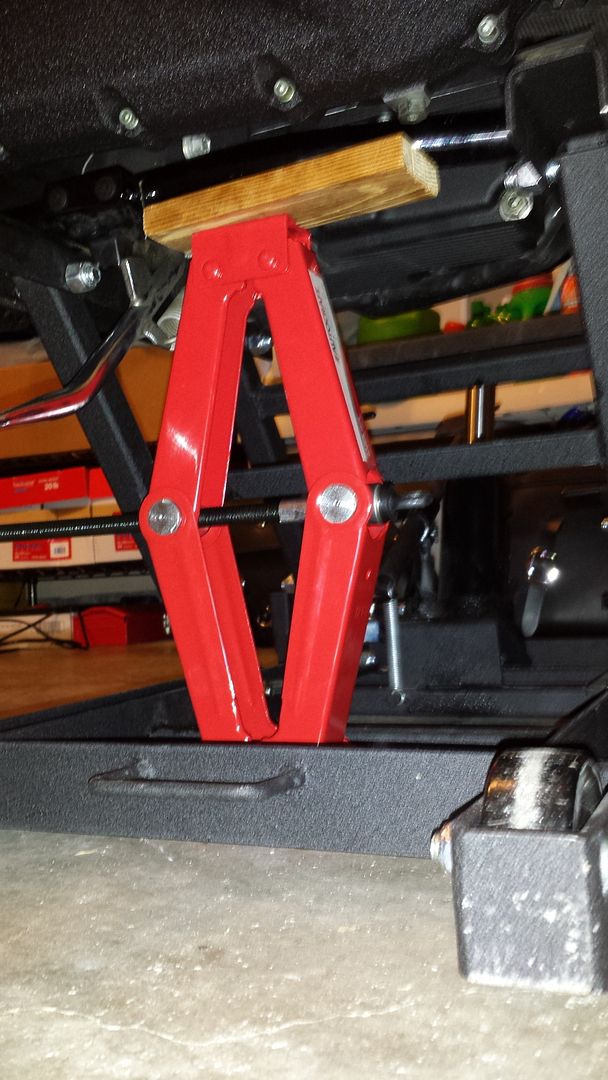
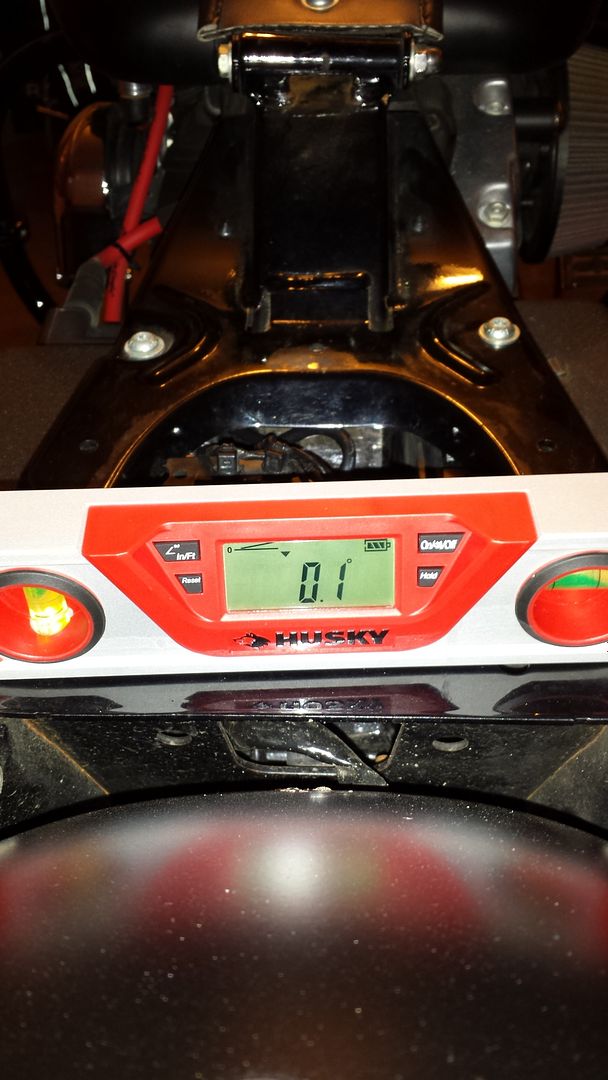
First: Get the bike level. I used my J&S jack coupled with a scissor jack and a block of wood. The digital level tells you which way you have to go, so I pushed up on the left side of the bike:
This isn't the only way to adjust the levelness, but it worked for me. The seat pan/frame is a good spot to check.
Do the above in small increments until you get as close to 0 as possible:
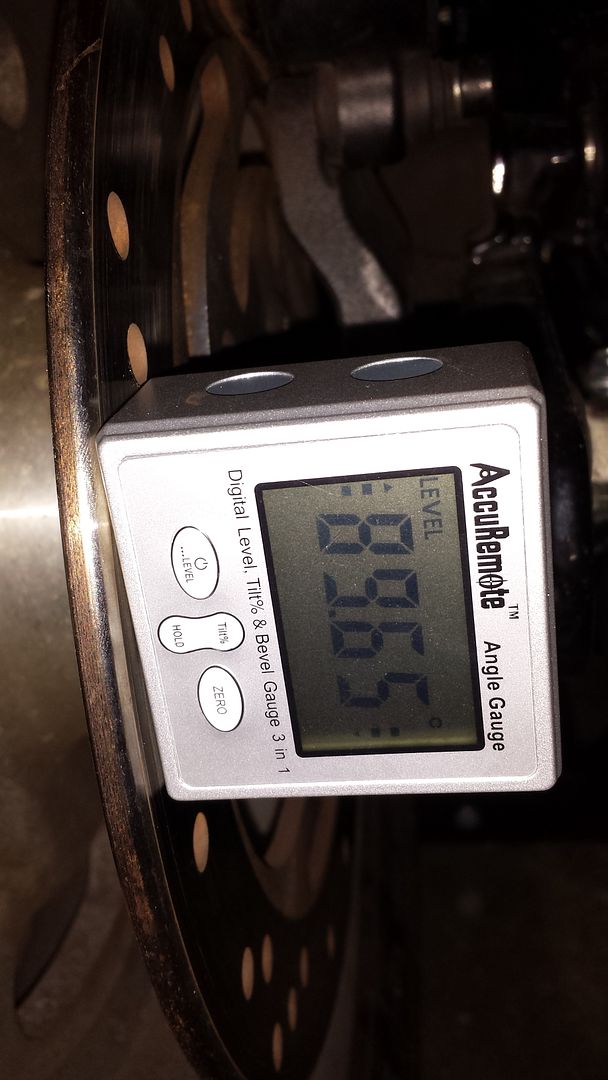
Once you've confirmed the bike is as level as you're able to get it, take the inclinometer and attach to your rear rotor:
There's some variance in the measurements and they're pretty sensitive so for me, this is about as perfect as I can see getting it. This reading is after 20k miles and never adjusting the top stabilizer link. I was surprised it was so well adjusted from the factory.
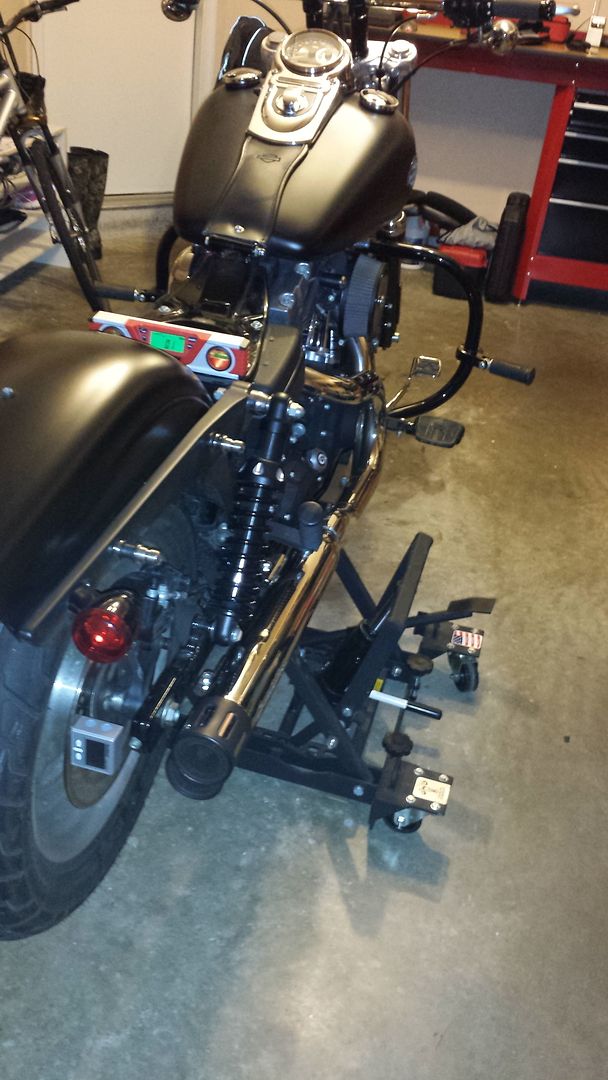
Overview shot:
Hope this helps someone out there,
Matt
So I get how you're checking this, but let's just say it was out of alignment. How would you go about adjusting it?
All is good except there are some initial variations left out....
This method starts with the foundation that the head set is welded properly and inline with the proper angle when the bike was originally made/welded at HD. This also assumes that once the frame is taken out of the frame jig, the frame does not spring to where it wants to go due to the welds. Is the frame stress relieved by heat treating the frame so the frame relaxes and goes to where it was originally gigged? Is the forks exactly the same length once you sit on the bike (how the bike must go down the road and not static measurements). So much for the reference point of the front rotor.
You may wish to exactly level the bottom frame rails (setting the foundation) and accurately measuring from the center (where your head stock is) taking in consideration the design of the frame where one side may be in a different location than the other side. Once secured than measure the head stock for both head angle on both planes
Next is making sure that all points are exactly aligned up on both sides by measuring from this chosen point (where this pointer is) and take measurements constructing the X, Y, & Z axis reference point. All must be referenced on a flat & true surface. There are companies who use lasers, some sort of many different ways to move the laser to remain true, and computer programs to graph it out. Outside of measuring and calculating your head stock to find true center is fairly easy if using a work table that is crudely calibrated true (you do not need measurements less than (+/- 0.001"). Just make sure the work surface is flat & level.
Starting with a base # from your brake rotor is a leap of faith. Still better than nothing. A CMM would be best. There are places who do this but be careful you are not being dazzled with BS.
I just noticed with my newly purchased 06 super Glide when I ride with no hands she boogies over to the left, and I have to lean way over to the right to ride straight. Could that be the problem
I just noticed with my newly purchased 06 super Glide when I ride with no hands she boogies over to the left, and I have to lean way over to the right to ride straight. Could that be the problem
That's actually pretty typical. There's a lot of weight from your primary on the left side of the bike. I have to lean a little to the right to go straight.
Slideshow: Jason Momoa's latest restoration project blends 1920s Harley-Davidsons with modern electric technology, creating some of the most unusual hybrid motorcycles ever built.
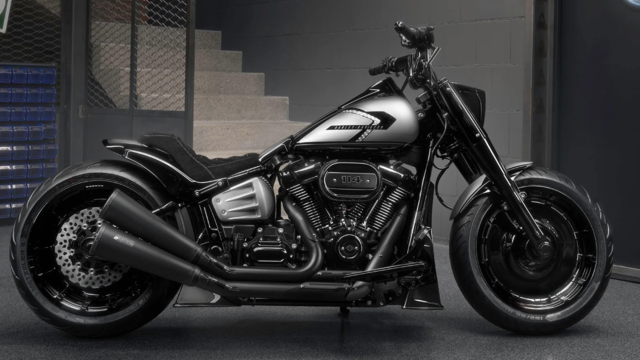
Harley-Davidson Fat Boy Becomes a Dark, Decepticon-Inspired Custom
Slideshow: Killer Custom's latest build relies on styling changes rather than performance upgrades, giving the cruiser an entirely different personality.
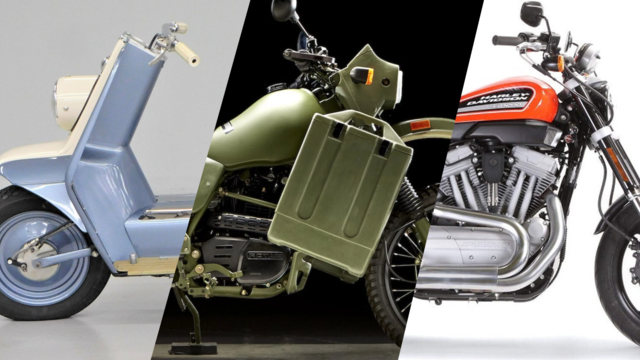
7 Surprising Harley-Davidson Products that Are Not Motorcycles
Slideshow: The bar-and-shield logo shows up on far more than motorcycles, some of the company's most unexpected products have nothing to do with riding.
Slideshow: From the troubled AMF years to modern misfires, these bikes earned reputations for reliability issues, questionable engineering, or disappointing performance.
Crazy Bunderbike Build Looks Amazing, But Is It Impossible to Ride?
Slideshow: The Swiss custom shop has taken a Harley Softail and stretched it into something so long and low that it looks closer to a rolling sculpture than a conventional motorcycle.