


VOES Switch Explained

Grand HDF Member


Joined: Apr 2007
Posts: 3,728
Likes: 3,073
From: Brighton, MI

The heavier the bike, then the stronger the amount of vacuum (more vacuum) the VOES will be is set at to "activate" or "turn on" the higher advance curve. So my guess and previous reading on the subject says about 6.0
For comparison, a sportster is around 4.0 so it jumps into the advance curve sooner or with less vacuum (a lower level of vacuum) required.
The wild west article I posted earlier gives a great explanation and makes the whole concept easier to understand.
I think the terminology regarding vacuum and electrical switches is what is causing some to misunderstand how the VOES really works.
For comparison, a sportster is around 4.0 so it jumps into the advance curve sooner or with less vacuum (a lower level of vacuum) required.
The wild west article I posted earlier gives a great explanation and makes the whole concept easier to understand.
I think the terminology regarding vacuum and electrical switches is what is causing some to misunderstand how the VOES really works.

Intermediate
Joined: Sep 2022
Posts: 43
Likes: 6
From: Georgia
The heavier the bike, then the stronger the amount of vacuum (more vacuum) the VOES will be is set at to "activate" or "turn on" the higher advance curve. So my guess and previous reading on the subject says about 6.0
For comparison, a sportster is around 4.0 so it jumps into the advance curve sooner or with less vacuum (a lower level of vacuum) required.
The wild west article I posted earlier gives a great explanation and makes the whole concept easier to understand.
I think the terminology regarding vacuum and electrical switches is what is causing some to misunderstand how the VOES really works.
For comparison, a sportster is around 4.0 so it jumps into the advance curve sooner or with less vacuum (a lower level of vacuum) required.
The wild west article I posted earlier gives a great explanation and makes the whole concept easier to understand.
I think the terminology regarding vacuum and electrical switches is what is causing some to misunderstand how the VOES really works.
Intermediate
Joined: Sep 2022
Posts: 43
Likes: 6
From: Georgia
The heavier the bike, then the stronger the amount of vacuum (more vacuum) the VOES will be is set at to "activate" or "turn on" the higher advance curve. So my guess and previous reading on the subject says about 6.0
For comparison, a sportster is around 4.0 so it jumps into the advance curve sooner or with less vacuum (a lower level of vacuum) required.
The wild west article I posted earlier gives a great explanation and makes the whole concept easier to understand.
I think the terminology regarding vacuum and electrical switches is what is causing some to misunderstand how the VOES really works.
For comparison, a sportster is around 4.0 so it jumps into the advance curve sooner or with less vacuum (a lower level of vacuum) required.
The wild west article I posted earlier gives a great explanation and makes the whole concept easier to understand.
I think the terminology regarding vacuum and electrical switches is what is causing some to misunderstand how the VOES really works.
Grand HDF Member
Joined: Apr 2007
Posts: 3,728
Likes: 3,073
From: Brighton, MI
Okay I got a vacuum tester and mine consistently closes (gets resistance) at 5" HG activation. If I'm understanding the wild west article, then it's good right? I did order one that is 6" HG activation. Should I switch it to 6" or just keep the old one? Looking for advice.
What was the ohms value you got with checking the old one? I am curious.
My original "closed" when I applied vacuum with the mity-vac, but the ohms resistance was higher than I liked (around 120 ohms). That told me the contacts of the switch were oxidized/worn and it was time for a new switch because there is no way to clean the contacts of the switch. The replacement was way low on ohms which is good thing and I can't remember exactly what the ohms value of the new one was.
It would be nice if you check your new one and tell us the ohms value of a new closed VOES switch).
The higher the ohms, the more worn the switch (or dirty) is. How much does it affect the performance of the VOES and the switching of the curves with dirty or corroded contacts on the VOES switch? I don't have the answer, however, I can say that it won't help

I would install the one but record the ohms value first so in the future if your troubleshooting and check it again, you can compare at a later date.
Intermediate
Joined: Sep 2022
Posts: 43
Likes: 6
From: Georgia
I don't remember what the ohms were but I know they were 100+. I was really only focused on when/if it opened. I will be getting the new one in on Thursday so I will let you know what it reads along with the old one. I put the old one back on so I could try and ride until the new parts come in. I'm still getting some shut down, hard start, sputtering and farting from the carb. I've replaced ignition coil, plugs, vacuum hose, battery and checked for bad grounds. Hopefully the plug Wires and voes will fix it. Also took exhaust off to make sure nothing was in it (mice, squirrel nutts) since it set for 7 days then all this **** started. I guess next is to drop the bowl on the carb and clean everything. Again thanks for your time and input. I will post the ohms Thursday or Friday night.
Grand HDF Member
Joined: Apr 2007
Posts: 3,728
Likes: 3,073
From: Brighton, MI
Yes I hope the VOES cures your problem, but in the mean time start reading up and watching carb rebuild videos and intake manifold seal replacement. If you don't know the history of the bike, it may be worthwhile to consider the carb next.
Start from the beginning and tell us about your bike, the bike history, and the problems your having. Maybe start up a new thread after the voes is installed.
Start from the beginning and tell us about your bike, the bike history, and the problems your having. Maybe start up a new thread after the voes is installed.
Last edited by Yankee Dog; Sep 27, 2022 at 04:23 PM.
Intermediate
Joined: Sep 2022
Posts: 43
Likes: 6
From: Georgia
Yes I hope the VOES cures your problem, but in the mean time start reading up and watching carb rebuild videos and intake manifold seal replacement. If you don't know the history of the bike, it may be worthwhile to consider the carb next.
Start from the beginning and tell us about your bike, the bike history, and the problems your having. Maybe start up a new thread after the voes is installed.
Start from the beginning and tell us about your bike, the bike history, and the problems your having. Maybe start up a new thread after the voes is installed.
Intermediate
Joined: Sep 2022
Posts: 43
Likes: 6
From: Georgia
Sorry for the late reply, I have been out of cell coverage for the past 4 days.
What was the ohms value you got with checking the old one? I am curious.
My original "closed" when I applied vacuum with the mity-vac, but the ohms resistance was higher than I liked (around 120 ohms). That told me the contacts of the switch were oxidized/worn and it was time for a new switch because there is no way to clean the contacts of the switch. The replacement was way low on ohms which is good thing and I can't remember exactly what the ohms value of the new one was.
It would be nice if you check your new one and tell us the ohms value of a new closed VOES switch).
The higher the ohms, the more worn the switch (or dirty) is. How much does it affect the performance of the VOES and the switching of the curves with dirty or corroded contacts on the VOES switch? I don't have the answer, however, I can say that it won't help
I would install the one but record the ohms value first so in the future if your troubleshooting and check it again, you can compare at a later date.
What was the ohms value you got with checking the old one? I am curious.
My original "closed" when I applied vacuum with the mity-vac, but the ohms resistance was higher than I liked (around 120 ohms). That told me the contacts of the switch were oxidized/worn and it was time for a new switch because there is no way to clean the contacts of the switch. The replacement was way low on ohms which is good thing and I can't remember exactly what the ohms value of the new one was.
It would be nice if you check your new one and tell us the ohms value of a new closed VOES switch).
The higher the ohms, the more worn the switch (or dirty) is. How much does it affect the performance of the VOES and the switching of the curves with dirty or corroded contacts on the VOES switch? I don't have the answer, however, I can say that it won't help
I would install the one but record the ohms value first so in the future if your troubleshooting and check it again, you can compare at a later date.
HD Forum Stories
The Best of Harley-Davidson for Lifelong Riders
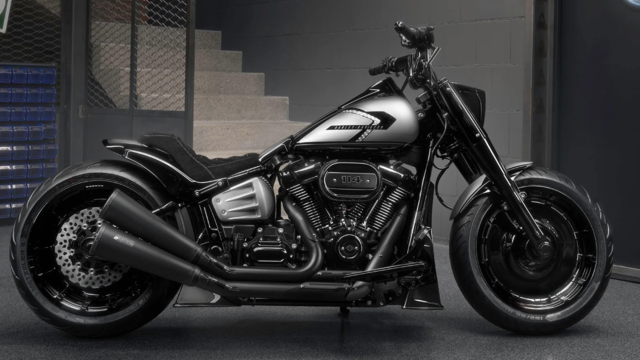
Harley-Davidson Fat Boy Becomes a Dark, Decepticon-Inspired Custom
Verdad Gallardo
6 Weirdest Harley-Davidsons Ever Sold to the Public
Verdad Gallardo
7 Times Harley-Davidson Chucked Tradition Out the Window
Verdad Gallardo
7 Surprising Harley-Davidson Products that Are Not Motorcycles
Verdad Gallardo
8 Best Harley-Davidson Motorcycles Ever
Pouria Savadkouei
10 Worst Harley-Davidson Motorcycles Ever
Pouria Savadkouei
Killer Custom's Jail Break Is The Breakout That Refused to Blend In
Verdad Gallardo
Crazy Bunderbike Build Looks Amazing, But Is It Impossible to Ride?
Verdad Gallardo
Harley-Davidson Reveals Super Cool Cafe Racer Concept
Verdad Gallardo
Grand HDF Member
Joined: Apr 2007
Posts: 3,728
Likes: 3,073
From: Brighton, MI
Little bit of a difference in the old vs new regarding ohms...
There really is no checking of the seals. Once you disturb them they need to be replaced. Even with age they need replacement. They get old, hard, don't seal like they used to, etc. Lots of info on seals. The biggest thing is positioning of the carb and manifold after you replaced the seals. Try to get the carb positioned in its "normally installed position" prior to tightening down the intake bolts. You don't want to move the manifold after it's all torqued down. Kind of tricky but can be done.
I am not familiar with S&S carbs so can't help you much other than all carbs have jets and ports. Those all should be clean/clear and the only way to tell that is by using carb cleaner spray and spraying in one end of the passage and looking for where it comes out. Keep doing that till you find the other end of the passage or port. That's the only way to know it is clear.
Correct float adjustment is important also. Ethanol fuel can mess with rubber carb parts so inspect closely.
Last question, what ignition system do you have? Stock?
There really is no checking of the seals. Once you disturb them they need to be replaced. Even with age they need replacement. They get old, hard, don't seal like they used to, etc. Lots of info on seals. The biggest thing is positioning of the carb and manifold after you replaced the seals. Try to get the carb positioned in its "normally installed position" prior to tightening down the intake bolts. You don't want to move the manifold after it's all torqued down. Kind of tricky but can be done.
I am not familiar with S&S carbs so can't help you much other than all carbs have jets and ports. Those all should be clean/clear and the only way to tell that is by using carb cleaner spray and spraying in one end of the passage and looking for where it comes out. Keep doing that till you find the other end of the passage or port. That's the only way to know it is clear.
Correct float adjustment is important also. Ethanol fuel can mess with rubber carb parts so inspect closely.
Last question, what ignition system do you have? Stock?

Seasoned HDF Member

Joined: Mar 2010
Posts: 21,148
Likes: 7,662
From: Poolville
R.polly, you really should start your own thread.. A 2 year old S&S E shouldn't have to many issues unless the float level was never set properly or the carb was never set up right.. as for the intake seals if done properly they should be ok after only 2 years.. There is a chance the crap in the tank could have plugged things up a bit..
Drop the bowl and let's have a look inside.. What jets are currently in the carb.. And as started by YD start your own thread and state what exactly has been done to the motor.. We really need all the info..
Drop the bowl and let's have a look inside.. What jets are currently in the carb.. And as started by YD start your own thread and state what exactly has been done to the motor.. We really need all the info..