




Question for older riders: Foot Clutch / Hand Shift Harleys

Thread Starter
|
Advanced
Joined: Nov 2009
Posts: 83
Likes: 24
From: Kansas City
 Question for older riders: Foot Clutch / Hand Shift Harleys
I was reading an article the other day about the older Harleys and was wondering about the operation of foot clutch/hand shift bikes. When preparing to come to a stop, does the rider keep the left foot on the clutch and hold the bike steady with the right foot down while stopped or coming to a stop, or was it common to place the bike in neutral just before coming to a stop and then coasting/braking to the final stop and therefore, both hands and feet are free while stopped. Just wondering.

Outstanding HDF Member
Joined: Sep 2014
Posts: 2,717
Likes: 273
From: Minnesota
An answer to that can only be found if we know whether the rider likes Fords or Chevy's, and whether he prefers Blondes, Brunettes or Redheads.
Once that information is determined the answer is: Yes.
Once that information is determined the answer is: Yes.
Seasoned HDF Member


Joined: May 2012
Posts: 32,934
Likes: 36,028
From: Carlsbad, CA
It's actually an interesting question, worthy of a respectful answer.
Grand HDF Member
Joined: Nov 2013
Posts: 3,807
Likes: 1,488
From: SW Washington State
I was reading an article the other day about the older Harleys and was wondering about the operation of foot clutch/hand shift bikes. When preparing to come to a stop, does the rider keep the left foot on the clutch and hold the bike steady with the right foot down while stopped or coming to a stop, or was it common to place the bike in neutral just before coming to a stop and then coasting/braking to the final stop and therefore, both hands and feet are free while stopped. Just wondering.
Last edited by sixguns; Aug 29, 2015 at 01:26 PM.

Big Kahuna HDF Member
Joined: Dec 2012
Posts: 322,622
Likes: 3,077
From: .....
I rode one once many years ago and while I liked how it looked doing it, it was a job. On a flat surface it was easy but on a hill, it was the worst, UNLESS you have a front break and this bike didn't. It's like driving a standard car but needing to balance it at stops.
Thread Starter
|
Advanced
Joined: Nov 2009
Posts: 83
Likes: 24
From: Kansas City
the key to operation is that foot clutch stays where you put it,[ unlike a car ] So you can release the clutch, leave the bike in gear and come to a stop with the right foot on the brake and left foot on the ground. once stopped,I hold the bike with the hand brake [ that is useless to stop with ] switch out my ground foot and get back on the clutch with my left foot. Factory bikes with foot clutch hand shift and front brake were not termed suicide. The factory setup is a very easy ride. hope this answer your question. Some guys may use the front brake to finish the stop and keep their left foot on the clutch and right foot or both feet to the ground, with the bike still in gear.
Thanks Sixguns. I didn't know the foot clutch would stay in place, freeing up the left foot for steadying the bike while stopped. I suppose the operation as you described becomes second nature and intuitive after a period of time, just like our current set-ups are.

Intermediate
Joined: May 2015
Posts: 25
Likes: 2
From: fedral way
I was reading an article the other day about the older Harleys and was wondering about the operation of foot clutch/hand shift bikes. When preparing to come to a stop, does the rider keep the left foot on the clutch and hold the bike steady with the right foot down while stopped or coming to a stop, or was it common to place the bike in neutral just before coming to a stop and then coasting/braking to the final stop and therefore, both hands and feet are free while stopped. Just wondering.
Trending Topics

Ultimate HDF Member
Joined: Jul 2014
Posts: 8,251
Likes: 3,990
From: Windwardside, Saba N.A.
Left foot clutch, right foot brake, left hand shift, right hand brake, throttle on right grip and ignition advance on left grip can keep you busy at times.
And to answer, I usually set rat-trap foot clutch on disengage and used both feet to stop. Transmission was three-speed tank-shift with R/F pattern of 1-N-2-3 so it is pretty easy to put in Neutral before stopping.
ETA This was a 1937 motor, my first in 1962. IIRC first gear had syncromesh but second and high did not so you rpm-matched when shifting up and down.
Yes, I would pay blood to have it back, but a ******** in a 1955 Chevrolet sideswiped the motor and me into a ditch and she never recovered.
And to answer, I usually set rat-trap foot clutch on disengage and used both feet to stop. Transmission was three-speed tank-shift with R/F pattern of 1-N-2-3 so it is pretty easy to put in Neutral before stopping.
ETA This was a 1937 motor, my first in 1962. IIRC first gear had syncromesh but second and high did not so you rpm-matched when shifting up and down.
Yes, I would pay blood to have it back, but a ******** in a 1955 Chevrolet sideswiped the motor and me into a ditch and she never recovered.
Last edited by Sierra977; Aug 29, 2015 at 05:39 PM.
HD Forum Stories
The Best of Harley-Davidson for Lifelong Riders

8 Best Harley-Davidson Motorcycles Ever
Pouria Savadkouei
10 Worst Harley-Davidson Motorcycles Ever
Pouria Savadkouei
Killer Custom's Jail Break Is The Breakout That Refused to Blend In
Verdad Gallardo
Crazy Bunderbike Build Looks Amazing, But Is It Impossible to Ride?
Verdad Gallardo
Harley-Davidson Reveals Super Cool Cafe Racer Concept
Verdad Gallardo
Engraved Rebellion: Inside Bundnerbike's Glam Rock II
Verdad Gallardo
10 Motorcycles You Should Never Buy
Joe Kucinski
10 Things Harley-Davidson Needs to Fix in 2026
Verdad Gallardo
Southpaw Super Glide: A Left-Hand-Drive 1979 Harley FXE Built to Fit the Rider
Verdad Gallardo
Outstanding HDF Member
Joined: Sep 2014
Posts: 2,717
Likes: 273
From: Minnesota
My point is/was that every rider will operate differently,,
Even the same operator will do things differently in various situations.
Asking for a specific answer to this is mute,, there is no chance in He!! your going to get a specific answer to a variable situation.
Think about it.

Extreme HDF Member
Joined: May 2010
Posts: 11,166
Likes: 1,801
From: Puget Sound, WA.

I had my pan's tranny set up so I could pop it into neutral so easy I would just push the clutch in, slip to neutral, and roll to a stop.
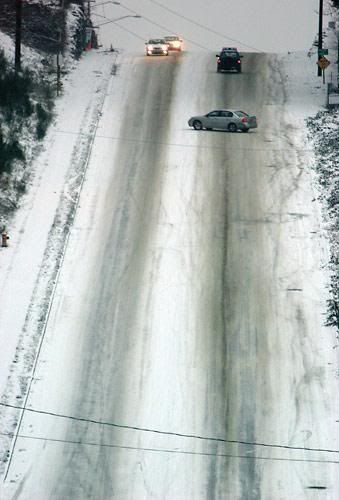
In Seattle with all the hills I'd sometimes angle into the curb with the rear tire so I could launch from there when the light turned green.
In the older days with steel bumpers, you'd just roll back into the car behind you- most cagers were so scared they didn't honk the horn or say anything. I'd always did it with care and give them a "thank you" wave when I took off.
When I started out from neutral it was so automatic that I really didn't think about it.
Last edited by Sling Blade 14; Aug 29, 2015 at 06:07 PM.